|
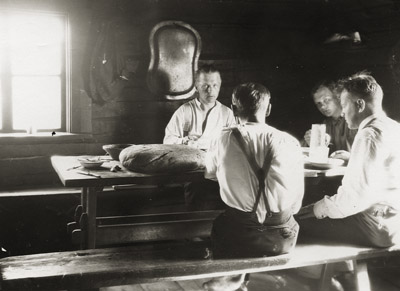
Rice porridge was a novelty among festive dishes in the 19th century. It was considered a finer treat than barley porridge, and peasants did not yet eat it during the century. Raisin or fig soup accompanied rice porridge. People drank Christmas ale or near-beer, and sometimes hard liquor with the porridge. “Some tasks on Christmas Eve were ordinary household chores: getting wood or fetching hay. But the high points were the Christmas sauna and the feast that followed. People sang the feast psalms, said grace before and after the meal, and sometimes an elderly person would take out the sermon book and read it aloud.” (Rytkönen 1971, Tuomaasta Nuutin nuppiin.) “People believed that Christmas food held the mystical power of all growth and fertility, and they wanted to preserve it through the winter. Therefore, the Christmas bread that had been made from the first crops in the autumn was kept in the crop bin until the next plowing the following spring. Then people would eat the bread and take a swig of home-brewed Christmas ale. Thus they formed the bond of life between the mature crop of the autumn and the new crop in the spring.” (Rytkönen 1971, Tuomaasta Nuutin nuppiin.) After the feast, the hired help went to the cow barn and the stable to give the animals a feast of hay and food. The animals got some Christmas drink, too, either straight up or soaked in oats or bread.“In Kuhmoniemi, a wife who was giving unleavened kekri bread to the cows would say: ‘Here’s kekri for you, too!’. Either she was wishing for good luck and fertility from the deity, or then the better food given to animals was like a holiday feast. ‘It was Christmas for the animals, too, when they had Christmas food, e.g. oats from a sack that had been under the house table at Christmas.’”(Rytkönen 1934, Kekriä kiertämässä.) Christmas church started at six in the morning. Candles burned in house windows and people also took candles to church. After the service, people would have a horse race to see who arrived home first. A victory would bring good horse luck and prosperity to the house. The hay that had been the cushioning in the sleigh during the Christmas service was given to cows because the visit had sanctified the hay, people believed. |
||||||
|