|
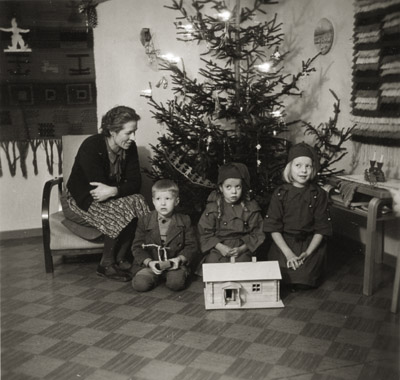
A part of Väinönkatu was made into the first Christmas Street in Jyväskylä at the turn of the 1950s. The shops on Väinönkatu, for example Syvänoro and Oro, sponsored the Street. The gift-giving Santa Claus became familiar in the countryside through elementary school Christmas parties. The Finnish Santa originates from a country tradition. During Yuletide, young villagers would dress up as bucks or cranes, entertaining and frightening people and asking for food and drink. People began to connect the Finnish Christmas Buck with the gift-giving figures of Central Europe, most importantly with Saint Nicholas. Thus, Santa Claus became a partly supernatural and terrifying figure, who rewarded good children with gifts, and punished the bad with a whipping birch. The first Finnish-speaking Teacher Seminary founded in Jyväskylä in 1863 helped spread new Christmas traditions to schools and then to homes. The Seminary Christmas party always had a Christmas tree as high as the room and decorated with live candles. Elementary school Christmas parties brought Christmas trees to the countryside in the 1870s and 1880s. Seasonal publications and the old tradition of Midsummer-, wedding-, and name day spruces also helped the spread the popularity of the Christmas tree. Christmas carols played a major role in the Training College Christmas party. The teachers and the students wrote many carols that are still known today, and the graduated teachers spread them all over Finland. Christmas carols were written and translated into Finnish from the start at the College, but the arrival of P.J. Hannikainen as the music lecturer at the end of the 19th century really broadened the repertoire. “Joulupukki, joulupukki” is one of his best-known carols. Social behaviour centered on the family in the 19th century; it was the base unit of society. The husband provided the living and the wife took care of the home and children. Emotional family bonds were essential, and Christmas was the ideal holiday for enhancing the family spirit. Following the example of the gentry, people began to celebrate Christmas as a holiday for home and family. The gentry and the townspeople started Christmas on the first Advent in accordance with German custom. |
||||
|