Nanoscience Days 2026
Info
Original Sokos Hotel Alexandra
Hannikaisenkatu 35
Jyväskylä 40100
Finland
Labo Line Oy is a Finnish family-owned distributor of laboratory equipment, founded in 1993. Labo Line offers expertise, high quality products, training and technical services for the whole life span of laboratory equipment – from consulting to after sales technical service.
Labo Line is focused on cold storage equipment, protective workstations, chemical storage solutions, cleaning, disinfection and sterilization solutions, and heat technology equipment such as furnaces , ovens and climate/humidity chambers. The most important customers are universities, hospitals, research institutes and industrial QC and RD laboratories.
More information: info@laboline.fi, puh. 09 877 0080.
Registration / Enrollment
Further information
Add to calendar
Programme
Preliminary Programme
October 5, 2026
Lobby
08.30 - 09.30 | Registration, coffee, visit the sponsors
Lecture hall
09.30 | Opening words by Timo Sajavaara, Dean of the Faculty of Mathematics and Science, University of Jyväskylä
09.45 | Frauke Gräter
10.45 | Sergio Padilla-Parra
11.45 | 30 min for sponsors
Restaurant and lobby
12.15 Lunch and posters, visit the sponsors
Lecture hall
13.30 | Bruno Frka-Petesic
Lobby
14.30 | Coffee, visit the sponsors
Lecture hall
15.15 | Kari Rissanen
Lobby
16.30–18.00 | Poster session with refreshments, poster abstracts
Campus
18.00 Tour around the campus of the University of Jyväskylä
Restaurant
19.30 | Conference dinner
20.00 | Band playing
October 6, 2026
Lobby
09.00 - 09.45 | Coffee
Lecture hall
09.45 | Sarah Haigh
10.45 | Adrian Bunzel
11.45 | 30 min for sponsors
Lobby
12.15 Lunch, posters, visit the sponsors
Lecture hall
13.00 | Jovana Milic
14.00 | Johanna Ivaska
15.00 | Closing words: Fabien Cougnon, Scientific head of the Nanoscience Center
Speakers
Adrian Bunzel
Max Plank Institute
Cellulose nanocrystal self-assembly into nanostructured photonic materials
Bruno Frka-Petesic
B. Frka-Petesic1,2*
1 Yusuf Hamied Department of Chemistry, University of Cambridge, Cambridge, UK
2 International Institute for Sustainability with Knotted Chiral Meta Matter (WPI-SKCM2), Hiroshima University, Hiroshima 739-8526, Japan;
bf284@cam.ac.uk
Abstract. Cellulose nanocrystals (CNCs) are anisotropic and chiral colloidal nanorods that can be extracted from various cellulosic bio-sources and represent a promising building block for the development of renewable and multifunctional nanomaterials. Remarkably, CNCs can spontaneously form a colloidal liquid crystal above a threshold volume fraction, with a left-handed cholesteric order, and upon further solvent evaporation can produce nanostructured films that display strong spectral reflection in the visible range, resulting in vivid structural colour.[1-3]
In this talk, I will discuss various aspects of the mechanisms responsible for such effect, and explore the various routes to control and utilise this phenomenon, from elucidating and controlling the chirality of CNCs at the individual level, to the implementation of strategies and constraints to drive their self-assembly into various nanostructured architectures, such as external fields, confinement or buckling instabilities.
References
[1] R. M. Parker, G. Guidetti, C. A. Williams, T. Zhao, A. Narkevicius, S. Vignolini, B. Frka-Petesic, Adv. Mater. 30, 1704477 (2018)
[2] B. Frka-Petesic, G. Kamita, G. Guidetti, S. Vignolini, Phys. Rev. Mater., 3, 045601 (2019)
[3] B. Frka-Petesic, T. G. Parton, C. Honorato-Rios, A. Narkevicius, K. Ballu, Q. Shen, Z. Lu, Y. Ogawa, J. Haataja, B. Droguet, R. M. Parker, S. Vignolini, Chem. Rev., 123, 12595 (2023)
Bio. Bruno is currently an Assistant Research Professor at the Department of Chemistry at the University of Cambridge, UK. He graduated theoretical soft matter physics in 2006 at Paris Diderot University, followed by a PhD in 2010 in experimental physics at UPMC (now Sorbonne University) in Paris. After short postdoctoral experiences in CERMAV-CNRS (Grenoble, France) and ENS (École Normale Supérieure, Paris, France), he joined in 2014 the Bio-Inspired Photonics group working with Silvia Vignolini on the self-assembly of organic nanocolloids for photonic materials. Since 2023, he is also an affiliated member of the International Institute for Sustainability with Knotted Chiral Meta Matter (WPI-SKCM2) based in Hiroshima University, and since 2026 a visitor scientist to the Max Planck Institute (MPIKG, Potsdam, Germany). Over the recent years, he became a specialist of cellulose nanocrystal self-assembly, and extended his research line to various aspects of the valorisation of naturally sources nanocolloids to design structured functional materials, from the identification and design of the key properties of the starting building blocks, to the control and development of suitable self-assembly routes.
Mechanoradicals in Living Matter: How Mechanical Forces Generate Oxidative Signals
Frauke Gräter
Abstract. Tissues are perpetually subjected to mechanical forces. We know for nearly a century that high mechanical load on polymer materials - be it a shoe sole or rubber band – causes the rupture of chemical bonds and generates mechanoradicals. We uncovered the very same mechanism in biology: radicals form by stretching collagen and elastin, major proteins material of our tissues, even under stresses far below tissue failure. Using experiments in conjunction with simulations and machine learning, we reveal how the extracellular matrix tames its radicals and converts them in a highly controlled fashion to oxidative stress, dominantly hydrogen peroxide. We currently explore how this new mechano-sensing mechanism is related to disease and ageing.
Bio. Frauke Gräter has joined the Max Planck Institute for Polymer Research in Mainz as Director in 2024, and is heading the department „Biomolecular Mechanics“. Frauke studied chemistry at the Universities of Tübingen, Kyoto, and Heidelberg, and completed her doctorate at the Max Planck Institute for Biophysical Chemistry in Göttingen. After that, she spent her postdoctoral period at the Department of Chemistry at Columbia University in New York. She then took up a junior group leader position at the MPG-CAS Partner Institute for Computational Biology, after which she continued her scientific career at the Heidelberg Institute for Theoretical Studies in Heidelberg as a group leader and later as a professor at the University of Heidelberg.
Frauke Gräter investigates how proteins have been designed to specifically respond to mechanical forces in the cellular environment or as a biomaterial. To this end, her group uses and advances molecular simulations and data-driven computational methods, in combination with biophysical experiments.
She is recipient of the PRACE Ada Lovelace Award 2017 and has been awarded an ERC Consolidator Grant. Among others, she is member of the Senate of the Leibniz Association, fellow of the Max Planck School Matter to Life, Editorial Board Member of the Biophysical Journal, and member of the excellence cluster 3DMM2O.
Probing Dynamic Atomic Behaviour at Surfaces and Interfaces
Sarah Haigh
Sarah J. Haigh 1, Sam Sullivan Allsop1, Matthew Lindley1, Wendong Wang 2, Nick Clark1, Roman Gorbachev 2.
1. Department of Materials and National Graphene Institute, University of Manchester, Oxford Road, Manchester M13 9PL, UK; 2. Department of Physics and Astronomy and National Graphene Institute, University of Manchester, Oxford Road, Manchester M13 9PL, UK;
Abstract. Scanning Transmission Electron Microscopy (STEM) enables direct imaging of local atomic structure and elemental composition to uncover structure-property relationships. For example, we have used this to uncover local nanostructure and thus support development of improved performance in ferroelectric films [1] and in electrocatalysts for water oxidation catalysts [2]. Yet (S)TEM imaging is typically performed in high vacuum environments which can cause artefacts relative to the sample in operando conditions. In situ (S)TEM using specialist holders or instruments enables imaging under more realistic environmental conditions. In this talk I will present some of our recent work illustrating how we have used STEM liquid cells to probe growth of tellurium nanowires, informing strategies for bulk electrodeposition at lower potential [3]. I will also report how we have applied in-situ gas cell STEM to investigate how the catalyst morphology evolves during activation heat treatment of cobalt oxides depending on the amount of doping with Mn promotor to optimise performance of Fischer Tropsch catalysts [4]. I will also report experiments using our graphene heterostructure liquid cells, which allow atomic resolution spatial resolution of solid catalysts surrounded by liquids including atomic scale dynamics at a solid-liquid interfaces [5]. We have developed a new polymer-free transfer technique to produce such graphene cells with minimal contamination and for a wide range of solvents [6]. Here we will report how this approach can be combined with an automated Noise2void machine learning image analysis pipeline [7] to allow new investigations of the dynamic behaviour of 10000-1000000 individual atomic sites at solid-liquid interfaces as a function of solvent environment [8].
References
[1] Y-Y-S, Cheng, et al (2026) Nature Materials 25, 73–79 https://www.nature.com/articles/s41563-025-02354-z
[2] C. Liang, et al (2026) Nature Materials (in press, https://www.nature.com/articles/s41563-026-02514-9).
[3] Y-C. Zou et al (2026) Matter (accepted, in press)
[4] M. Lindley, et al (2024) ACS Catalysis, 14, 10648-10657 https://pubs.acs.org/doi/full/10.1021/acscatal.4c02721
[5] N. Clark, et al (2022) Nature, 609, 942–947 https://www.nature.com/articles/s41586-022-05130-0
[6] W. Wang et al (2023) Nature Electronics, 6, 981–990 https://doi.org/10.1038/s41928-023-01075-y
[7] W. Thornley et al (2026) NPJ computational materials, 12, 86, https://www.nature.com/articles/s41524-025-01939-1
[8] S. Sullivan-Allsopp et al (2026), Science, 392, 6793, 77-82 https://www.science.org/doi/10.1126/science.adw2469
Bio. Sarah Haigh is a Professor of Materials at the University of Manchester, UK whose research interests focus on advanced/in situ transmission electron microscopy (TEM) characterisation for improved understanding of nanomaterials behaviour. She completed undergraduate and doctorate degrees in Material Science at the University of Oxford (2004 and 2008) then worked as Consultant Application Specialist to JEOL UK before starting at Manchester in 2010. She is Vice Dean of Research and Innovation for the University of Manchester’s Faculty of Science and Engineering. She is also Director of the bp International Centre for Advanced Materials an academic-industrial collaboration set up with $100M investment from bp and focused on research towards net zero. She has been awarded ERC Starter and Consolidator grants and has published more than 200 peer reviewed journal papers and 5 book chapters. https://scholar.google.com/citations?user=rWFjXPEAAAAJ&hl=en
Integrin mediated cell adhesion in modulation of cancer progression
Johanna Ivaska
Abstract. Tissue homeostasis is dependent on the spatially controlled localization of specific cell types and the correct composition of the extracellular stroma. Integrins are the main cell adhesion receptors of extracellular matrix (ECM) ligands. They integrate ECM cues to the cellular cytoskeleton and regulate key cellular signalling pathways. By nucleating new adhesion sites and regulating the turnover of existing adhesions, integrins and components of the actin cytoskeleton control cell morphology, polarity and migration. In all adherent cell types, integrins are essential regulators of tissue homeostasis and their mis-regulation is implicated in several diseases, including cancer and inflammation. Integrin-mediated adhesions, in conjunction with the actin cytoskeleton, regulate cell fate and identity and allow cells to migrate and invade the surrounding ECM.
Tight control over integrin mediated adhesion and signalling is paramount for normal cell function and is perturbed in almost every step of cancer progression. Our long-standing interest is in uncovering cancer relevant integrin-associated proteins and signalling networks. We have used RNAi screens to identify new proteins implicated in the regulation of integrin activity, integrin traffic, cell migration and metastasis. We are continuing this work by 1) investigating in mechanistic detail adhesion regulating protein networks using proximal-biotinylation, by 2) developing FRET-based probes to map the spatiotemporal regulation of integrin signalling under different conditions, by 3) screening for cell response to varying ECM compositions and 4) by exploration of integrins in mechanosensing and mechanotransduction.
Bio. Professor Ivaska is an academic researcher at the University of Turku, Finland. Her research focuses on finding novel approaches to treat cancer by gaining a fuller appreciation of the intricacies of cell adhesion in regulating cell fate, tissue homeostasis and crosstalk with the stroma.
Johanna completed her PhD in 2000 at the University of Turku before completing her EMBO and Research Council of Finland (formerly Academy of Finland) funded postdoctoral training at the Cancer Research UK London Research Institute in 2003. She was appointed Group Leader of the Cell Adhesion and Cancer Laboratory and Research Council of Finland Principal Investigator at the University of Turku in 2003. Johanna became a Professor of Molecular Cell Biology in 2008 (tenured in 2015). She is Academy Professor and Director of a Research Council of Finland Centre of Excellence, BarrierForce.
Johanna has published over 140 papers, with first or senior author publications in Nature Reviews Molecular Cell Biology, Nature Reviews Cancer, Annual Review of Cell and Developmental Biology, Nature Materials and Nature Cell Biology.
Examples of Johanna’s seminal discoveries include several novel integrin activity and trafficking regulators. Johanna’s expertise in receptor trafficking has also led to the discovery of drug resistance mechanisms in HER2-amplified breast cancer and new potential HER2 cancer vulnerabilities. Additionally, in a global collaborative effort, Johanna and her team have shown that brain cancer cells exhibit biased migration toward softer environments (“negative durotaxis”), a phenomenon that is recapitulated by breast cancer cells when the mechanosensitive adhesion protein talin is depleted. These data represent a major paradigm shift in the field where the majority of research has guided the development of therapies based on cancer cells favouring a stiffer microenvironment. Johanna continues to push the boundaries of her research as the director of the newly funded Centre of Excellence BarrierForce. Here, Johanna and her team (five research groups) aim to integrate computational modelling of specialized cell adhesion machinery with advanced imaging, tissue engineering, and mouse models of human disease to gain a systems-level understanding of endothelial and epithelial tissue barrier.
Johanna was recently awarded an ERC Advanced Grant to investigate the molecular signals underlying cancer border-crossings and the mechanisms that overwhelm the natural defences that normally maintain normal tissue architecture and prevent disease progression.
Johanna was elected as a member of EMBO in 2015, the Finnish Academy of Science and Letters in 2016 and Academia Europaea in 2023. She was appointed as EMBO Council member in 2023 and awarded honorary doctorate from University of Jyväskylä in 2026.
Supramolecular Control in Hybrid Perovskite Materials:
from Photovoltaics to Neuromorphics for Sustainable Energy Technologies
Jovana V. Milić*
University of Turku, Finland; jovana.milic@utu.fi
Abstract. Hybrid organic-inorganic framework materials have emerged as one of the most promising semiconductors in optoelectronics.[1] In particular, hybrid halide perovskite materials have demonstrated superior solar-to-electric energy conversion in photovoltaics. These are soft yet crystalline mixed ionic-electronic semiconductors with remarkable optoelectronic characteristics.[2,3] However, their limited stability in response to environmental factors, such as oxygen and moisture, as well as under operating conditions of voltage bias and light, hamper practical applications.[4] This is the result of ion migration that contributes to the reactivity at the interface, limiting stability under device operating conditions.[2] There has been an effort to overcome these shortcomings by developing tailored organic components that template hybrid perovskite frameworks and contribute to their stabilization through increased hydrophobicity and limited ion permeability, enhancing their performance in optoelectronics.[5,6]
We demonstrate the capacity to rely on supramolecular engineering to develop a new generation of hybrid perovskite
materials that respond to external stimuli and adapt to their operating conditions, such as by incorporating photochromic systems into ‘smart solar cells’ that can adapt to day-night cycles.[7] The dynamic control of the underlying ionic migration has set the basis for the utility of these materials in brain-inspired memory elements, as artificial synapses,[8] and self-powered memories for neuromorphic computing,[9] revealing new perspectives for hybrid framework materials, and more sustainable lead-free systems,[10] in emerging technologies.
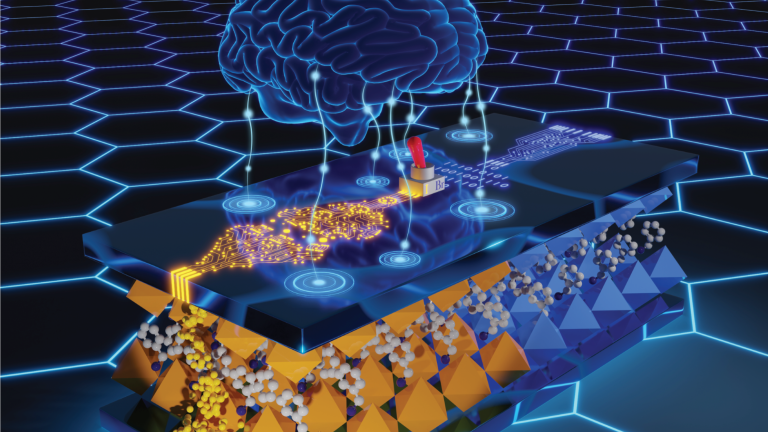
Schematic of a hybrid perovskite material in neuromorphics
References
[1] S. Krause, J. V. Milić*, Commun. Chem. 2023, 6, 151.
[2] J. Thiesbrummel, J. V. Milić, C. Deibel, E. C. Garnett, S. Tao, T. Kirchartz, A. Guerrero, P. Cameron, W. Tress, M. Saiful Islam, B. Ehrler, Nature Rev. Chem. 2026, in press.
[3] L. A. Muscarella, J. V. Milić*, et al. Adv. Mater. 2022, 34, 202108720.
[4] J. V. Milić*, J. Mat. Chem. C 2021, 9, 11428.
[5] W. Luo, G. AlSabeh, J. V. Milić*, in Photochemistry (Eds.: S. Crespi, S. Protti), 2022, 50, 346–370.
[6] G. AlSabeh, M. Grätzel, J. V. Milić*, et al. Angew. Chem. Int. Ed. 2025, e202417432.
[7] W. Luo, J. V. Milić*, et al. Adv. Mater. 2025, 2420143.
[8] M. M. Ganaie, G. Bravetti, S. Sahu, M. Kumar, J. V. Milić*, Mater. Adv. 2024, 5, 1880.
[9] M. Loizos, K. Rogdakis, W. Luo, P. Zimmermann, A. Hinderhofer, J. Lukić, M. Tountas, F. Schreiber, J. V. Milić*, E. Kymakis*, Nanoscale Horiz. 2024, 9, 1146.
[10] (a) M. Zhu et al., Chem. Soc. Rev. 2025, 54, 11719; (b) Adv. Energy Sust. Res. 2025, 2500028; (c) M. Ghasemi, et al. Adv. Energy Mater. 2025, 2502693; (d) L. A. Muscarella et al. Mater. Horiz. 2025, 12, 6124–6132; (e) M. M. Ganaie et al. Mater. Horiz. 2026, in press.
Bio. Jovana V. Milić has been an Associate Professor at the Department of Chemistry of the University of Turku in Finland since September 2024, supported by the Sustainable Materials and Manufacturing (SUSMAT) programme, Research Council of Finland, and European Research Council Starting Grant. She obtained her Dr.Sc. Degree in the Department of Chemistry and Applied Biosciences at ETH Zurich in Switzerland in 2017. She thereafter worked as a Scientist in the Laboratory of Photonics and Interfaces at EPFL, as a Swiss National Science Foundation PRIMA Fellow (since 2020), and as Assistant Professor (since 2021) at the Adolphe Merkle Institute of the University of Fribourg in Switzerland. Her research is centered around bioinspired stimuli-responsive (supra)molecular materials for energy conversion, with a particular interest in photovoltaics and neuromorphic computing for smart and sustainable technologies. In addition to research and cross-disciplinary international collaborations, she is involved at the interface of science, policy, and diplomacy toward sustainable development globally. For more information, please refer to www.jovanamilic.com.
Sergio Padilla-Parra
King's College London
Kari Rissanen
University of Jyväskylä
Venue
The event will take place in
Original Sokos Hotel Alexandra,
Hannikaisenkatu 35, 40100 Jyväskylä
phone: +358 20 1234 642
https://www.sokoshotels.fi/en/hotels/jyvaskyla/original-sokos-hotel-alexandra
Get to know Jyväskylä
Accommodation
Accommodation in Jyväskylä
Benefits for conference participants.
When booking your accommodation, you can use discount code at the following local hotel:
Original Sokos Hotel Alexandra