

Language Campus history
The birth of Kielikopla and the Language Campus: The roots of cooperation and the formation of identity (2008–2010)
The founding of Kielikopla
The year 2008 marked the beginning of a new form of cooperation in language research and education at the University of Jyväskylä with the establishment of a group called Kielikopla (‘the language lot’). The basic idea behind the network was simple but ambitious: to combine the expertise of the Language Center (Kielikeskus), the Centre for Applied Language Studies (Solki), and the Department of Languages in pursuit of common goals. Although there was no official organizational structure yet, the creation of Kielikopla reflected a strong need for cross-institutional cooperation, where linguistics could come together in terms of research, teaching, and development.
One of the key figures behind Kielikopla was professor Maisa Martin, whose vision was to create a multidisciplinary and synergic network of language professionals. Martin had worked in all three main units and had a deep understanding of their operating cultures. This experience gave her an exceptionally good understanding of how different actors in the language field could work together fruitfully.
In addition to Martin, Tarja Nikula-Jäntti (formerly Nikula), Anne Pitkänen-Huhta, Peppi Taalas, Bertold Fuchs, Maija Kalin, Sabine Ylönen, Heli Pekkala, Leena Subra, and Tuula Hirvonen were also closely involved in Kielikopla. At the time Kielikopla was founded, the first five of these individuals held leadership positions in their own departments at the University of Jyväskylä, and some of the other members of the group later rose to leadership positions.
From the outset, Kielikopla's objectives were multifaceted. The aim was to prevent overlapping research at the University of Jyväskylä and to bring teaching and development activities in different units closer together so that the dialogue between research and teaching could be intensified in order to develop language teaching. Another important goal was to build a shared identity by increasing interaction between units, for example through mobility. Kielikopla was a step towards a more coordinated, visible, and influential language education and research community. The systematic nature of Kielikopla was well illustrated by the fact that, early on in its activities, in 2008, Bertold Fuchs, Maija Kalin, and Tarja Nikula were appointed to be responsible for strategic planning.
Culture of cooperation and network practices
Kielikopla was never an official unit, but rather a community united by a common desire and understanding that working together achieves more than competition. The network relied largely on personal relationships, goodwill, and everyday encounters. This was not a weakness but rather a source of strength.
At the heart of the cooperation were joint meetings where ideas were shared and joint activities were planned. Kielikopla enabled researchers and teachers to get to know each other and laid the foundation for later research and development projects. The network also took students into account, who were occasionally involved in various projects, particularly in the field of language technology and teaching experiments.
Towards a Language Campus
Kielikopla was able to create a solid foundation for cooperation through its activities, but from the outset, the network's goal was to raise its profile and increase its visibility. The idea of permanent, organized cooperation was behind the activities.
Martin, who was closely involved in Kielikopla's activities, saw many advantages in combining the different language units, which led her to consider the possibility of establishing a faculty of languages. Establishing a faculty of languages would have enabled a more strategic approach, a clear structure, and the creation of its own budget. The idea of a new faculty was met with skepticism, and so the faculty of languages was not pursued. Although the establishment of the faculty was rejected, Kielikopla was nevertheless able to develop at its own pace, as it did not require official structures or funding for its operations. This enabled a level of agility that traditional institutions were unable to achieve.
Changes were made to the University Law that had a significant impact on the role and status of universities. The aim was to strengthen the special nature of universities. One of the key objectives of the law was to strengthen the legal independence and financial management of universities in order to guarantee their special nature. The new University Law came into force in 2009. Alongside the reform of the University Law, the Ministry of Education and Culture drew up a new agreement for the period 2010–2012. The new University Law and the agreement with the Ministry of Education prompted the University of Jyväskylä to update its strategy. The new strategy, "Quality and Movement," served as a catalyst for the creation of the Language Campus.
The consolidation of the Kielikopla's activities ultimately led to the establishment of the Language Campus in 2010. Peppi Taalas was appointed as its director. The Language Campus initially consisted of the Department of Languages, the Language Center, and the Centre for Applied Language Studies (Solki). The decision to establish the Language Campus was made as part of the university's strategic goal to strengthen the University of Jyväskylä's position as a center of excellence in languages and communication, and the first steering group met shortly after the decision to establish it.
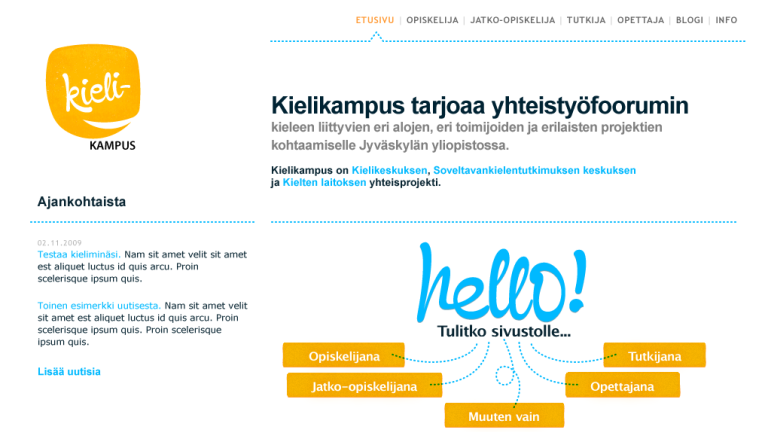
Image: Language Campus website from 2009
The aim of the name "Language Campus" was to describe a broad-based cooperation platform that combines research, teaching, development, and social influence in the field of languages. In the early documents, the core of the vision was poetically formulated as "A common umbrella for languages, language, and communication."
The events leading to the creation of the Language Campus and its early years show how big things can be built from small beginnings when a shared vision, trust, and enthusiasm carry forward. At first, the Language Campus was nothing more than a group of people who believed that the status, teaching, and research of languages could be better developed together than alone.
The Language Campus's activities will become established and strengthened in 2011–2015.
The first Language Campus seminar will see the light of day in 2011
In 2011, the language pedagogy of the Department of Teacher Education (OKL) joined the Language Campus.
From the very beginning of the establishment of the Language Campus – and even before that – it was understood how important it was for its activities to be outward-looking. From the outset, the Language Campus had been active both within and outside the university. Maintaining cooperation between the Language Campus staff and school teachers was considered an important and guiding principle. The aim was to raise awareness of the importance of language education and language research.
The start of the Language Campus seminar tradition is considered a significant turning point in the activities of the Language Campus. The first Language Campus seminar, "Language at the Center of Everything," was held on February 9, 2011. The event was attended by many high-profile individuals. The event was opened by University Rector Aino Sallinen, and speeches were given by Minister of Education Henna Virkkunen, as well as Anita Lehikoinen, Director of the Higher Education and Science Unit at the Ministry of Culture.
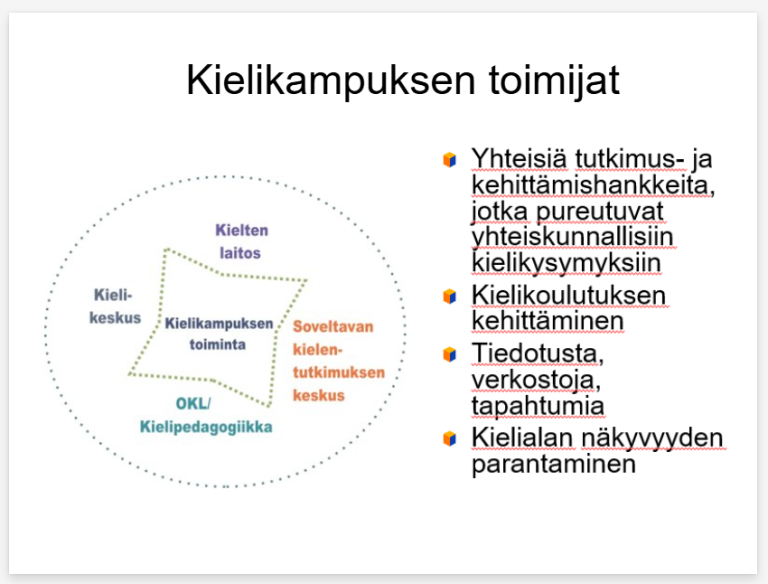
Image: Slide from a presentation at the Language Campus Seminar in 2011
Overall, the seminar brought together a wide range of participants from different departments, disciplines, and fields of work. The event was considered a success, and this success laid the foundation for a tradition of seminars. The themes of the first seminar were the importance of language skills, interaction between departments, and strengthening community spirit. The seminar raised the profile of the Language Campus both within and outside the university. Participants felt that they were part of a new community that enabled the sharing of ideas and new forms of cooperation.
The Language Campus seminars became a tradition, and each seminar has examined language culture and languages from a variety of perspectives. The seminars have not only presented the research, teaching, and linguistics-related work carried out at the University of Jyväskylä, but also introduced current topics in national and international language research. The selected topics also aimed to update teachers' skills and learning methods. Over the years, the topics have included, among other things, the teaching of Chinese language and culture at the University of Jyväskylä, learning materials, invisible multilingualism, popularizing research, and translation.
Alongside the seminar tradition, the Language Campus community gathered for evening get-togethers after the seminars. These gatherings strengthened the sense of community not only by allowing people to get to know each other, but also by rewarding Language Campus participants and others who had promoted language issues.
The Language Campus did not have joint funding; instead, the funding for its activities was agreed upon between the different units' budgets. What was unique about the Language Campus was that people knew each other and wanted to do things together. In addition to funding for joint activities, this also meant that, for example, Language Center staff, who were not originally encouraged to engage in research, were able to participate in research projects through the Language Campus. According to Maisa Martin, this was one of the most significant achievements of the Language Campus.
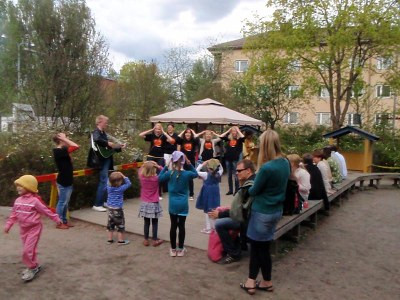
Image: Language showering at the Yläkaupungin yö event in 2011
The Language Campus's activities were based on strong networking, and during 2012 it established its position as an active contributor in the fields of research, teaching, and public interaction. Communication was focused on in the form of a newsletter. The Language Campus participated in the KEOS fair, the LESLLA symposium, as well as the European Day of Languages and the European Week of Languages organized around it. The events brought together teachers, researchers, and students from Finland and abroad. In addition to university-level events, consideration was given to how language choices could be influenced at an early stage. This led to the establishment of a summer camp for elementary school students, which was held from 2012 to 2019.
On March 15, 2012, the Language Campus organized a seminar entitled "The Great Debate on Learning Materials." The seminar discussed how the results of language research often have little impact on the teaching methods and learning materials used in schools. However, it was common knowledge that teachers had expressed a desire for further training and updates on the latest research findings. The extensive research activities of the members of the University of Jyväskylä Language Campus (the Department of Languages, the language pedagogy of the Department of Teacher Education (OKL), the Language Center, and the Center for Applied Language Studies) did not reach potential users. The findings of the seminar and the needs expressed by teachers in various contexts prompted the Language Campus to address this issue.
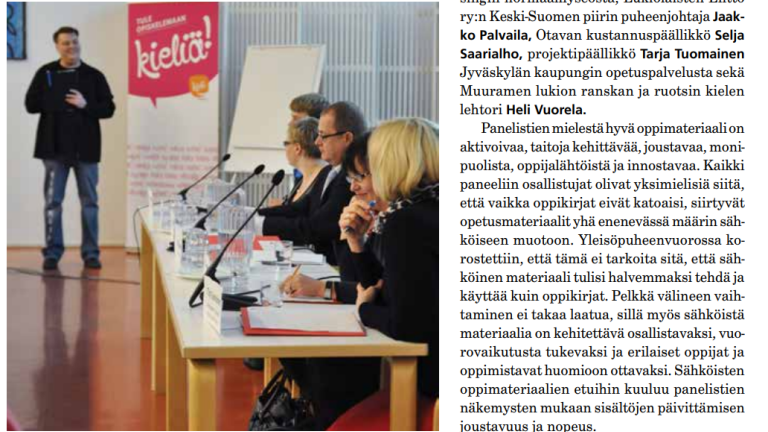
Image: Article about the Language Campus's great discussion on learning materials in Tempus magazine from 2012.
To resolve this issue, it was decided to create a website called Kieliskooppi, which was launched in May 2012. The website made the research results more accessible and raised the profile of language research, making it easily accessible to a wide range of users.
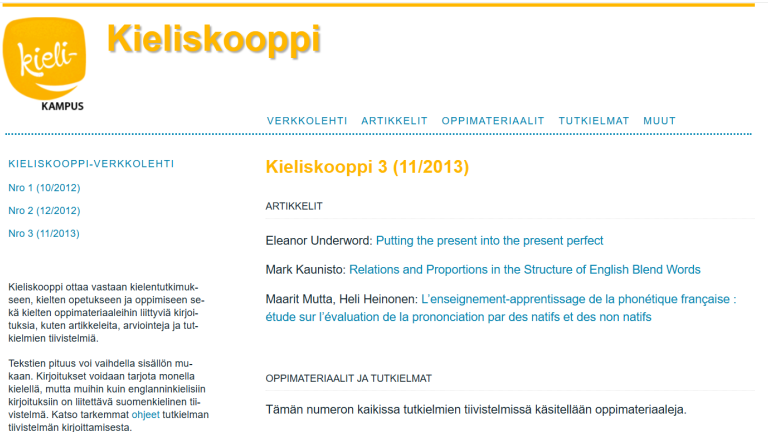
Image: Front page of the online journal Kieliskooppi
In the summer of 2012, the Language Campus website was given a new look, and at the same time, it was decided to revamp the structure and layout of Kieliskooppi (‘language-scope’). As a result of the revamp, Kieliskooppi was published in the form of an online magazine, which made it possible to present all new articles together. The online magazine was intended to be published about six times a year and had its own editorial board, which approved the articles submitted. Three issues of the online magazine were eventually published in 2012–2013, after which the publication gradually faded away.
Image: The Language Campus representing at the Studia fair in 2011
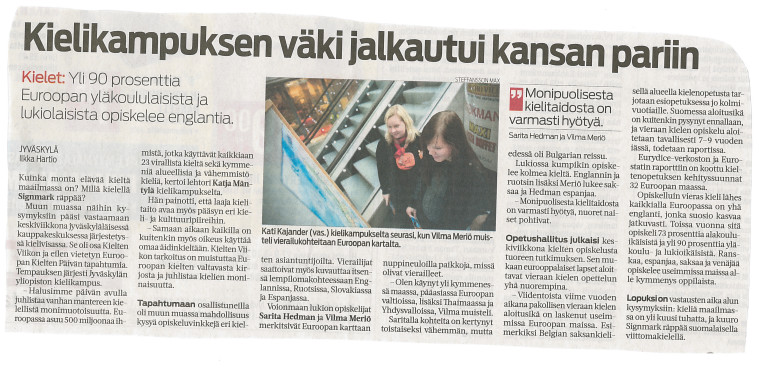
Image: Article about the Language Week event organized by the Language Campus in the local paper Keskisuomalainen from 2012
Social visibility and strategic positioning in 2013-2014
"The Language Campus considers and develops a modern research and education concept based on a research-based view of the language skills, linguistic expertise, and cultural competence needed in the world." -Brochure, 2013
The strong networking model continued in the following years. The Language Campus established its position not only as an internal cooperation forum but also as a social influencer. Measures launched in previous years helped the Language Campus to focus its activities more clearly on the outside world. This focus outside the university community arose from the need to highlight the importance of languages in society and to strengthen language awareness on a broad scale. This was particularly evident in the Language Campus's events and publications, which sought to reach new audiences and popularize linguistic knowledge. Participants from various sectors were invited to seminars, and the programs featured panel discussions with teachers, researchers, and business leaders.
Image: The Language Campus Seminar in 2013
According to anecdotal sources, at one event a business leader stated that he opposed language teaching because he had had a poor Swedish teacher at school. This example shows how strongly personal experiences can influence language policy and the value given to teaching.
At the end of 2013, the Language Campus steering group decided to become the publisher of the Apples - Journal of Applied Language Studies, previously published by the Center for Applied Language Studies (Solki). As its name suggests, it focuses on publishing articles from various disciplines that deal extensively with language in society. Apples is a peer-reviewed, openly available online publication that has been published regularly since 2001.
The steering group appointed at the beginning of 2014 consolidated the activities of both the Language Campus and the steering group itself: the role of the steering group was clarified, strategy work was developed, and events were organized regularly. Alongside the seminars, Svenska dagen in particular became an established part of the Language Campus's annual activities. At the same time, the role of the Language Campus as a network and discussion forum was emphasized. In 2014, a postgraduate working group was launched at the Language Campus with the aim of bringing together doctoral students and young researchers at the Language Campus. The group has been active from the outset, and its activities have been planned and implemented by the doctoral students and young researchers themselves over the years. The Postgrad group offers peer support and academic growth for young researchers.
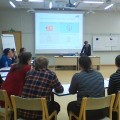
Image: Postgrad Group bootcamp from 2014
One of the most visible initiatives outside the university community was the Kielenkiintoista (‘langueinteresting’) column produced by the Language Campus in the local newspaper Keskisuomalainen. Readers were asked to send in questions about languages and linguistics, which were answered in a way that was easy to understand. Although questions did not always come in as expected, the column was kept going by the experts' own initiative. The purpose of the column was not only to share information, but also to promote interaction and participation: language belongs to everyone, and anyone can participate in linguistic phenomena by asking questions and making comments.
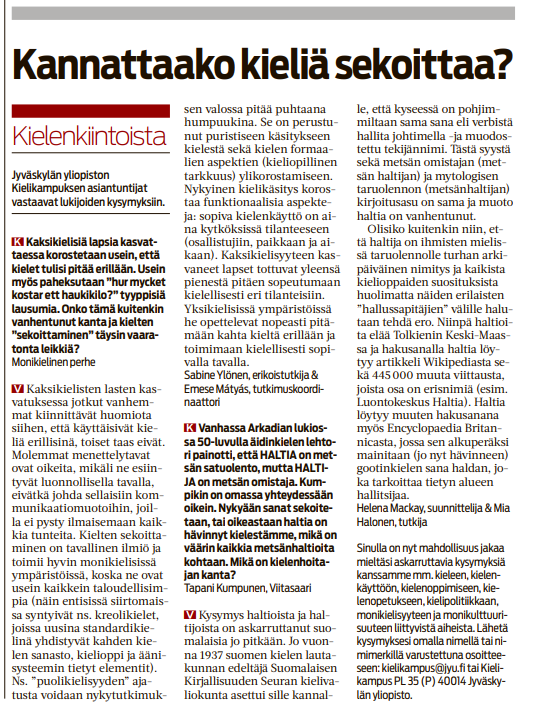
Image: Kielenkiintoista column in Keskisuomalainen
The Language Campus also sought to influence official processes. It actively participated in statements and social debates, often in coordination with other units. This represented a new phase in which the Language Campus moved from its role as an information provider to that of a shaper of social debate and national language policy.
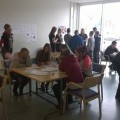
Image: Language Campus at the University of Jyväskylä Science Day event in 2014, aimed at students in upper secondary school and secondary school
During Sabine Ylönen's chairmanship, the Language Campus began to develop its first strategy, which included, among other things:
• increasing language awareness at different levels of education
• participating in initiatives related to language policy
• influencing the development of curricula
• promoting multilingualism and linguistic equality
With this strategy, the Language Campus strengthened its profile as a multidisciplinary community of experts with something important to say in social debates.
Defending multilingualism and influencing education policy in 2015-2016
The years 2015-2016 marked the consolidation of social influence as part of the Language Campus's activities. During this period, the debate on the narrowing of language choices in schools intensified, and the Language Campus actively participated in the debate in favor of diversity in language choices and multilingualism. The Language Campus sought to influence not only teachers but also parents and school administrators in order to spread awareness of the importance of language skills as widely as possible.
The Language Campus also took a stand on the narrowing of the language selection in upper secondary education, which was particularly evident in the case of less commonly chosen languages such as German and French. Strategically, the importance of language awareness was emphasized not only within language subjects, but also as part of the teaching of other subjects. This laid the foundation for the so-called language-aware school.
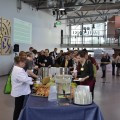
Image: Futuuri! Language summer school in 2015
The Language Campus Action Plan 2015–2016 specified the strategy's priorities in research, education, and social interaction. The program focused on strengthening internationalization with the aim of launching international master's and doctoral programs, building multidisciplinary research programs, and promoting participation in major international projects. At the same time, the aim was to support student-centered learning and joint pedagogical development among teachers.
Within the university, advocacy work was carried out with the rector and the faculties, among others. The Language Campus began to establish itself as a kind of expert institution which, thanks to its informal status, was able to respond to current social issues more quickly and flexibly than official units. Through its activities, the Language Campus wanted to create an understanding that language is not just a subject or a technical skill. Language is part of identity and participation, and it is related to how people understand each other and the world.
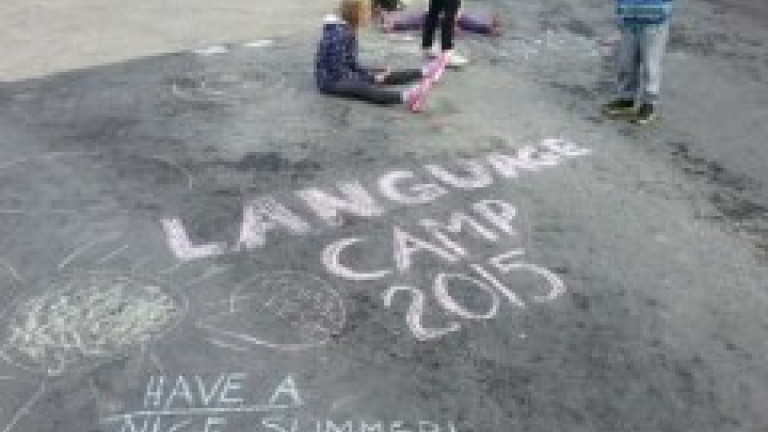
Image: Language camp in 2015
In 2015, a pedagogical working group was established within the Language Campus with the aim of combining the perspectives of language teaching and teacher training. The university community had noticed that the training of language students and teacher trainees was completely separate. The pedagogical working group sought to build bridges between the two types of training by organizing popular workshops. The workshops dealt with language pedagogy, functional language learning, and common teaching solutions. They brought together teachers, researchers, and students, which gradually increased cooperation between the different fields of education.
In early 2015, the Language Campus staff founded a joint staff choir called Mukamas (‘with/as if’). The Mukamas choir provided a new way to strengthen staff cohesion alongside their work. The choir met regularly to rehearse throughout the academic year. Over the years, the Mukamas choir has performed at events at the University of Jyväskylä and in joint concerts with other university staff choirs. Since fall 2022, the choir has been open to all university staff.
Image: Language showering at the Yläkaupungin yö event in 2015
The Language Campus Strategy 2015–2017 emphasized the close connection between research, education, and social interaction. The strategy was based on the University of Jyväskylä's strong tradition of applied language research and the versatile language education that builds on it. The Language Campus wanted to strengthen its position as an internationally recognized research hub and, at the same time, create operating models that would combine research and teaching in a more visible way. Cooperation between units was seen as a resource that created synergy in research, education, and language policy advocacy.
The research strategy emphasized multidisciplinarity and the examination of social changes such as globalization, technologization, and multilingualism. The aim was to support innovative research initiatives and strengthen the international visibility of language research in Jyväskylä.
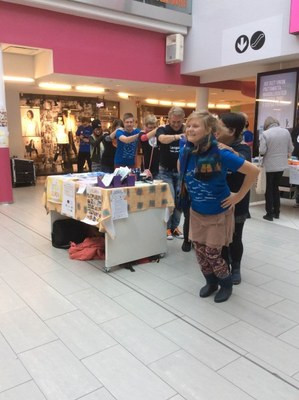
Image: European Day of Languages event at the Forum shopping center in 2016
In terms of societal interaction, the Language Campus sought to highlight the importance of languages and language education to a wide audience. This was achieved, for example, through school and public events such as language showerings and language camps, as well as through active participation in the language policy debate. Seminars, conferences, and publications raised the profile of research and opened up discussion on current issues in language education. The implementation of the strategy was supported by concrete measures, such as joint meetings between researchers and teachers and research visits.
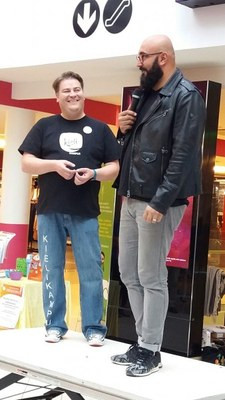
Image: Ali Jahangiri's cheerful stand-up performance was the highlight of the 2016 European Day of Languages event at Forum. Mikko Jäkälä is hosting. (Photo: Eeva-Leena Haapakangas)
Going deeper with strategies and defending linguistic equality in 2017-2018
The Language Campus launched a process to develop a new strategy. The goal was to create a more comprehensive strategy that would shift the focus from the traditional defense of language teaching toward the promotion of multidisciplinary language awareness and linguistic justice. Through its strategic choices, the Language Campus not only reacted to societal issues but also actively sought to reframe them in a new way. The choices and priorities sparked heated debate within the Language Campus, as their content was seen to have a genuine impact on the Language Campus's activities.
"For the first time, we had some real debate about what to include in the strategy. That shows that these issues were truly important." – Mikko Jäkälä
The Language Campus also continued to develop structurally. The work of the steering group was clarified, and responsibilities were distributed more systematically. Cooperation with other units deepened. The university administration began to take the expertise of the Language Campus more seriously when responding to incoming requests for statements and internal development processes, among other things.
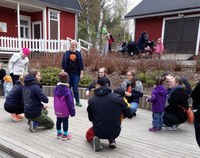
Image: Language showering at the Mäki-Matti Family Park during Yläkaupungin yö in 2017
The mobility of research projects also increased. The Language Campus began to function as a platform where researchers and teachers from different units could find each other and launch joint projects. Although the Language Campus was not an administrative unit, it increasingly functioned as a strategic network that supported career circulation, cooperation, and development.
"The Language Campus was never a hierarchical structure, but it has enabled people to find each other." – Mikko Jäkälä
Internal university advocacy – language-aware campus
Internal influence within the university was strengthened as the Language Campus sought to promote the idea of a language-aware university, where every teacher and student would understand the importance of language as a tool for teaching and learning, regardless of the subject being taught.
This was reflected not only in the themes of seminars, but also in internal training, workshops, and discussion events. The Language Campus also began to appear in the faculties' own strategies and curriculum work.
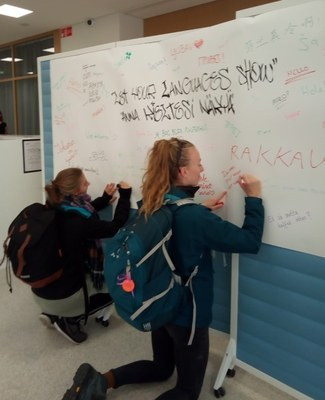
Image: The Language Campus's graffiti wall at the Researchers' Night 2018
In 2017, there were many major changes at the University of Jyväskylä in terms of language studies and research. At the beginning of the year, the Department of Languages and the Department of Communication Sciences were merged into the Department of Languages and Communication Sciences (KiVi). The merger of the departments began in 2016 to ensure a smooth transition to a joint department. In practice, this meant that the Department of Languages was strengthened with studies in communication and journalism.
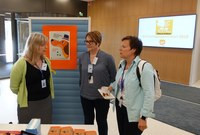
Image: Language Campus Seminar 2018, "A right to language"
The University of Jyväskylä's profile in applied linguistics was significantly strengthened during the 2017–2018 academic year when the University of Vaasa's language education responsibilities were transferred to the University of Jyväskylä as part of a merger. In connection with the transfer, the University of Vaasa's degree-level language education and research became the full responsibility of the University of Jyväskylä as of August 1, 2017. This meant that the teaching and research previously organized by the University of Vaasa, such as English, German, Nordic languages (including language immersion), modern Finnish, and Russian and French as minor subjects, were transferred to the University of Jyväskylä. The transfer involved more than 700 people, including approximately 700 students and 30 staff representatives. The transfer was driven by the government's policy of strengthening the strategic specialization of universities.
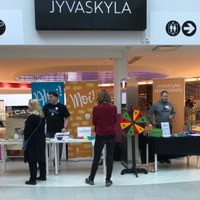
Image: European Day of Languages event at the Forum shopping center in 2018
Digital transformation in 2019-2020
In 2019, also the teacher training school (Norssi) joined the Language Campus, but the Language Campus activities had already been open to teachers at the teacher training school before that.
In 2019-2020, the Language Campus shifted its focus even more strongly towards promoting inclusivity, accessibility, and multilingualism. This reflected broader societal developments: issues related to language teaching and language policy were increasingly examined as part of equality, human rights, and social justice.
The Language Campus strengthened its position as an expert in event organisation. In particular, the seminars and workshops organised in 2019 brought together various interest groups. The Multilingualism Day, European Day of Languages events and language-aware workshops attracted widespread interest. The Language Center, one of the units under the Language Campus, was renamed the Center for Multilingual Academic Communication, or Movi for short.
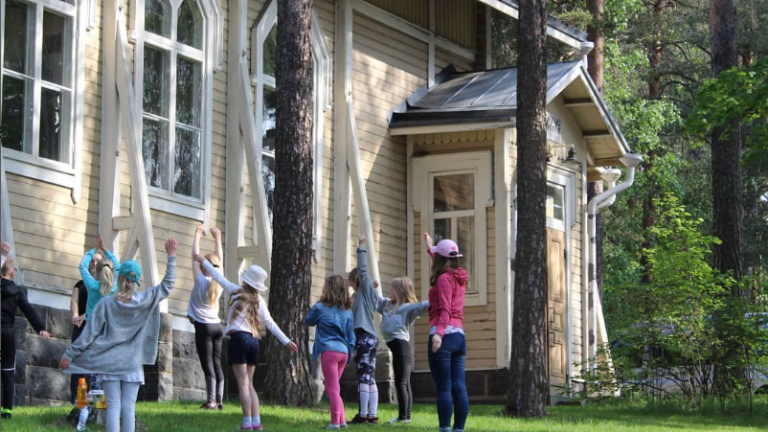
Image: Language camp in 2019
Through these events, the Language Campus not only reached a wider audience, but also built bridges between actors in different fields. For example, cooperation with early childhood education, special education, and adult education deepened, and language awareness began to gain a foothold in these fields as well.
At the end of 2019, internal discussions highlighted the need to look at language more broadly: not only as a subject, but also from the perspective of social justice, accessibility, and inclusion. This idea gave rise to the Equity Team thematic group, which began its work in 2020 within the Language Campus. The thematic group strengthened the range of research projects that had been a strong part of the Language Campus's identity. The Equity Team came to stay as part of the Language Campus's activities, bringing with it new, thought-provoking, and timely content and bringing together experts from different units.
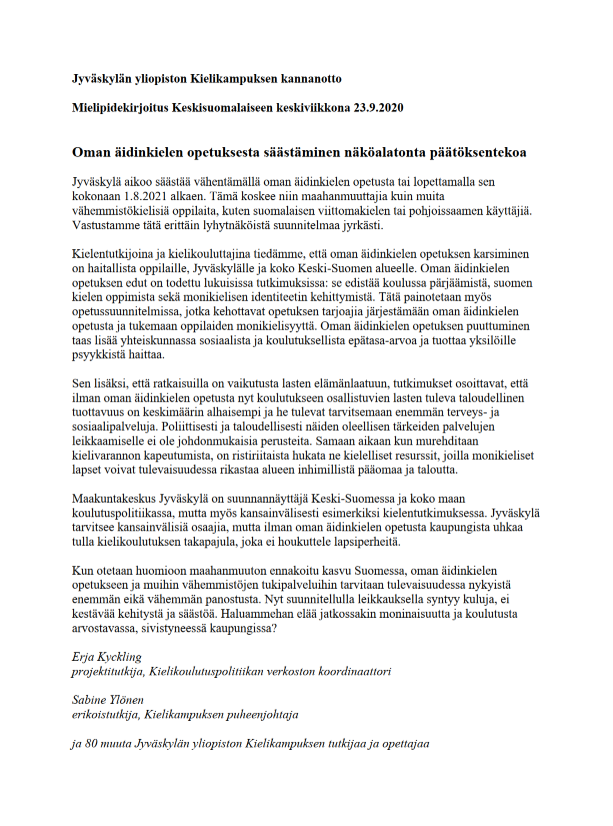
Image: A statement by the Language Campus in the opinion column of the Keskisuomalainen newspaper in September 2020
The Equity Team began organizing training sessions, seminars, and workshops. It evaluated strategic language use and highlighted the experiences of multilingual students. The first events attracted large numbers of participants and raised issues that had not previously been discussed on campus forums. This also increased the need for systematic planning and resource management.
A common understanding gradually developed among the Language Campus actors that language is not only a means of communication but also an essential part of an individual's position in society. The expansion of the Equity Team's work and the themes of its events reflected this change in concrete terms.
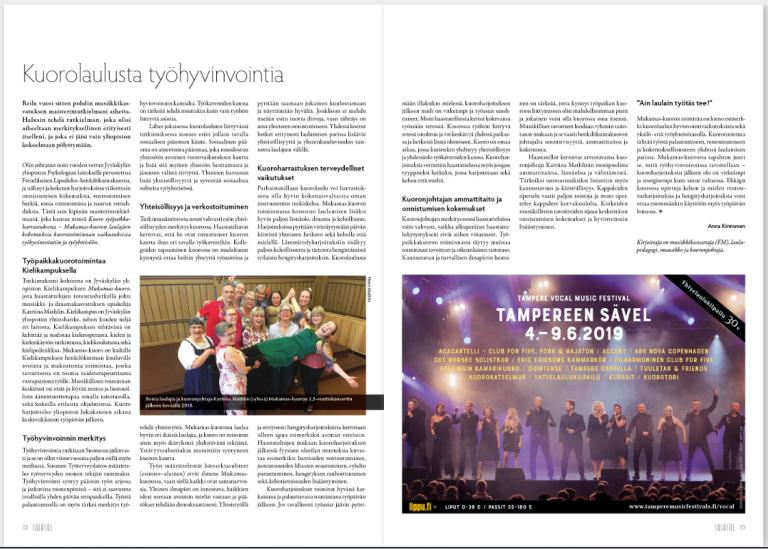
Image: Article about the Mukamas choir in Sulasol magazine 1/2019
The status of minority languages in particular became a prominent theme. The Language Campus organized events that addressed specific issues related to, for example, the Romani language, sign language, and Finland Swedish. These events emphasized linguistic rights and how society can support linguistic diversity.
In addition, the Language Campus participated in discussions on linguistic equality in upper secondary education and language support for higher education students. Special attention was also given to the availability of language teachers and regional inequalities in education. These were themes that the Language Campus members sought to influence through statements and networks.
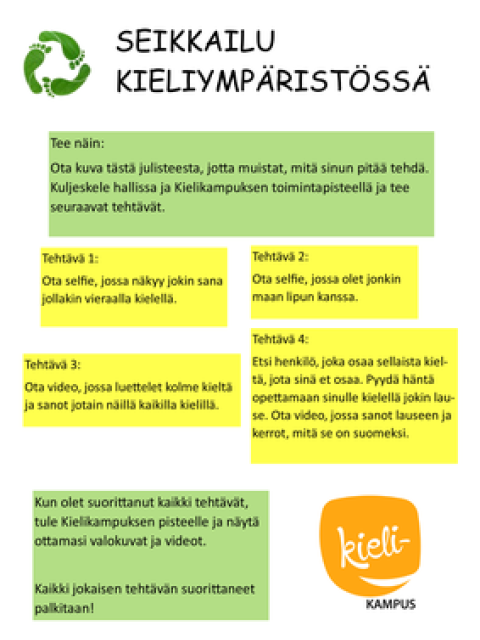
Image: An exercise by the Language Campus at Toukofest 2019
Digitalization and the change brought about by the pandemic
The coronavirus pandemic shut down society in early 2020, affecting all on-site activities and rapidly shifting them to remote formats. This forced change accelerated digital development and also permanently changed the forms of activity. The coronavirus pandemic was in itself a radical social change, and getting used to the new everyday life took its toll.
The effects of the coronavirus pandemic were also visible in the activities of the Language Campus. Events and workshops moved to remote formats, which required quick reactions and new pedagogical thinking. The Language Campus responded to the situation with agility. Digital platforms such as Zoom and Teams enabled new forms of collaboration. Workshops were organized online, and multilingualism was discussed in panels that reached participants from all over Finland.
For example, the Postgrad group, active since 2014, had to revamp its operating methods. Over the years, the group had established a routine of organizing writing and reading meetings, mentoring, and an annual Spring School mini-conference. The events were mainly held in person, but with the coronavirus pandemic, all meetings were suddenly moved online, which changed the nature of the writing meetings in particular. The groups, which had previously met in the campus computer rooms, moved to an online platform, where both the setting of daily goals and the final round were organized remotely. Remote implementation also brought with it a new sense of community. A great example of this was the virtual lunch break, which proved to be a popular way to share news and support each other in a situation where face-to-face encounters had disappeared. Surprisingly, online meetings became more popular than the previous face-to-face meetings, and their frequency was increased to a weekly basis.
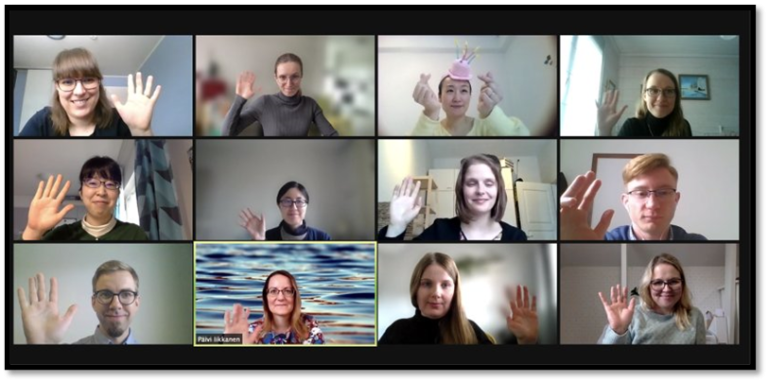
Image: Postgrad Group remote meeting on Zoom, Spring School 2021
More broadly, the Postgrad group found that online activities opened new doors but also brought challenges: accessibility, interaction, and community spirit had to be rebuilt. The Language Campus focused on the principles of digital accessibility and developed its communications to be clearer, more multilingual, and more visually appealing.
The Language Campus deepened its commitment to issues of inclusion, accessibility, and multilingualism, but at the same time had to face a new operating environment due to the coronavirus pandemic. This dual period demonstrated the Language Campus's ability to both deepen its content and renew its operating models. Community spirit and a strong value-based commitment to linguistic justice remained at the core of its activities. Even though the world was changing fast, the Language Campus kept its role as a conversation starter, bridge builder, and enabler of participation.
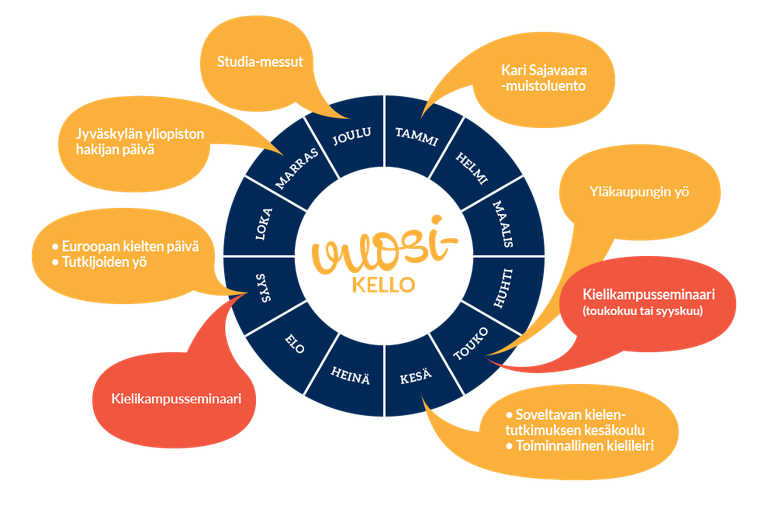
Image: Language Campus annual calendar from the Plone website
The Language Campus Action Plan 2020 continued along the lines of previous strategies, but introduced new emphases on community spirit, communication, and the development of multilingual pedagogy. The aim was to raise the profile of the Language Campus within the university, increase the involvement of staff and students, and strengthen links with local networks. Community spirit was built through various events, ranging from multilingual coffee breaks and pedagogical discussions to language karaoke and movie nights. At the same time, efforts were made to involve students and postgraduate students more visibly in the activities.
The program also emphasized increasing visibility and impact. The preparation of a communication strategy, public events such as Researchers' Night, Yläkaupungin yö, and a children's language camp,* as well as closer cooperation with schools and the third sector, brought the activities of the Language Campus to wider attention.
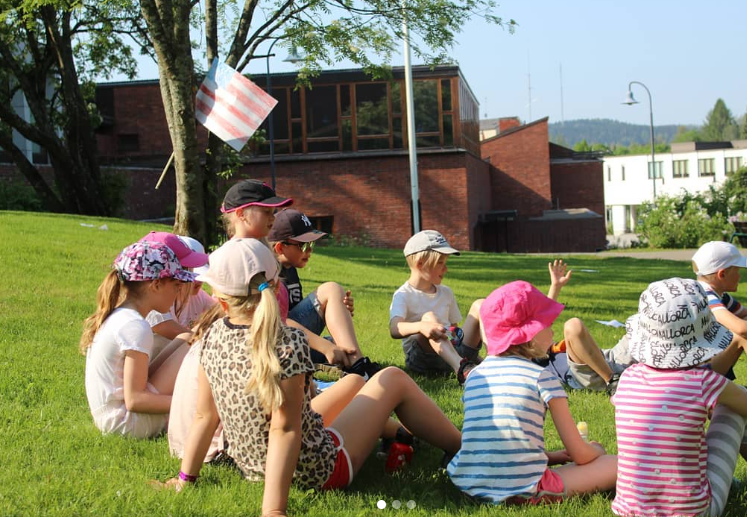
Image: Language camp in 2019
At the international and national level, the Language Campus actively participated in various networks and working groups, and locally, the Edufutura collaboration with the City of Jyväskylä was strengthened.
* The children's language camp has since been transferred to the University of Jyväskylä's JYUniorit program.
Clarifying the identity in 2021-2022
The Language Campus was strengthened in spring 2021 when the Finnish Institute for Educational Research (KTL) joined it.
In the aftermath of the coronavirus pandemic in 2021-2022, the Language Campus entered a new phase. The digital leap of previous years had enabled accessibility and expanded networks, but at the same time, a question arose. What is the Language Campus as a physical and communal space when face-to-face encounters have become less frequent?
This led to a need to review its activities from the ground up. A discussion on updating the strategy began within the steering group. The strategy drawn up earlier in 2017 was still ambitious and fundamentally relevant, but the changed operating environment, such as the pandemic, digitalization, and structural changes in the university field, required a new focus.
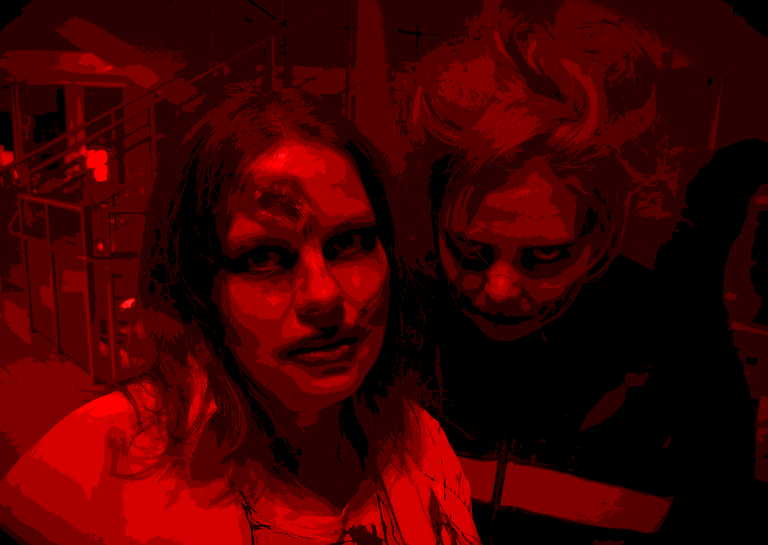
Image: The Language Campus organized a zombie-themed escape room game at the Researchers' Night 2021
Since 2022, the Language Campus has been guided by a new strategy with goals extending to 2027. The four main pillars of the strategy are supporting community spirit, fair and ethically sustainable teaching, research and community spirit, promoting a new conceptualization of multilingualism, and strengthening stakeholder work and expert influence. The basic idea is to operate as a unified Language Campus with broad social visibility and influence. This is reflected in close cooperation with stakeholders, participation in discussion on language policy, and highlighting the importance of diverse language skills. The strategy is also put into practice in practical activities: in funding applications, training events, political and strategic advocacy work, and stakeholder cooperation. Through these activities, the Language Campus strengthens its community, creates networks, and acts as an active participant in discussions on language and language education issues.
In 2022, the tenth Language Campus Seminar was held at the University of Jyväskylä after a two-year hiatus due to the coronavirus pandemic. The theme of the workshop-style seminar was "Future worlds, language, and interaction." Participants gave plenty of positive feedback, especially on the content and face-to-face encounters.
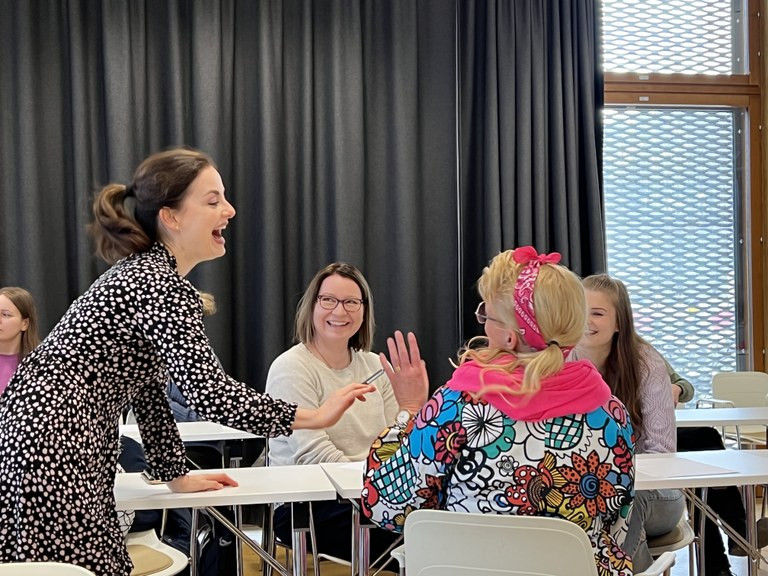
Image: Language Campus Seminar 2022
The pandemic years and the period following them remind us that even when circumstances change, activities based on community values can be maintained and even strengthened. The Language Campus is a constantly evolving center of expertise where language, community, and participation come together.
The return of face-to-face encounters – hybrid events and a new kind of community spirit
As the pandemic began to ease, the need for face-to-face events became more apparent. The Language Campus responded quickly to the easing of restrictions on gatherings by organizing hybrid events in which both physical and online participants were on an equal footing. The European Day of Languages celebrations and language awareness workshops were prime examples of successful hybrid events. These events not only brought back the joy of meeting up, but also sparked new ideas for collaboration.
One significant step forward was the renewal of the Language Campus's communication. The new strategy brought with it the need to clarify the visual identity and communication tools. Visual infographics, language fact sheets, accessible slide sets, and plain language presentations were introduced.
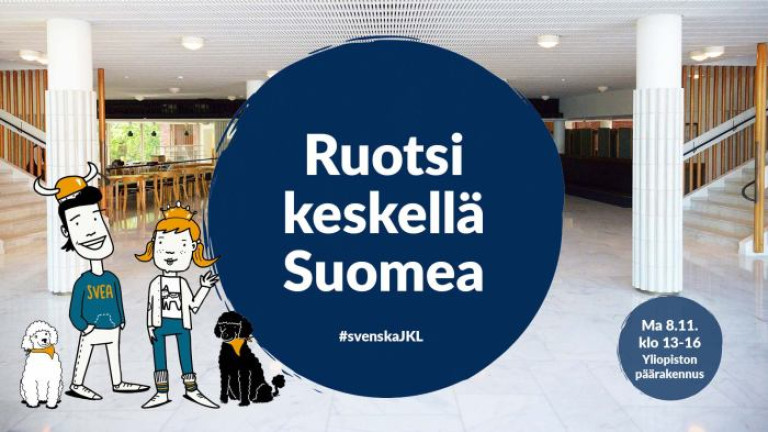
Image: Advertisement for the Swedish in the Middle of Finland event from 2021
This development made it possible to share the information produced by the Language Campus more widely with schools, the media, and non-governmental organizations. Social media communication was also reactivated, and new followers and interaction with communities interested in language were gained, particularly on Twitter and, from 2024 onwards, also on Instagram.
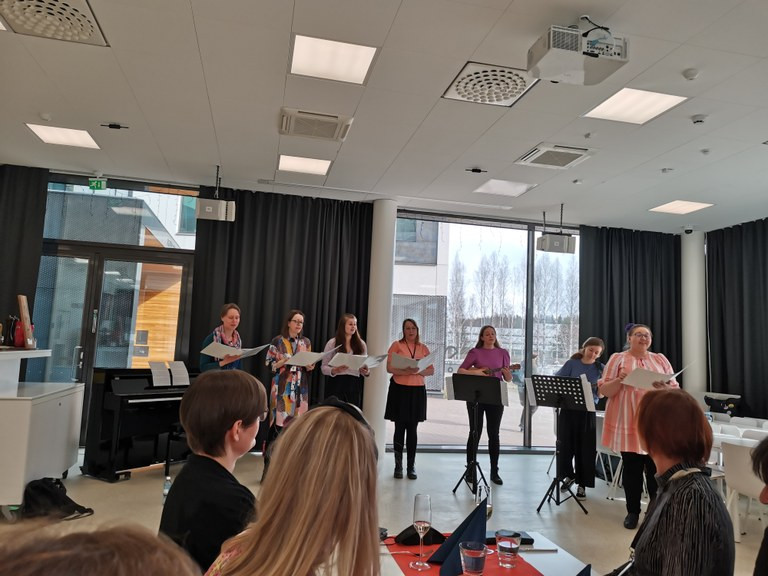
Image: The Language Campus Mukamas Choir performing at the recreation evening of the Language Campus staff in 2022
The Language Campus's latest years of operation, 2023–2025
In 2023, the Language Campus organized its usual events and activities.
The Language Campus strategy defined linguistic justice and inclusion as the theme for the period beginning in 2024. The strategic theme chosen for the term also became the theme for the 2024 Language Campus seminar. The seminar was organized in collaboration with the Multilingualism in School and Higher Education Lab of the FORTHEM Alliance. The seminar was more like a conference in nature, as it lasted two days and included a variety of presentations, workshops, and session presentations.
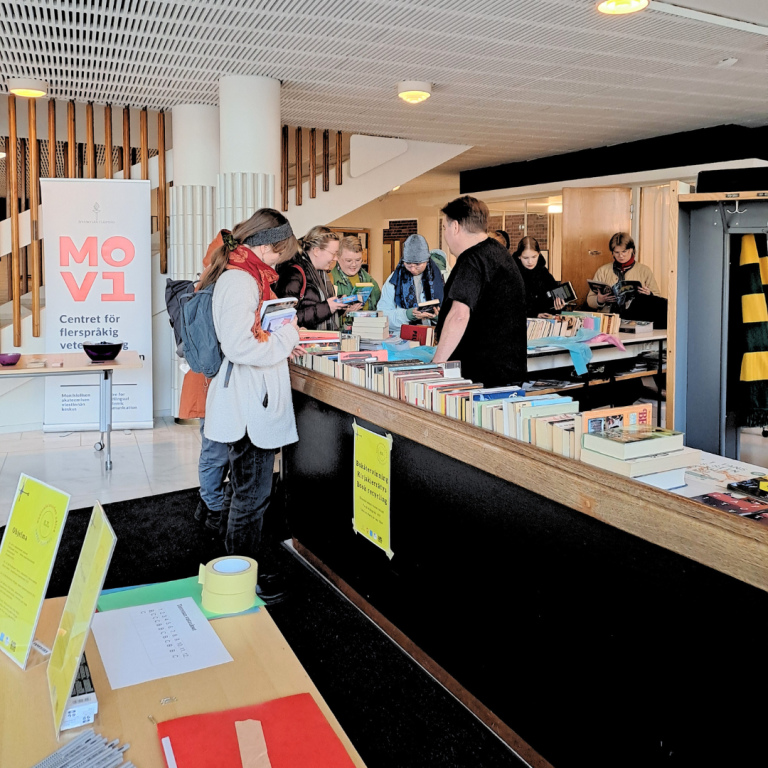
Image: Book recycling at the Finnish Swedish Heritage Day event in 2024
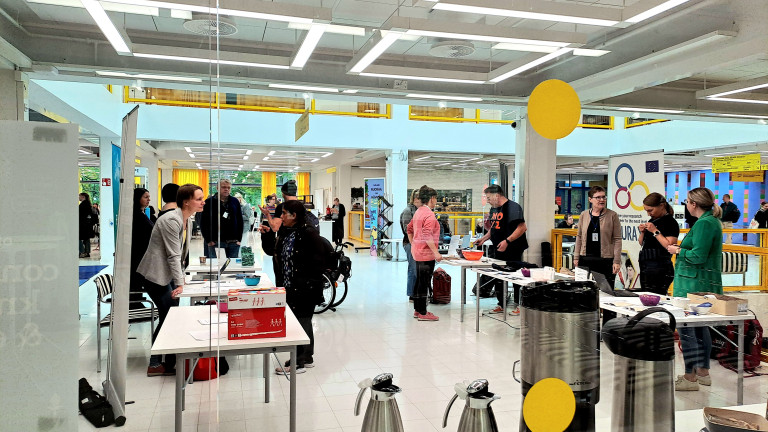
Image: The European Day of Languages event in 2024 was aimed at the university staff
In 2025, during Katja Mäntylä's term as chair, six new thematic groups were established under the Language Campus: Accessibility, language and communication, Minoritized languages, Swedish in the middle of Finland, Language learning and teaching in primary and secondary education, and Finnish as a second language. At the end of the year, it was decided to merge the Minoritized Languages thematic group with the Equity Team thematic group. The activities of the thematic groups were seen as a way of promoting the objectives of the Language Campus in a concrete way at the grassroots level.
In spring 2025, the theme of the Language Campus seminar was "language unites," and its main focus was to bring Language Campus members together in the spirit of topical information and recreation—the program included campus tours, community singing, and voice training among other things.
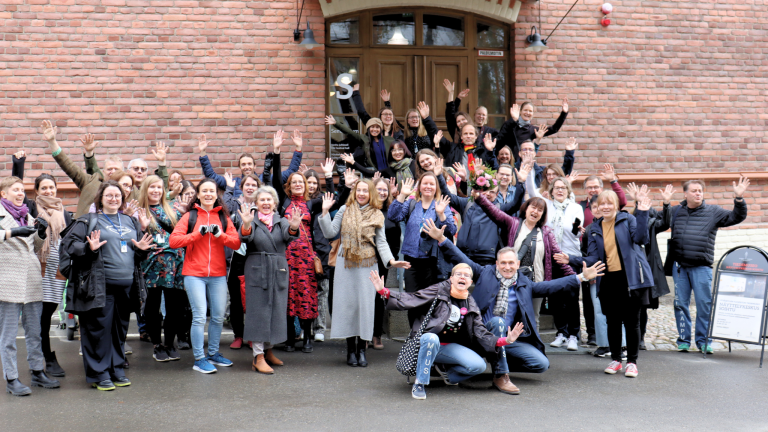
Image: Group photo from the Language Campus Seminar 2025
The theme for the upcoming two-year period 2026-2027 is "language, hope, and joy," and with it the Language Campus aims to highlight the benefits of language and language awareness in society.
To conclude
Although Maisa Martin has not been actively involved in the activities in recent years, she continues to consider the Language Campus important. It provides a structure and network where people from different units working in the same field can meet and collaborate. In addition, she believes that the Language Campus has contributed to Jyväskylä's strong profile as a center for applied linguistics both in Finland and internationally. Maisa Martin hopes that in the future, the Language Campus will focus even more strongly on issues of linguistic equality, clarity of communication, and also on highlighting languages that are widely spoken around the world but receive little attention in Finland.
Timeline
| 2008 | Kielikopla is founded |
| 2010 | The Language Campus is established between the Language Center, the Center for Applied Language Studies (Solki), and the Department of Languages |
| 2011 | The language pedagogy of the Department of Teacher Education (OKL) becomes part of the Language Campus |
| 2017 | The departments of languages and communication sciences merge. The Department of Language and Communication Sciences (KiVi) begins operations |
| 2019 | The Language Center turns into Movi |
| The Teacher training school of Normaalikoulu (Norssi) joins the Language Campus | |
| 2021 | The Institute for Educational Research (KTL) joins the Language Campus |
Language Campus Award winners
| 2011 | Jenni Kankaanpää and Marlen Harrison in recognition of their commendable work in language teaching and research at the University of Jyväskylä |
| 2012 | Katja Mäntylä for her many new initiatives in teaching, extensive networking also outside the university, and encouraging students to participate in the activities of the Language Campus |
| 2014 | Department of Physics for their bold initiative to integrate communication and language studies into subject studies in line with the language policy objectives of the University of Jyväskylä |
| 2016 | Maisa Martin, Maija Kalin, and Tuula Hirvonen |
| 2018 | Päivi Iikkanen for her commendable work for the Language Campus, active and community-minded work among the Language Campus's postgraduate students, and for initiatives and their implementation related to the development of postgraduate studies |
| 2019 | Jyväskylä University School of Business and Economics for promoting language learning in its degree programs |
| 2022 | Johanna Ennser-Kananen for her key role in planning and drafting the Language Campus strategy for 2022–2027 and establishing the Equity Team |
| 2023 | Kristiina Skinnari for acting as a bridge builder between schools and universities, and for participating in numerous language and communication projects and development initiatives |
| 2025 | Sabine Ylönen for her long-term work for the Language Campus |
| 2026 | Mikko Jäkälä for his active and tireless work in support of the Language Campus and the development of its activities |
Here below you can browse through past events and activities of the Language Campus. Note that some of the descriptions can only be found in Finnish.


