
Artificial Intelligence, Neuroscience, and Maker Pedagogy in STEAM Classrooms: EDUHK Delegation Explores Transdisciplinary Learning at FIER, JYU
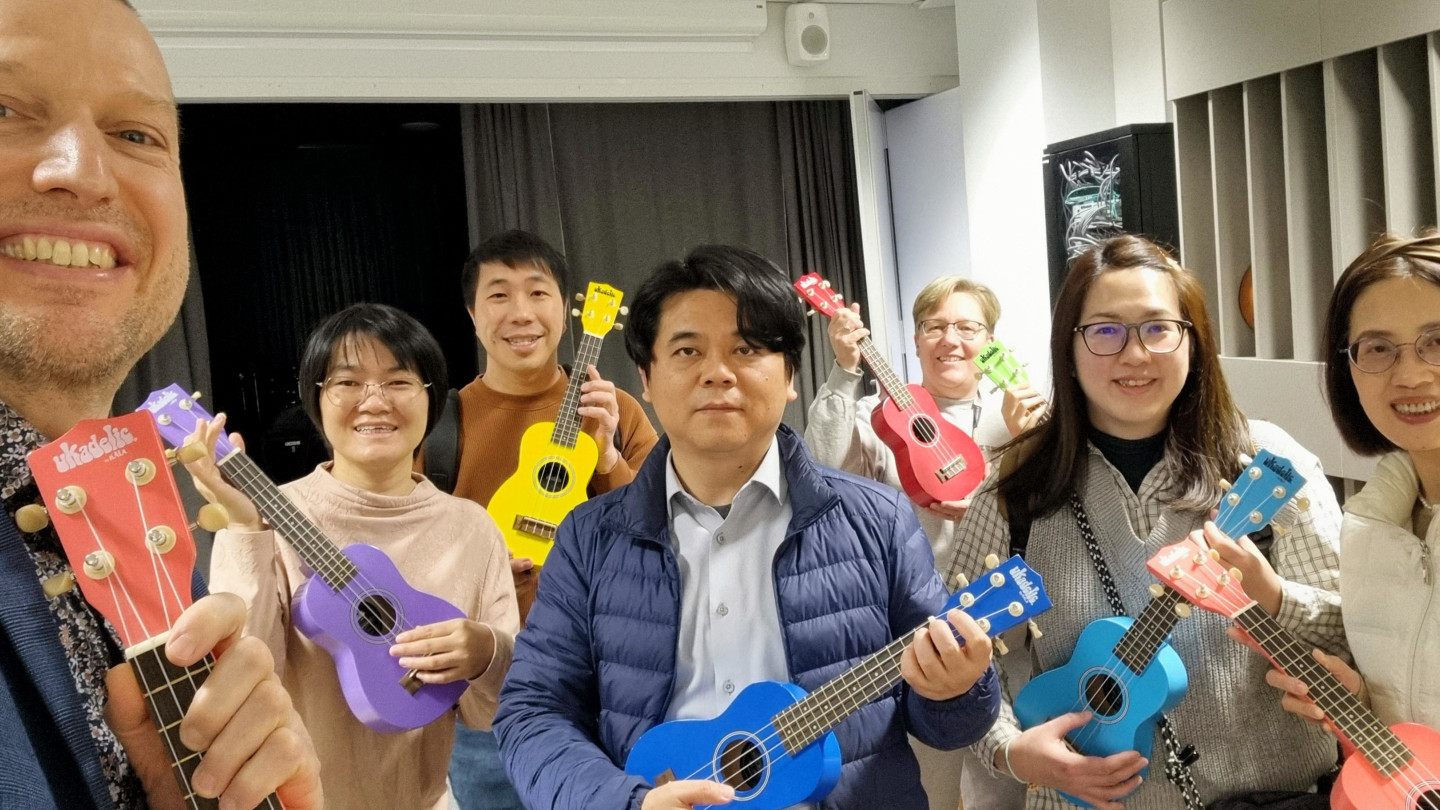
The EduHK delegation included Zhi Hong Peter Wan, Xiaojing Weng, Kason Ka Ching Cheung, Leisi Pei, and Ying Zhan. Their programme combined school-based experimentation, research exchange, and system-level dialogue, offering a compact but coherent view of how STEAM education is evolving across contexts.
Classrooms as Sites of Interdisciplinary Translation: SWEETIE in Finnish Schools
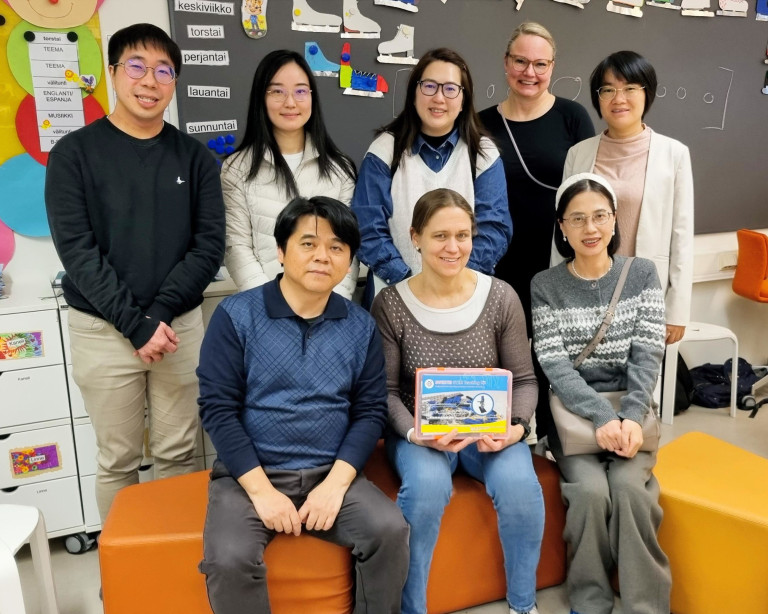
The visit began in classrooms at Kortepohja and Norssi Schools, where EduHK's SWEETIE platform and STEAM toolkit—developed by Zhi Hong Peter Wan—was implemented in live teaching situations. Built on the principle of “STEM for All; STEM by All,” SWEETIE is designed to lower barriers for both teachers and students while maintaining structured, conceptually rich learning pathways.
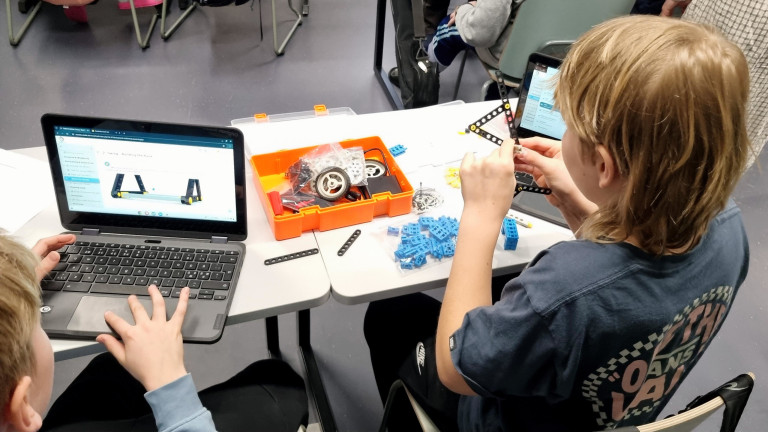
Students worked in pairs, sharing devices and engaging with modular learning kits. The emphasis was on immediacy: minimal setup, rapid entry into activity, and clear progression through tasks. What became visible was not only the functionality of the platform, but its adaptability—how a pedagogical model developed in Hong Kong can operate within Finnish classrooms without losing coherence.
The SWEETIE toolkits remain in Finland and become available for JYU's partner schools.
A Shared Intellectual Space: From Brain to Practice
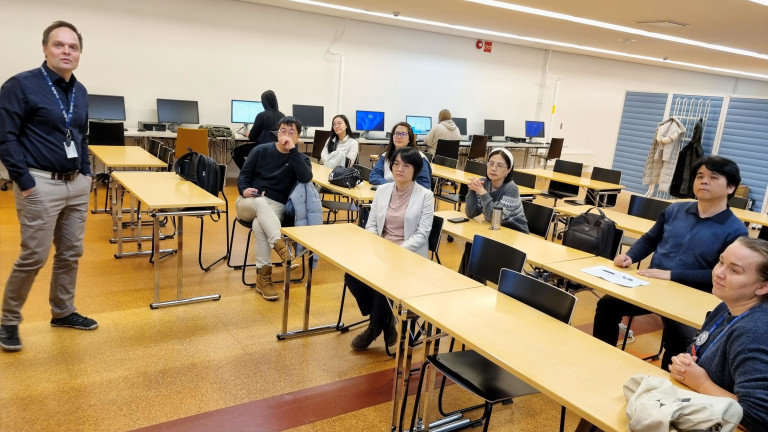
A hybrid seminar was organized during the visit. Hosted by JYU's Senior Researcher, Kristof Fenyvesi and Postdoctoral Researcher, Josephine Lau, the hybrid seminar, From Neuroscience to Maker Pedagogy: Inclusive STEAM Education in the Era of GenAI, extended the conversation beyond classrooms into a broader conceptual field.
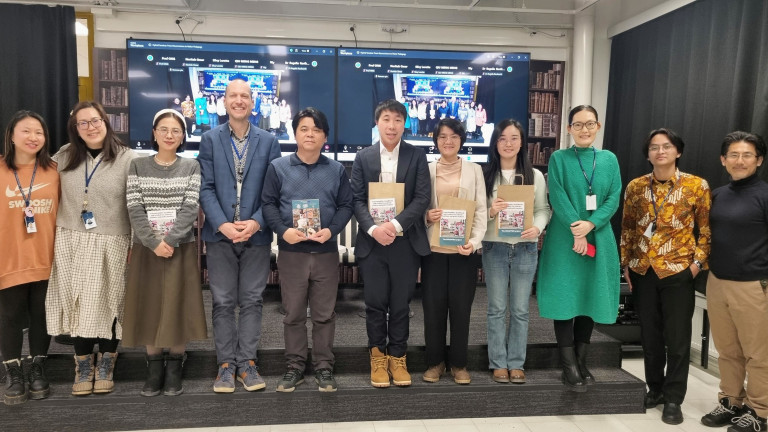
The seminar was supported by JYU’s LUMA Centre and connected to EDUHK’s GRIFE (Global Research Institute for Finnish Education) partnership. GRIFE is an initiative dedicated to researching, adapting, and extending Finnish education approaches in international contexts. Within this framework, the seminar deliberately spanned multiple levels:
- Leisi Pei examined how neuroscientific insights can inform mathematics learning design
- Xiaojing Weng explored maker pedagogy through real-world problems and mentoring
- Kason Ka Ching Cheung reconsidered science identity in AI-mediated environments
- Ying Zhan addressed early childhood STEM and teacher capacity
- Zhi Hong Peter Wan connected these strands through the SWEETIE model and its GenAI extensions
The strength of the session lay in its refusal to collapse these perspectives into a single framework. Neuroscience, pedagogy, identity, and technology were treated as interdependent but not reducible to each other.
The seminar can be viewed on the ILE channel on YouTube:
https://youtu.be/JUokDOpWgrc?si=GgCsj5ZKnmFm52BP
Learning in the Age of AI: Identity, Agency, and Recognition
One of the more precise lines of inquiry concerned science identity under conditions of technological change. As AI systems increasingly participate in knowledge production, traditional models of learning—centred on individual performance and teacher recognition—require reconsideration.
The discussion suggested a shift toward more distributed forms of recognition, where learners engage not only with peers and teachers, but also with AI systems that shape feedback, evaluation, and even authorship. This does not displace existing pedagogies, but it reframes the conditions under which they operate.
Early Childhood and Teacher Capacity: The Structural Question
At the same time, the visit highlighted a persistent structural issue: teacher readiness. As Ying Zhan emphasised, early childhood STEM education depends as much on teacher confidence and support as on curriculum design. Across contexts, educators recognise the value of STEM, yet often lack the resources or training to implement it effectively. Approaches such as SWEETIE address this directly by embedding teacher usability into the design itself—reducing complexity without simplifying the learning.
Between Models: Dialogue with the Finnish LUMA Network
Meetings with the Finnish LUMA network, including Jan Lundell and Tuomo Äkkinen, shifted the focus from classroom practice to system-level organisation. Here, differences became productive. The structured scalability of the SWEETIE model met the Finnish emphasis on teacher autonomy and locally adapted practice. Rather than converging, these approaches clarified each other—highlighting alternative pathways for supporting STEM education at scale.
A Working Model of Transdisciplinary Collaboration
What defined the visit was not any single activity, but the way they connected. Classroom implementation informed research discussions; research reframed classroom practice; system-level exchanges provided context for both.
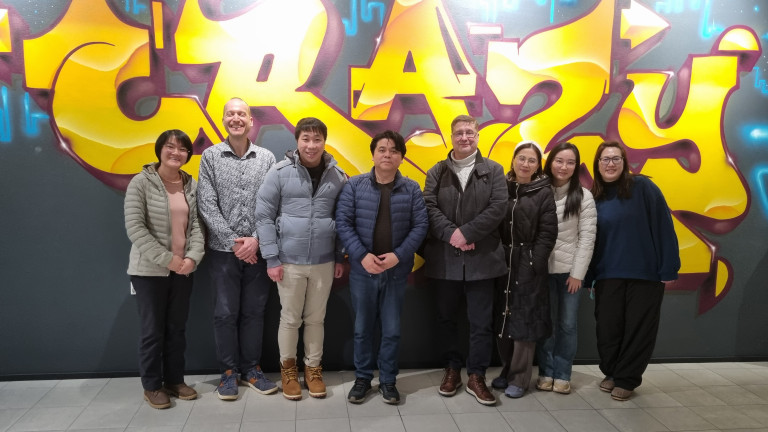
For the Innovative Learning Environments research group (ILE) and its partners, the visit strengthens an ongoing collaboration with EDUHK and the Global Research Institute for Finnish Education. For the visiting team, it situates their work within a different educational ecology—one that both challenges and extends their frameworks.
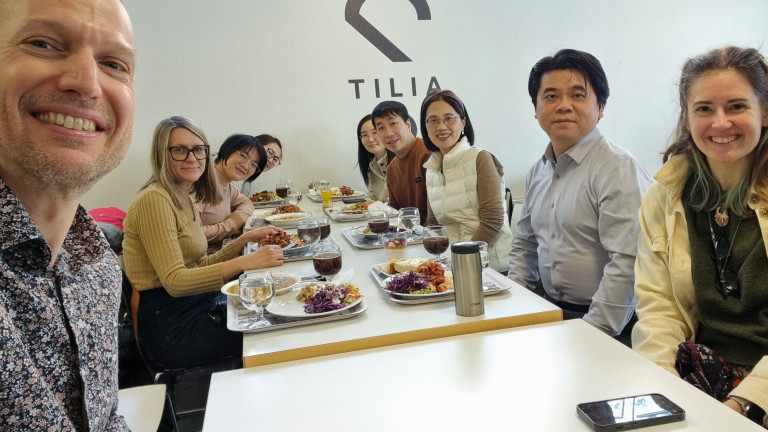
The outcome is not a unified model of STEAM education, but something more useful: a clearer understanding of how different approaches—across disciplines, levels, and systems—can be brought into meaningful relation.


