
Acridinium Recognition Units:
Multi-Responsiveness in Complex Supramolecular Systems
Henri-Pierre Jacquot de Rouville
Institut de Chimie de Strasbourg (UMR CNRS 7177), Université de Strasbourg, Strasbourg, France
Email: hpjacquot@unistra.fr
Equilibria involving multiple interacting life components gave rise to complex assemblies (double helix of DNA, G-quadruplex secondary structures). In addition, living organisms are endowed with numerous remarkable and complex functions (transmission of information, chemical transformations, transport, regulation) mediated by physical and chemical stimuli. In consequence, understanding and mimicking these functions using switchable artificial supramolecular systems is of paramount importance and still remains a
current challenge.
We recently reported bis-acridinium supramolecular receptors able to bind guest molecules (Figure 1).1 Surprisingly, acridinium-based receptors are scarcely exploited in supramolecular chemistry despite their multi-responsive properties. Indeed, they respond to chemical and redox signals by reversibly modifying their shape, their chemical and optical properties.2 This class of receptors exhibits i) self-complementary behaviors leading to the formation of entwined dimers,1a ii) narcissistic self-sorting,1b iii) p-donor/p-acceptor host-guest behaviors and were also studied as selective phase transfer agents in perfluorocarbons.3 In addition, the multi-switching properties of these receptors were investigated to alter their recognition events with guests. An increasing complexity has been achieved by the introduction of acridinium units in mechanically interlocked molecules.4 The dual-readout of the mechanical response of a [2]rotaxane structure was thus probed. Finally, the combination of the acridinium unit to another multi-responsive unit, namely porphyrin core, led to complex supramolecular systems exhibiting more than eight different states.5
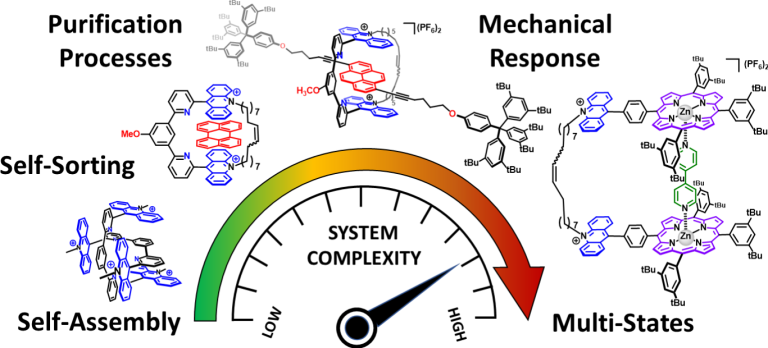
Figure 1. Increasing Complexity in Multi-Responsive Acridinium Supramolecular Systems.
Acknowledgements
The CNRS, the université de Strasbourg, the agence nationale pour la recherche (ANR) and the fondation
Jean-Marie Lehn are thanked for financial support.
References
[1] a) H.-P. Jacquot de Rouville, N. Zorn, E. Leize-Wagner, V. Heitz, Chem. Commun., 2018, 54, 10966–10969; b) H.-P. Jacquot de
Rouville, C. Gourlaouen, V. Heitz, Dalton Trans., 2019, 48, 8725–8730.
[2] H.-P. Jacquot de Rouville, J. Hu, V. Heitz, ChemPlusChem, 2021, 86, 110–129.
[3] J. Hu, J. S. Ward, A. Chaumont, K. Rissanen, J.-M. Vincent, V. Heitz, H.-P. Jacquot de Rouville, Angew. Chem. Int. Ed., 2020, 59, 23206–23212.
[4] J. Hu, S. Adrouche, E. S. Gauthier, N. Le Breton, M. Cecchini, C. Gourlaouen, S. Choua, V. Heitz, H.-P. Jacquot de Rouville, Chem. Eur. J., 2022, 28, e202202840.
[5] A. Edo-Osagie, D. Serillon, F. Ruani, X. Barril, C. Gourlaouen, N. Armaroli, B. Ventura, H.-P. Jacquot de Rouville, V. Heitz, J. Am. Chem. Soc., 2023, 145, 10691–10699.
