
Turning carbon into metal: sustainable photonic applications with all-organic luminophores
Ondřej Mrózek, PhD
Institute of Inorganic Chemistry of the Czech Academy of Sciences, Husinec-Řež 250 68, Czech Republic
Modern photonic applications, such as organic light-emitting diodes (OLEDs) and photoredox catalysis, rely on luminophores that incorporate heavy transition metals. The most prominent examples are complexes of particularly rare metals, such as iridium, ruthenium, or osmium, which are costly and whose mining is environmentally problematic. Moreover, deposits of metals like Ir are geographically concentrated in only a handful of regions, which is associated with geopolitical issues. To enable sustainable and cost-effective photochemistry and to support the rapidly growing OLED market with inexpensive emitters, it is crucial to find luminescent alternatives made from more abundant and widely accessible elements.
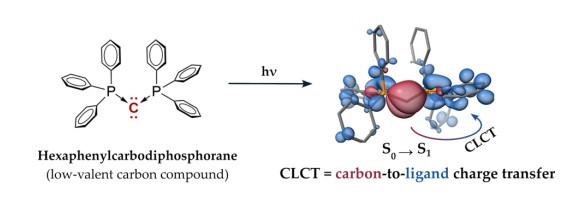
In this contribution, low-valent carbon compounds will be discussed in terms of their remarkable photophysical (and chemical) properties, which, in many respects, parallel trends observed in luminescent metal complexes. Most importantly, the presented low-valent carbon compounds exhibit a new type of electronic transition: carbon-to-ligand charge transfer (CLCT).1 CLCT states promote exceptionally fast triplet formation rates, ultimately leading to an efficient thermally activated delayed fluorescence emission pathway. Triplet-excited states involved in the emission mechanism enable the use of low-valent carbon compounds as sustainable all-organic photocatalysts in triplet-triplet energy and electron-transfer processes. Last but not least, strategies for the chemical stabilization of generally highly reactive free low-valent carbon compounds will be presented.
References
1. O. Mrózek, et al. Inorg. Chem. 2026, 65(10), 5507-5521.
