
Understanding the structure of wood cell walls
Paavo Penttilä
Associate Professor (Applied Material Physics), Ph.D.
University of Jyväskylä, Department of Physics, Nanoscience Center
Wood is a natural material surrounding us everywhere, in the forests and in our daily life. Still, we know surprisingly little on its nanostructure, structural variety, and how the structure links to its properties as a material. I try to understand the structure of wood, how it is formed, and how it gains its properties. I use and develop X-ray and neutron scattering methods, supported by imaging and modeling, to characterize the structure and properties of wood and similar materials. I am especially interested in the structure formation of the cell walls and their interactions with water.
Multiply Entangled Receptors for High-Affinity Anion Recognition in Water
Fabien B.L. Cougnon,a
Department of Chemistry & NanoScience Center, University of Jyväskylä, Jyväskylä, Finland
E-mail address: fabien.b.l.cougnon@jyu.fi
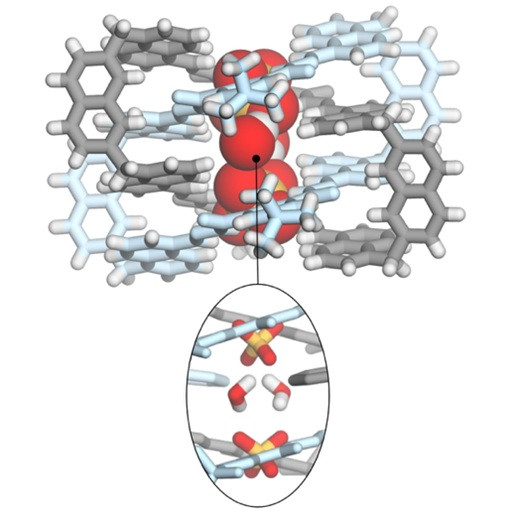
Despite recent synthetic advances, creating multiply entangled molecules with defined functions remains a formidable challenge. In this presentation, I will describe the efforts of our group to address this issue. I will notably present the rational design and straightforward synthesis of doubly interlocked [2]catenanes (also known as Solomon links) that bind sulfate in water with exceptional affinity (K ≈ 107-107 M-1). [1] In this design, mechanical entanglement is exploited to generate highly preorganized yet adaptable binding sites complementary to sulfate. These entangled receptors display an unusual solvent dependence, as they bind sulfate more strongly in water than in organic solvents. This result is particularly noteworthy given the high hydration energy of sulfate, which typically impedes its aqueous recognition. Moreover, sulfate binding canbe monitored through changes in emission of the entangled receptors. These results demonstrate that multiply entangled architectures can be engineered to achieve high-affinity anion recognition in competitive, biologically relevant environments.
[1] K.K. Geyl, A. Belyaev, D. Pál, D. Delcourt, J.S. Ward, P. Permi, V. Gervais, R.M. Gomila, A. Frontera, F.B.L. Cougnon, Chem, in press.
