
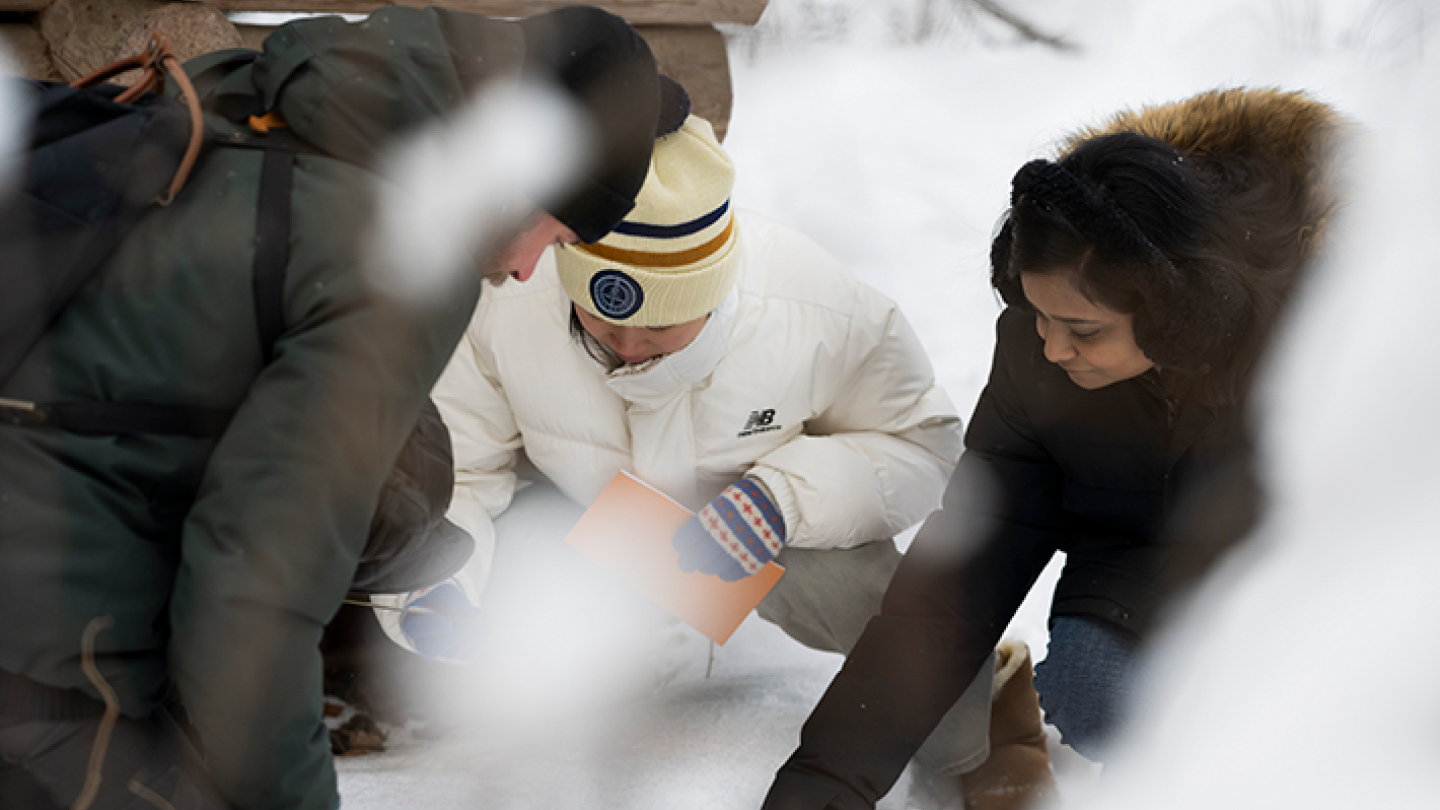
The Winter School explores the evolutionary and ecological significance of Finland's longest season for different groups of organisms. Participants will gain valuable hands-on experience with winter research methods and fieldwork, while working in an environment that may become part of their future research or professional career.
The Winter School consists of the following courses:
- Winter Limnology
- Boreal Winter Ecology
The programme is particularly recommended for students with a background in ecology, evolution, microbiology, aquatic ecology, limnology, freshwater biology, or environmental sciences.
The courses provide advanced-level intensive teaching that combines lectures, field excursions, and experimental field exercises. The language of instruction is English. Participants will have the opportunity to learn from internationally recognised researchers and gain practical experience with field methods used in winter ecology research.
In addition to the academic programme, the Winter School offers the chance to experience the Finnish winter firsthand. Depending on participants' interests and weather conditions, optional activities may include owl-watching excursions, ice fishing competitions, stargazing, and winter swimming. The Winter School is also an excellent opportunity to build international networks and connect with students and experts from Finland and abroad.
The Winter School takes place at the Konnevesi Research Station, located approximately 70 kilometres from Jyväskylä. Tuition is free of charge, but participants are required to pay a participation fee covering accommodation and full board at the research station, as well as the field excursion to Pyhä-Häkki National Park included in the Boreal Winter Ecology course. The fee depends on the length of stay. More information is available on the Winter School website.
Apply and join us for a unique winter experience!
The application period for the Winter School will open on November and it will end on 31 December 2026.
Join us to explore the ecology of winter, gain valuable field experience, and become part of an international community of students and researchers studying life in the North!


