
Art as a way of knowing
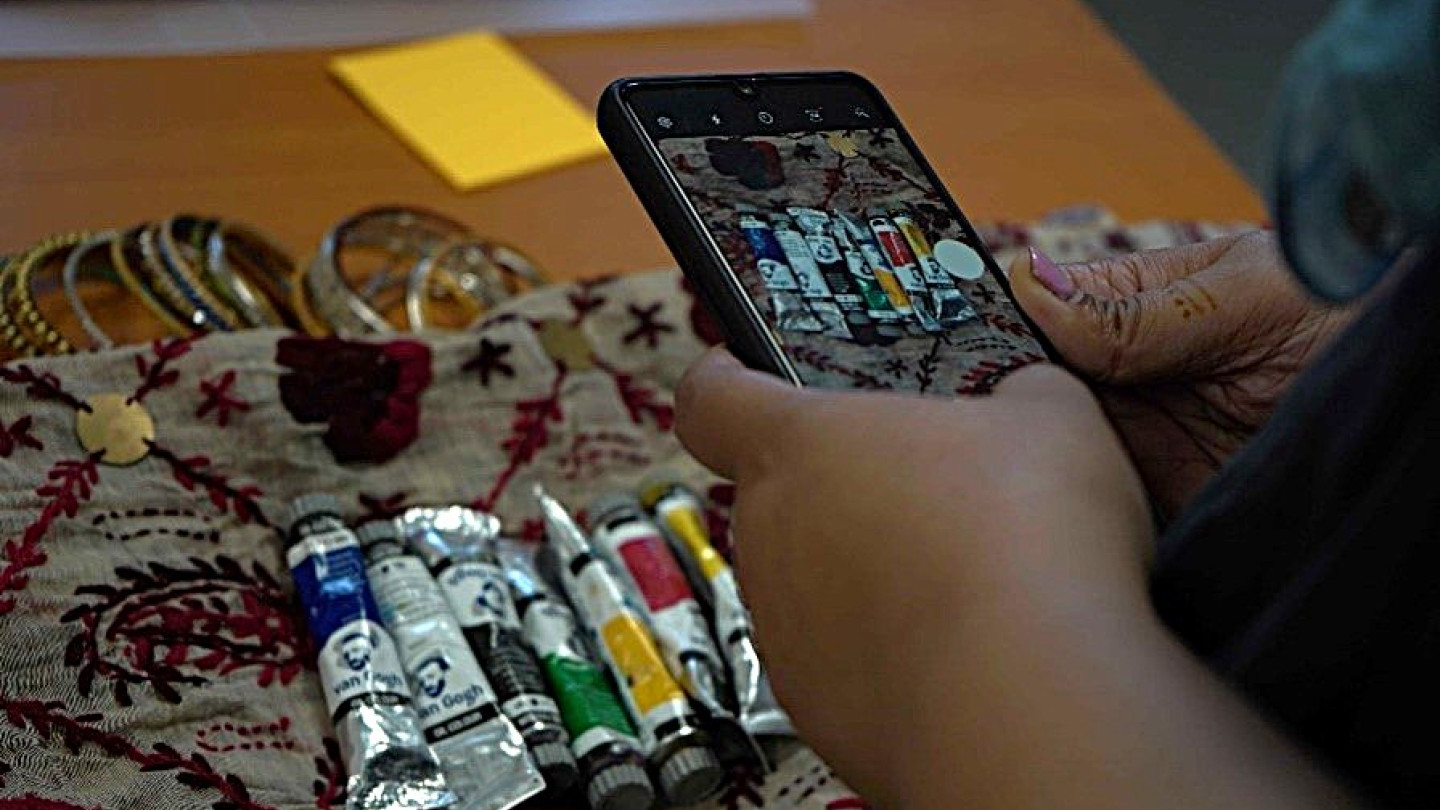
Professor James Simpson from the Hong Kong University of Science and Technology regularly visits the Centre for Applied Language Studies, CALS. This is a snapshot from a longer discussion with Sari Pöyhönen about art as a way of knowing in applied linguistics and participatory research.
Sari: Welcome back to Finland, James. What brings you here this time?
James: I’m here for the month of November, carrying out a short University of Jyväskylä visiting research fellowship. I’m working with you on a research article and a project plan. And most importantly I’m enjoying the calm that the Finnish autumn offers, in the supportive environment of CALS. I’m taking a short break from my work in the Division of Humanities, Hong Kong University of Science & Technology.
Sari: Arts-based research or creative inquiry in general has received attention for the past 10-15 years. When did you begin to be interested in finding out what arts could offer to your research?
James: I’ve always enjoyed photography. But the first time I integrated arts practice was on the Translation and Translanguaging project, which we called TLANG. This was funded by the Arts and Humanities Research Council and ran between 2014 and 2018. Its aim was to explore how communication fails or succeeds when languages and cultures come into contact, in the UK’s superdiverse city spaces. Dr. Jessica Bradley was a member of the project, and while working with her, I really started to understand how language and arts practice could come together in productive combination. Two smaller projects ran alongside the TLANG project, where we worked with people from forced migration backgrounds in Leeds and in the UK alongside a community arts organisation. An important feature of these projects was collaboration. I grew to understand that people were able to successfully express complex ideas such as identity, settlement and social integration through their collaborative creative practice in ways that they wouldn’t be able to do otherwise because of the lack of shared language. I’ve developed this view in my more recent work, where I explore questions of belonging for people from south and southeast Asian backgrounds in Hong Kong. Employing creative practice takes one beyond expression towards a more profound sense of knowing. Expression indicates knowing, and one can know as well as express, through art.
Sari: You used the word ‘profound’. I've been thinking that arts-based research can also make something more concrete. People are surprised sometimes to find what their take on belonging actually was, for example. I have been working with professional artists, with whom we have shared linguistic repertoires, and it has surprised me how some artists don’t want to talk about their creative outputs. Art for them should speak on behalf of itself. Is one willing to share one’s thoughts and emotions, for example? It may become quite a delicate matter and there you need this collaboration, especially to listen carefully, but not just as a “typical” ethnographer, but as someone who is willing to share something personal as well.
James: Yes, absolutely. I think that indicates the importance of interaction. It’s not just a question of “take a photo and come and talk about it”. That was a fairly standard activity that I used to present to students back when I was a language teacher. What we have to consider in this line of research is how we create conditions in which everyone feels that they have an equal right to speak. I suppose what we're trying to do all the time is to gain an insider or an emic perspective on these topics we are exploring through the arts. One has only to read the paper or listen to the news to see how dehumanised people are, who have some sort of marginal and minoritised position. I think in our case using art-based methods to gain those insider perspectives and to bring the personal to the fore is absolutely crucial as a kind of corrective.
Sari: Thank you James for the discussion. And we look forward to welcoming you to Jyväskylä and to CALS again next year and in the years to come!


