
Dissertation: Laser light can boost and stabilise negative ion beams
What did you study?
I investigated how laser light affects a caesium sputter ion source. In this device, caesium ions strike a solid sample called a cathode, releasing atoms from its surface. Some of those atoms gain an extra electron and are extracted as a beam of negative ions. By varying the laser wavelength, power and pulse timing, it was examined how the beam responded under different operating conditions. I measured the beam current and cathode temperature together to distinguish the immediate effects of laser light from the slower effects of heating.
What were the results of your research or what is its main outcome?
Under selected operating conditions, laser illumination increased the bromine negative-ion beam current to about nine times its initial value. The experiments revealed two responses: a rapid change associated with electron emission from the cathode and a slower change linked to heating and the condition of the cathode surface. I found that laser illumination in the 440–460 nm range increased the beam current for several negative-ion species. The experiments showed no measurable additional increase when the laser was tuned to caesium resonance wavelengths. For copper, the experiments showed that the temperature mattered for sustaining the beam. Under the conditions studied, cathode temperatures of about 100–120°C favoured sustained beam current, while further heating reduced it.
How can the results be applied? What new insights did the research contribute?
The findings show how accelerator operators could use laser light to adjust beam intensity. Short pulses can limit heat build-up, and adjustments to laser power can help compensate for gradual drift in beam current. The research also helps explain why a beam can increase as soon as the laser is switched on and then decrease as the cathode heats up. Understanding how temperature and caesium on the cathode surface affect the beam can guide the choice of laser settings for different elements.
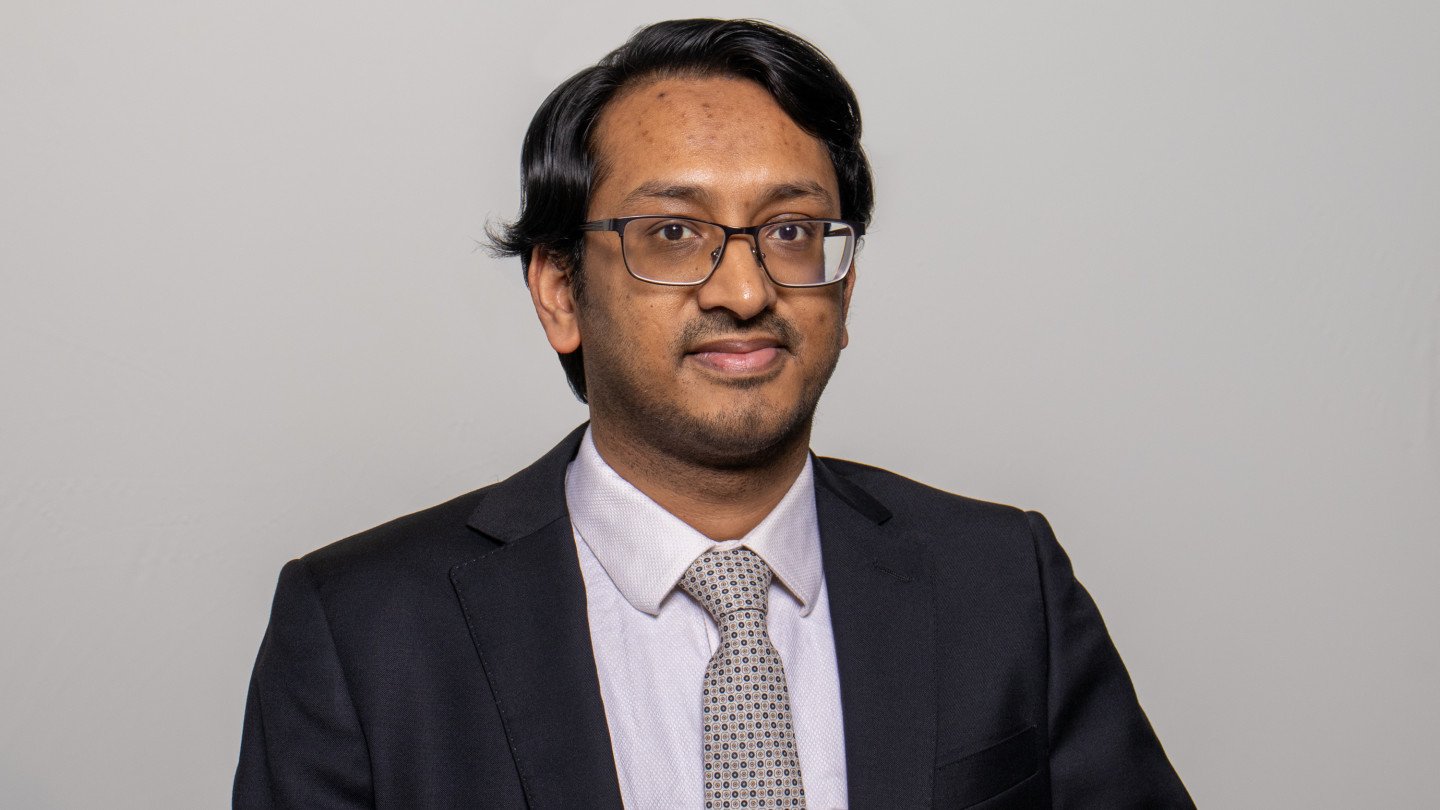
The doctoral dissertation in physics by M.Sc. Akbar Hossain, Laser-Assisted Cathode Conditioning and Optimisation of Negative-Ion Production in a Caesium Sputter Ion Source, will be publicly examined on Friday, 11 December 2026 at 12:00 in auditorium KEM2, Ylistönrinne, University of Jyväskylä.
Opponent is Dr. Mark Roberts (Woods Hole Oceanographic Institution) and Custos is Senior Lecturer Mikko Laitinen (University of Jyväskylä). The language of the public defence is English.
Further information: akbar.a.hossain@jyu.fi

