
Dissertation: Ligand design is a powerful tool to modify the reactivity and properties of metal complexes (Suvinen)
In chemistry, ligands refer to molecules or ions that bind to a central atom or ion to form coordination compounds. Although the number of different metal centres is quite limited, the number of ligands is virtually unlimited, as they are composed of non-metallic elements, such as carbon, nitrogen, oxygen, and hydrogen, which form a huge variety of molecules.
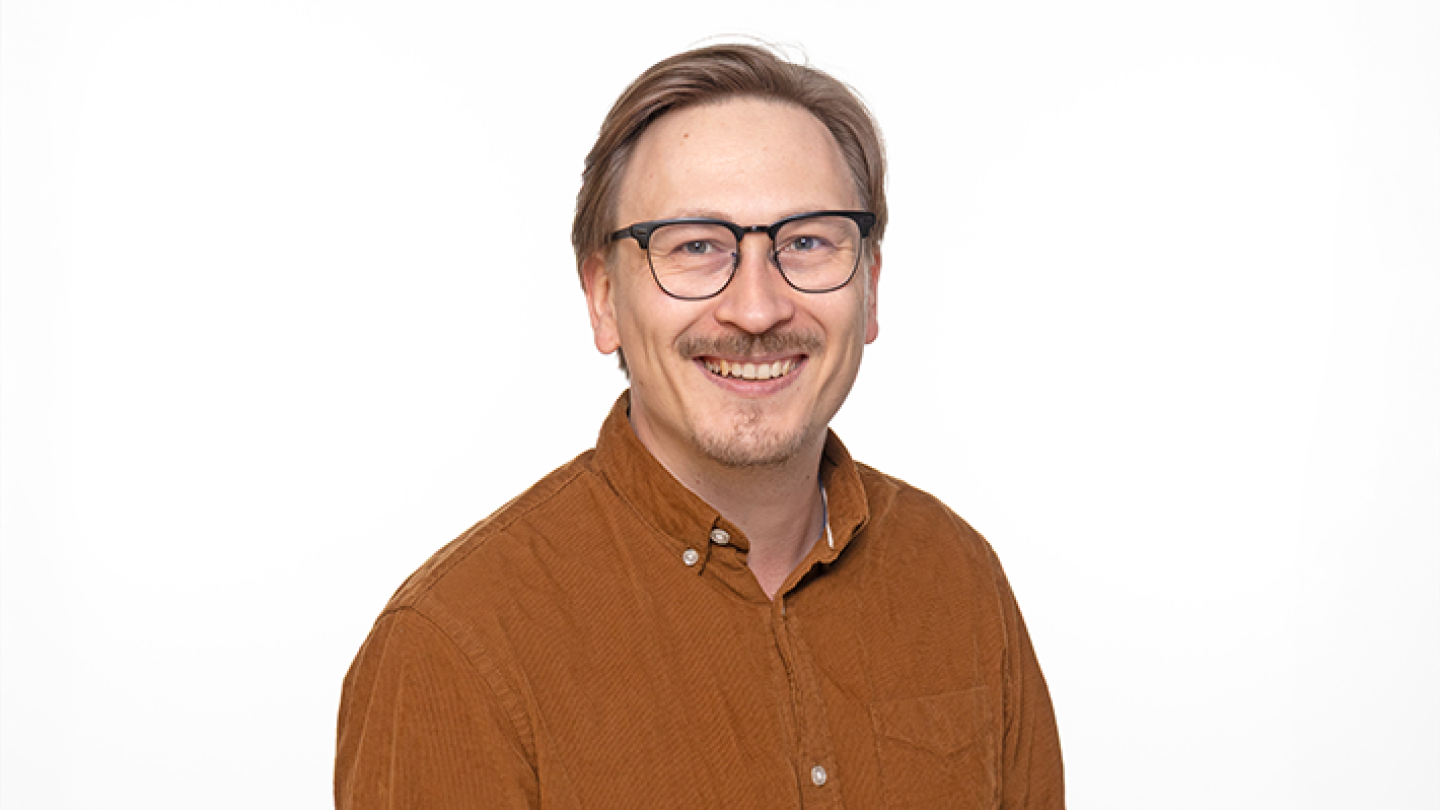
- The development of new ligands is important, as they allow chemists to regulate the structures, properties, and reactivities of coordination compounds, says Doctoral Researcher Roope Suvinen from the University of Jyväskylä.
A new carbene ligand enables extraordinary structures
Suvinen and co-workers developed a new bis(ligand) based on cyclic (alkyl)(amino)carbenes that can bind to metal centres at more than one point. The coordination compounds formed through this route, called chelates, are typically very stable and have many applications, for example, in industry, medicine, or chemical research.
- The set goal was not exactly easy to achieve. However, in collaboration with the research group of Professor Roland Roesler (University of Calgary), we solved all the problems and ultimately reported the first example of a chelating bis(cyclic (alkyl)(amino)carbene) ligand, tells Suvinen.
The coordination ability of the new ligand was demonstrated through an array of transition metal complexes it formed. Of these, the structurally very bent two-coordinated nickel(0) complex proved to be of particular interest. Similar metal complexes are important in catalysis, especially in coupling reactions in which new carbon-carbon bonds are formed.
- It will be interesting to see how the ligand framework developed in our study will be utilised in different applications and what kind of other chelating ligands based on cyclic (alkyl)(amino)carbenes will be reported next, says Suvinen.
Carbenes are more than just ligands
Suvinen also investigated the reactions of a cyclic (alkyl)(amino)carbene with hexachlorophosphazene. The results showed that the employed carbene reduced hexachlorophosphazene even without an external reducing agent, forming phosphorus-nitrogen compounds that behaved like phosphine ligands. The work focused on modelling the photophysical properties of the synthetised compounds, such as their ability to absorb light, and their associated structure-property relationships.
- Although hexachlorophosphazene was first reported in the early 1800s and the compound has been used as a starting material in the manufacture of polymers, very little was previously known about its reduction chemistry. The results of our study, conducted together with Dr. Etienne LaPierre (University of Victoria), showed that the reduction can be done in a very unusual way, and that the reactivity and properties of the compounds produced are very interesting, states Suvinen.
Small changes, huge impact
In his dissertation work, Suvinen also examined the reactivity of an ionic germanium compound stabilized by a cyclic (alkyl) (amino)carbene ligand with carbon dioxide. The results of the study showed that the nature and reactivity of the key germanium-carbon bond changes when the anion is isolated from the cation, for example, by encapsulation. The isolated anion reacts with carbon dioxide by [2+2] cycloaddition, while the interactions between the ion pair result in the formation of a coordination bond.
- Even very small changes in the chemical structure of a compound can have a huge effect on its reactivity. The more we understand these connections, the better we can predict, explain, and modify the behaviour of compounds and utilise them in various applications, summarises Suvinen.
M. Sc. Roope Suvinen defends his doctoral dissertation "Experimental and Computational Investigations of Cyclic (Alkyl)(Amino)Carbenes and their Transition Metal and Main Group Complexes” on June 26th 2026 at 12:00 in Agora Auditorio 2 (Ag B105). The opponent is Professor Jason D. Masuda (Saint Mary's University, Canada) and the custos is Professor Heikki M. Tuononen (University of Jyväskylä). The defense will be held in English.
The dissertation is available online at: https://jyx.jyu.fi/jyx/Record/jyx_123456789_111617?sid=472971919


