
From biology to safety technology: Moona Huttunen develops multidisciplinary expertise in engineering
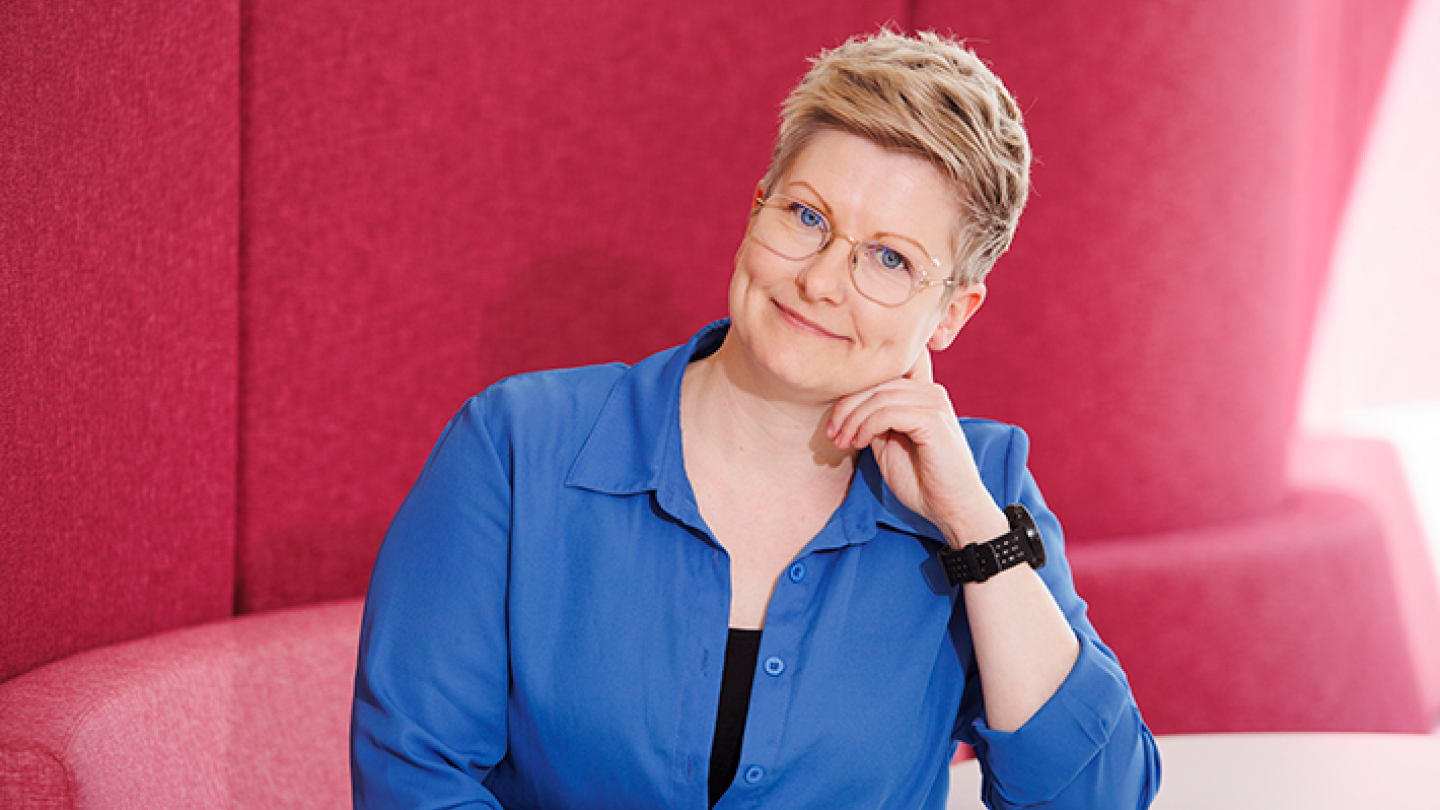
Originally from Jäppilä, Moona Huttunen started her biology studies at JYU in 2004. From an early stage, she knew that she was interested in cell and molecular biology, and she eventually completed her doctoral degree in this field in 2014.
After that, she pursued an academic research career abroad. She worked as a postdoctoral researcher in London at the University College London (UCL), continuing her research in virology and specialising in high-risk viruses. However, the onset of the COVID-19 pandemic changed her plans unexpectedly.
“At the beginning of the pandemic, I took a flight to Finland just to visit, before the borders closed,” says Senior Lecturer Huttunen. “Ultimately, I never returned to Britain.”
Huttunen worked at the University of Turku on COVID-19 research for the next two years. In 2022, she returned to Jyväskylä as a virology researcher. Although research has always been at the core of Huttunen’s career, teaching and guidance have also been an integral part of it. The new Master’s Degree Programme in Technology for Safety and Risk Management at the University of Jyväskylä enabled her to combine research and teaching in a new way.
What is safety technology?
Safety technology is a field of science that evokes a wide range of images and requires us to examine phenomena from many different angles. According to Huttunen, it is precisely this aspect that makes it interesting.
“When I talk about my work with my friends, colleagues or parents, I notice that safety technology means different things to different people,” she says. “For some, it refers to defence industries. For others it may refer to health, and for some to occupational safety. And all of these are true.”
Huttunen emphasises that safety is not just about regulations, warning signs or given guidelines.
“Safety research is a specific field of science where safety issues are addressed from various perspectives,” she says. “For example, the focus can be on preventing hazardous situations and managing risks. We can also learn from past accidents. In Finland, safety research is conducted at the Finnish Safety and Chemicals Agency (TUKES), the Finnish Institute of Occupational Health (TTL), the Radiation and Nuclear Safety Authority of Finland (STUK), and the National Institute for Health and Welfare (THL). The University of Jyväskylä is also involved in researching safety culture.”
The degree programme is based on natural sciences
At JYU, the Master’s Degree Programme in Technology for Safety and Risk Management is firmly rooted in natural sciences. This type of education demonstrates that different fields of science complement one another to provide a more comprehensive understanding of the world.
“Our expertise is particularly strong in physics, chemistry, biology and nanosciences,” says Huttunen. “We draw on these for knowledge related to materials and phenomena often associated with safety issues.”
Throughout the degree programme, core scientific knowledge is integrated with safety research perspectives, including risk assessment, human factors, safety management and legislation. Safety cannot be addressed as a technical issue alone because it always involves people, decision-making and management.
“Safety is a popular theme, and for a good reason. As technology advances, safety issues become increasingly complex, so we need skilled professionals who can understand broader phenomena and integrate science, technology and human aspects.”
Corporate collaboration
Guest lectures and corporate collaboration are an essential part of technology education. The aim of this programme is for students to complete their master’s theses in cooperation with a company or organisation. This would also help students gain skills needed for working life and find employment.
“We want our students to have strong connections to the world of work,” says Huttunen. “We are constantly in contact with companies and organisations. We look for cooperation partners and ask them what competencies are needed in their field and how multidisciplinarity is reflected in their activities.”


