From Open and Distance Learning to Immersive STEAM: UPOU and JYU ILE Build a Longer Research Horizon
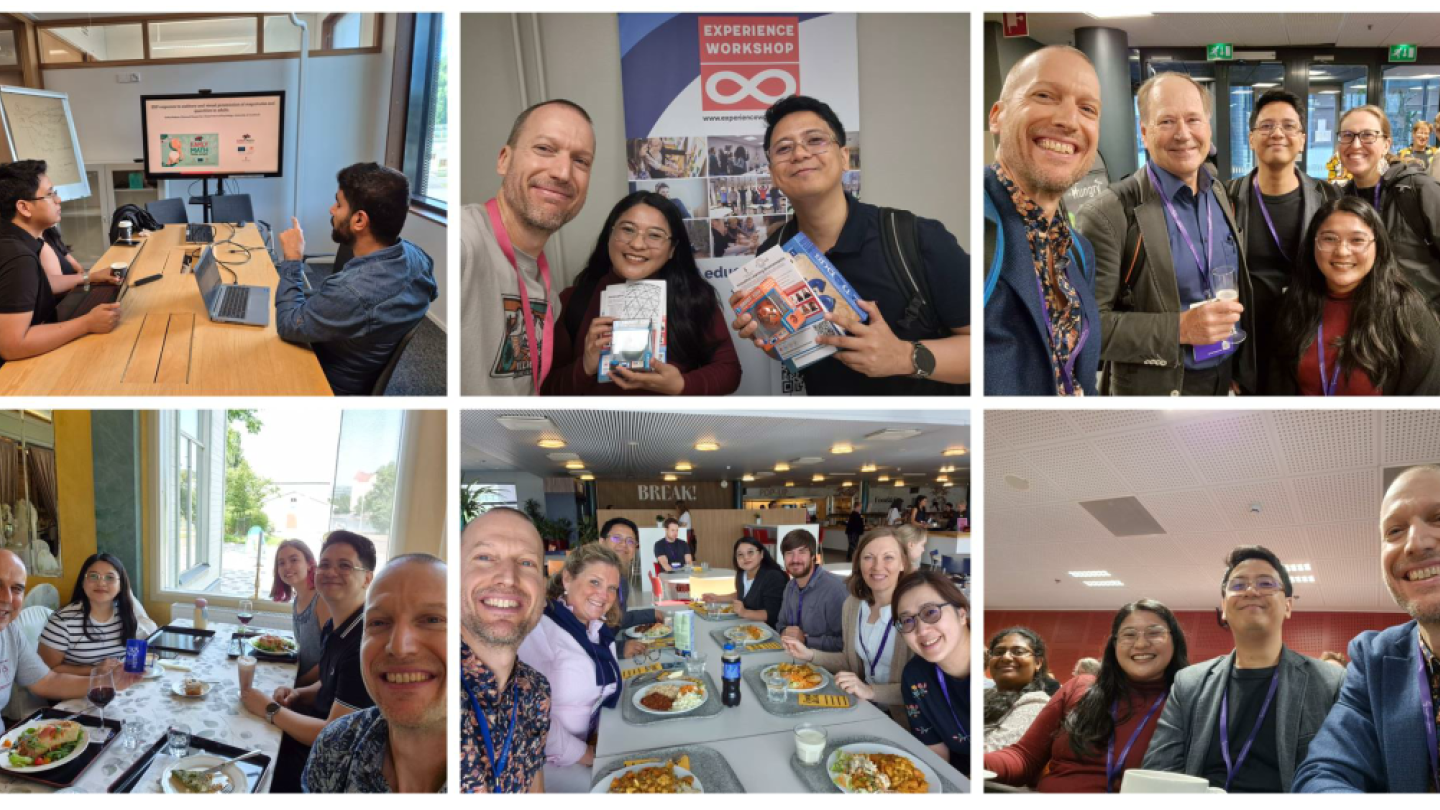
From 27 July to 21 August 2026, Ybañez and Ombid worked with the Finnish Institute for Educational Research (FIER), the Innovative Learning Environments (ILE) research group and JYU Open University, exploring how UPOU’s long experience in flexible and distance learning could connect with JYU’s work on technology-enhanced, transdisciplinary and future-oriented learning environments.
The visit was hosted by Kristóf Fenyvesi, Senior Researcher at FIER and ILE and Associate Professor at UPOU, together with Kati Clements, Research Coordinator at JYU’s Faculty of Information Technology, and colleagues across ILE and JYU Open University. Fenyvesi’s role at UPOU gives the collaboration a continuing academic bridge between the two universities rather than limiting it to a single mobility period. The original visit programme was designed as a basis for longer-term academic exchange and research cooperation between UPOU and JYU.
Where open learning and innovative learning environments meet
The visit was not primarily about presenting one educational system to another. It became a working space for asking where our different areas of expertise genuinely intersect.
For JYU ILE, these include STEAM education, sustainability and planetary wellbeing, AI and technology-enhanced learning, makerspaces, 3D printing, immersive technologies and the participatory design of learning environments.
UPOU brings another important perspective: extensive experience in designing flexible and inclusive learning across distance, location and circumstance.
Put together, these perspectives open interesting questions. What happens to STEAM when the learning environment is not necessarily a classroom? How can AI and immersive technologies extend access without weakening the role and agency of educators? How can virtual environments support experimentation, visualisation and collaboration rather than simply reproduce conventional teaching on a screen?
These became recurring themes throughout the visit.
From AI and mathematical visualisation to immersive ODeL
Working sessions explored responsible uses of AI in education, visualisation in mathematics learning, and virtual and augmented environments for Open and Distance e-Learning.
A particularly promising direction is the space between these fields: using emerging technologies not as isolated tools, but as parts of learning environments designed around participation, accessibility, agency and meaningful interaction.
The discussions also moved toward short courses and capacity-building activities combining expertise in STEAM, AI literacy, sustainability education, mathematical visualisation and technology-enhanced learning environments and making this expertise accessible through open and distance formats.
From Jyväskylä into wider research communities
The cooperation was also tested in practice through a remarkably rich sequence of academic encounters.
The visit coincided with PME49 – the International Group for the Psychology of Mathematics Education conference in Helsinki, whose focus on “Sensing and making sense of mathematics” connected naturally with discussions on embodied learning, mathematical visualisation and cognition.
In Tampere, the visitors joined the Nordic-East Asia Higher Education Research Symposium (NEAHERS), addressing transformations in higher education including AI, digitalisation, sustainability and international collaboration. This was followed by participation and joint presentations at FERA, Finland’s national Conference on Education, and ECER, the European Conference on Educational Research.
Moving together through mathematics education, higher education research, the Finnish educational research community and the wider European research landscape gave the collaboration a practical academic dimension: ideas discussed in Jyväskylä could immediately be shared, challenged and developed within different research communities.
It also opened an important next direction: doctoral education. The partners began exploring research visits, joint seminars, methodological exchange, co-supervision and ways of connecting doctoral researchers to the international networks around UPOU and JYU ILE. Open and distance formats could complement physical mobility and make such cooperation more continuous.
A research visit as infrastructure
For ILE, international mobility is most valuable when the visit itself is only one moment in a longer collaboration.
This is also how Fenyvesi approaches his dual academic role at JYU and UPOU: as an opportunity to connect people, research questions and institutional environments that might otherwise remain separate.
During the Jyväskylä visit, the partners began sketching a five-year horizon for cooperation—joint studies and publications, academic exchanges, doctoral education, short courses, capacity building and international project proposals.
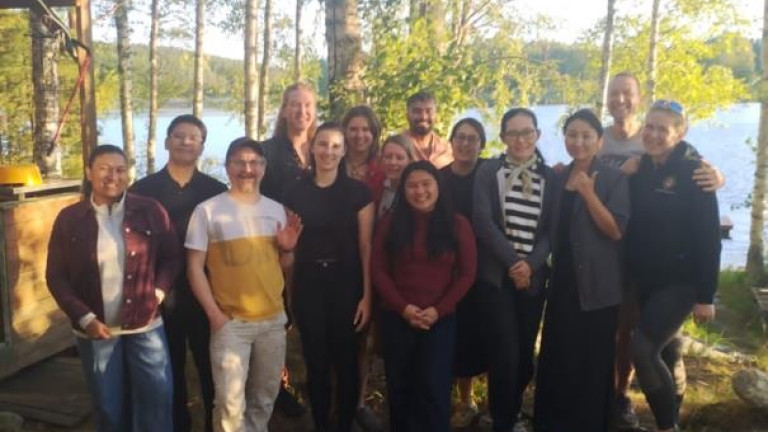
The informal parts mattered too. Participation in ILE’s year-start research planning, conversations across JYU, workshops, conferences, meals and encounters with colleagues widened the network around the cooperation and created connections that could not have been planned in advance.
That is often where an international research visit becomes useful: not when everything has been decided beforehand, but when there is enough shared direction for unexpected connections to become productive.
The collaboration is supported from the UPOU side by Chancellor Joane V. Serrano and Faculty of Education Dean Charisse T. Reyes, whose support helped make the research visit possible.
The next step is not to turn every conversation into a project. It is to identify which of these connections are strong enough to sustain five years of work.