
Senior Researcher Dr. Kristóf Fenyvesi on STEAM Education, Planetary Thinking, and Rethinking Schooling
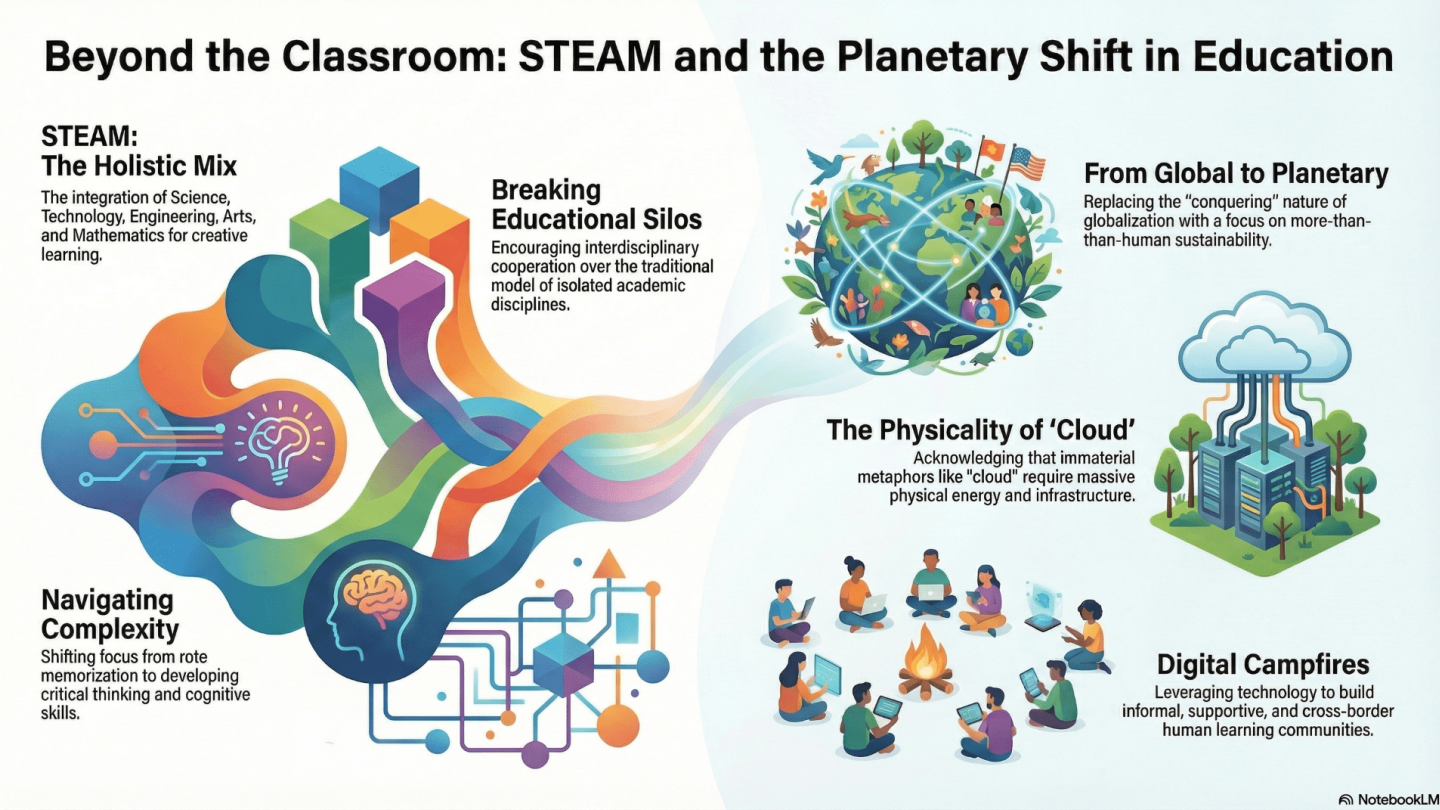
A recent episode of the Distant Yarnings podcast offers a timely reflection on how learning is being reshaped under current social, technological, and ecological pressures.
Recorded on 6 February 2026, the episode brings together Dr. Kristóf Fenyvesi, Senior Researcher at the Finnish Institute for Educational Research and International Coordinator of the Innovative Learning Environments research group, with Julie Lindsay and Jim Harris.
🎧 The full episode is available here:
https://create.usq.edu.au/distant-yarnings/2026/03/30/ep-7-steam-snow-and-schooling-a-chat-with-kristof-fenyvesi/
In this episode, Fenyvesi challenges familiar narratives around digitalization and globalization. The discussion on mobile phone bans is not reduced to a simple pro or contra argument. Instead, it raises a deeper question: what does it mean to prepare students for a digital society? The episode is also worth listening to for its treatment of STEAM education. Here, STEAM is not presented as a trend or an add-on. It is framed as a way to overcome rigid divisions between disciplines.
Fenyvesi’s reflections on his schooling in Hungary, contrasted with Finnish education, provide a concrete illustration of how educational systems shape attitudes toward authority, community, and learning itself. For researchers, educators, and anyone interested in the future of learning, this episode is worth listening not because it provides definitive answers, but because it sharpens the questions that education must now address.


