
New Professor Virpi-Liisa Kykyri is researching how interaction can support wellbeing and change
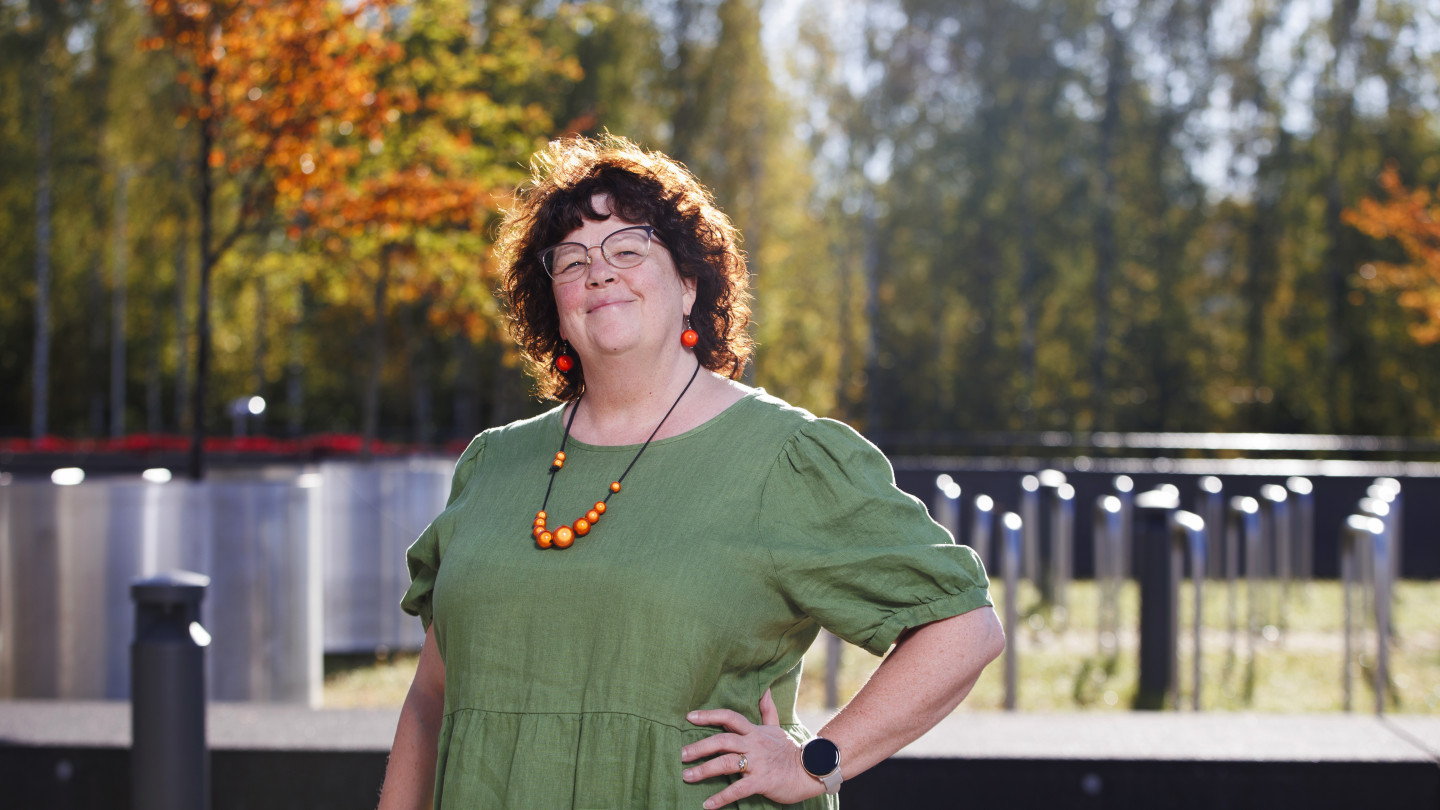
Virpi-Liisa Kykyri, who took up her post as a Professor of Psychology in October, is investigating what happens in the interaction between therapist and client and how this relates to the outcomes of psychotherapy. Her research examines, for example, what kind of interaction makes a person feel that they are being listened to and understood.
– It has long been known that a good therapeutic relationship is linked to better outcomes. Now we also have methods that allow us to study in much greater detail how interaction changes from one moment to the next and how these changes relate to the progress of therapy, says Kykyri.
Using these new methods, interaction can be studied not only through speech and emotions but also through bodily synchrony, which refers to the unconscious alignment of reactions, movements, facial expressions and nervous system activity, with people becoming attuned to the same ‘wavelength’, so to speak.
Kykyri and her fellow researchers are currently investigating what happens when the connection between a psychotherapist and a client is momentarily disrupted, and whether such a break in the therapeutic relationship is reflected in neural synchrony. Researchers are interested in whether such breaks can provide new insights into the significance of synchrony between people. They are also interested in how repairing these breaks and re-establishing the connection affect synchrony.
Research findings support the development of services
– Analysing interactions in therapy sessions provides information that can be utilised not only in psychotherapy but also more broadly in social and health services and in the training of professionals, explains Kykyri.
– It is not enough for the service system to function well from a technical point of view. It is also extremely important that people feel they are genuinely being listened to and understood. These experiences can be of great significance not only for recovery, but also for whether a person feels they can influence their own life and their own affairs.
Kykyri is passionate about the subject: the significance of interaction research is not limited to consultation rooms or a particular age group.
– I am fascinated by how relationships between people work. There are always ways of communicating that can be helpful and beneficial to us all, and especially to people in vulnerable situations. ‘For example, I would hope that a young child always has an adult nearby who knows how best to connect with a child who is upset, frightened or having a tantrum, Kykyri notes.
The path to becoming a researcher began with curiosity
Kykyri describes herself as a naturally inquisitive researcher.
– I’ve always had a researcher’s mindset. I immerse myself in what I’m doing and view my work tasks as research questions.
Kykyri ended up studying Psychology somewhat by chance. She hadn’t planned to study Psychology at all at secondary school, but became interested in the subject while leafing through a friend’s Psychology textbook on her way to school. After graduating from university, while working as a psychologist and Director of Psychology at the Central Ostrobothnia Central Hospital, amongst other roles, Kykyri continued her studies in the specialist psychologist training programme in occupational and organisational psychology, qualifying as a Licentiate of Arts (Psychology) in 2005. She was awarded a Doctor of Philosophy (Psychology) in 2008.
She later joined the ‘Relational Mind’ project at the University of Jyväskylä as a researcher, where her interest in the study of psychotherapy and interaction grew stronger.
– I’m inspired by the opportunity to discover knowledge that could be of practical use to people in their everyday lives. I’ve always been interested in how people connect with one another, particularly when life is difficult and relationships are strained.
Impact on research and researchers
As a professor, Kykyri wants to strengthen the societal impact of research and, in particular, support young researchers in their career paths. This goal is also supported by her role as Deputy Head of Research at the Department of Psychology.
– ‘In my view, the role of a professor entails a responsibility to ensure that research findings reach society. I would like to work even harder to ensure that research yields practical benefits for people and the service system, says Kykyri.
– At the same time, I hope that, as a university, we can find ways to support young researchers during the challenging early stages of their careers.
Prior to her appointment as Professor of Psychology, Kykyri has held various research, teaching and development posts at the University of Jyväskylä since 2013. She has helped to build the framework for psychotherapy research and training, is the Director of several research projects and actively collaborates with national and international partners. In addition, she serves as chair of Psykonet, the national university network for Psychology.


