
Children’s play changes with the times – but what has become of imagination?
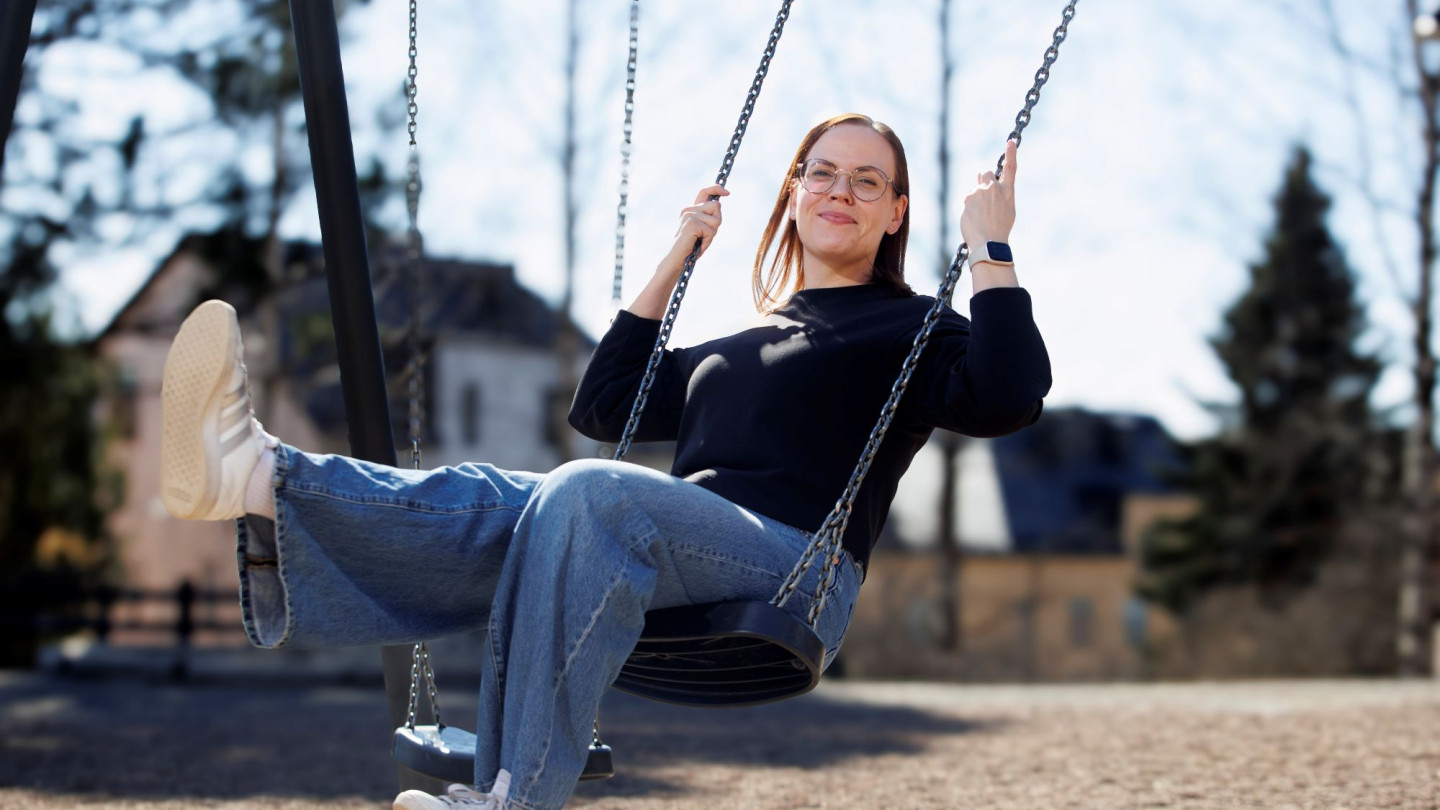
This year’s exceptionally early spring has made many families turn their attention to the coming playground season. Children have already taken over the sandboxes and puddles, and parents wait impatiently for the time when they can hang up their children’s weather-proof clothing.
A recent study at the University of Jyväskylä showed that playgrounds are an important part of Finnish families’ daily life year-round. Children go outside regardless of the weather, and playing outdoors is still seen as pivotal for well-being, physical activity and spending time together.
In fact, the value placed on playing outdoors is so strong in Finland that Finnish childhood is perceived internationally as being especially free and active.
In Finland, children’s right to play is respected
I recently came across a story on social media about a Finnish mother living in the United States who was attempting to raise her child in “the Finnish style”. She wanted to give her children the opportunity to play outdoors whatever the weather, clothing them pragmatically and emphasising free, autonomous play without early academic expectations in their daily life.
In Finnish education, play and imagination are natural ways for children to make sense of the world. They are at the heart of childhood, and the freedom to play is an important value that should be respected.
Although Finnish parenthood has its own pressures, the value placed on play may somehow contribute to the fact that Finland has repeatedly ranked as the happiest country in the world.
Childhood became longer after the Second World War
Play and imagination have been constants of human history – the most philosophical among us believe that all of humanity and culture are, at their core, the product of imagination.
Children especially have always found space for play. Archaeologists have uncovered artifacts they consider to be toys from ancient Stone Age dwellings and tombs. Adults, too, have always played in one way or another: sporting events, contests, games and a rich storytelling tradition all involve some form of play.
The content of play and the opportunities for it, however, have varied over different eras.
For example, a century ago in predominantly agricultural Finland, childhood was short, and play was intertwined with often strenuous daily chores. But play has also been present in hard times, including wars, famines and other crises. It has helped children escape the threats of the surrounding world for a while and cope with them through imagination.
After the Second World War, the position of childhood and play in society changed significantly. Rising living standards, increased leisure time and the spread of education extended childhood, while giving it new meanings and content.
The growth of consumer society brought new types of games and toys into homes, while the spread of technology, such as radio and television, also gradually shaped the everyday life and imagination of children.

Is play in crisis?
In recent years, there has been a growing debate over whether children’s free play has decreased and become more limited – with some wondering if there is even a crisis of play at hand. In 2022, the Save the Children association reported that in Britain only a third of children regularly play outdoors. The change was particularly stark in contrast to their grandparents’ childhood. Similar findings have been reported from other Western countries as well.
A 2019 study in the United States examined the differences between the play cultures of today’s parents and their children. It noted how play has gradually shifted from traditional outdoor activities towards increasingly technological and passive forms of play. The shift was explained by broader trends in society as well as by the parents’ increased safety concerns and changing parental ideals.
Recent Finnish studies indicate that, at least in Finland, children under school age continue to engage in a range of physical activities and spend time outdoors daily.
However, worries about children’s increasing screen time and its connections to their mental health and decreased physical activity are also common in Finland.
Given these discussions, it is easy to think that digital devices are what make children passive, stifle their imagination and take away space for free play.
As society changes, so do the building blocks of children’s play
From the perspective of childhood history, however, this discussion is somewhat surprising. In this field, it is a fundamental notion that childhood changes over time as along with being a socially and culturally shaped construction. In this sense, the observations about altered playing habits are not surprising at all.
Children’s ways of playing are always changing because the relevant building blocks change along with the surrounding society.
A child sitting with a smartphone in hand might not match the image we adults associate with a playing child, but the child may be building highly complex imaginary worlds in their mind, including stories and roles that are just as real and important as the outdoor play activities of the past.
As the childhood geographer Owain Jones suggests, childhood is a way of existing in the world which remains hidden from adults, and it is not for adults to judge its content as either good or bad.
Accordingly, experts have recently called for broader discussion about the impact and content of children’s screen time.
Play changes, but imagination persists
Though what play consists of might change, imagination does not disappear. It is an in-built element of human nature, and play is still a way for children to practice social skills and learn to take their place in the world.
This takes us to the gist of the history of childhood: In their playing, children of today draw on the contemporary cultural and visual imagery – movies, games, digital environments – but do it in their own creative ways. Play cannot, therefore, remain unchanged. And neither should it.
Play belongs to children, and let’s keep it like that!
The writer, Essi Jouhki, works as an Academy Research Fellow at the Department of History and Ethnology, University of Jyväskylä. Her research is focused on the history of childhood, play and imagination. She is currently leading the research project Re-Imagining childhood. Imagination as a Transdisciplinary Approach to Exploring Past childhoods (REIMAG)


