The gardens and plant collections of Jyväskylä University increasing resilience in times of war and change.
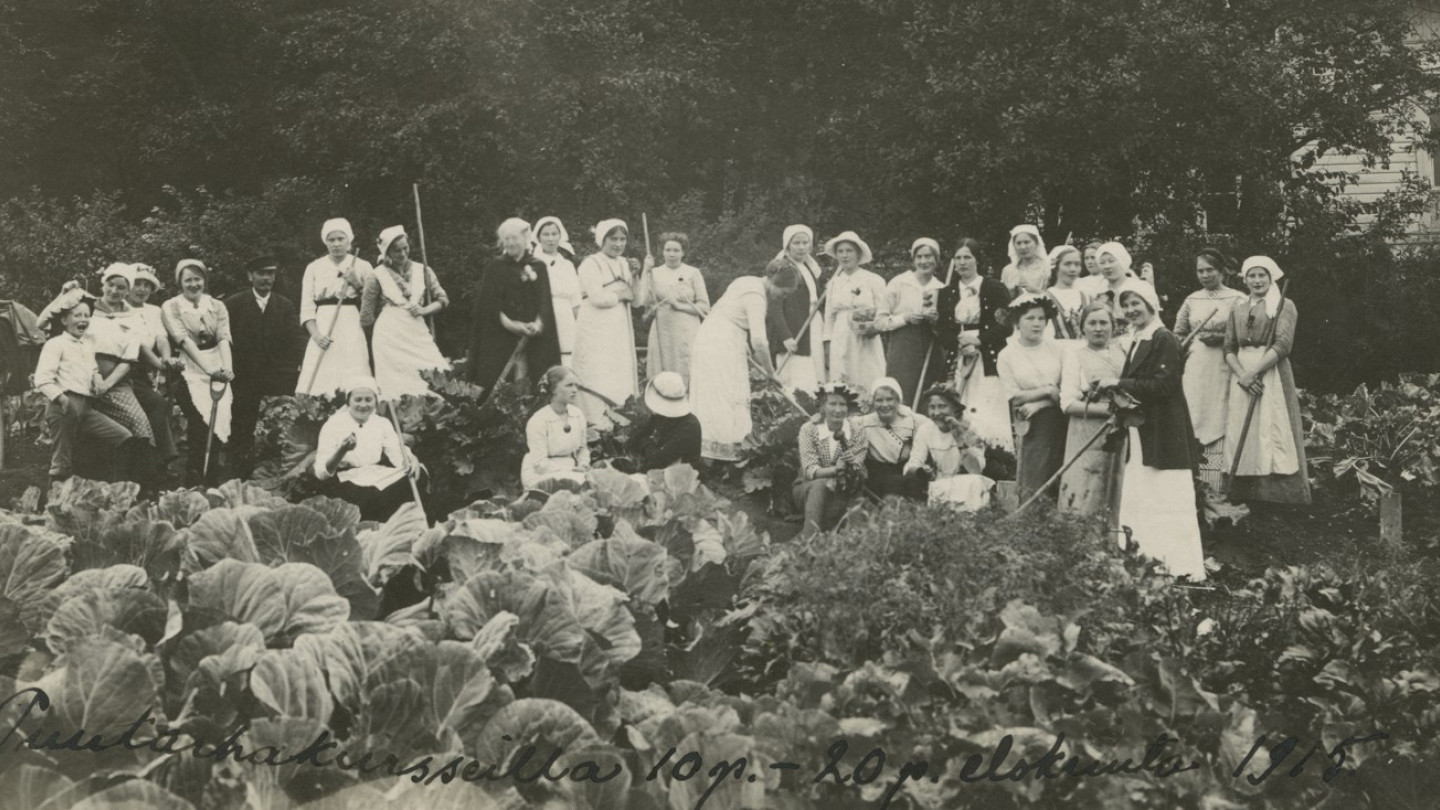
The Jyväskylä University Botanical Garden was not officially established until 1990, but the history of the plant collection and the school garden dates back to the construction of the Seminaarinmäki Teachers' Seminary in the 1880s. The Seminaarinmäki Garden, also called The Seminary Park, was designed as a teaching garden maintained by the students and gardeners of the Finland's first teacher seminary, but also as a landscape park for the teacher students living in the seminary area.
The Seminary Park became Finland's first official school garden, and the teachers who graduated established school gardens all over Finland, taking the knowledge of horticulture with them to the provinces. Teachers played a major role in promoting gardening and agriculture in Finland. Through their work, they influenced the development of the nation’s entire garden culture and, by extension, broader fields such as urban planning.The idea that gardens also enhanced well-being was present in the background, but the importance of food production, i.e. the cultivation of edible plants, played a big part. The skill of growing food was seen as important for the well-being and crisis resilience of Finnish people. The Great Finnish Famine of the 1860s played a big role in the background.
War and oppression
During the years of oppression under the Russian rule and also during the war in the early 1900s in Finland, the Seminary Park also suffered: there was a huge shortage of food, so many of the seminary students left to work elsewhere in agriculture, and at the same time, a large part of the male students of the seminary joined the army. After gaining independence (1917) in the Civil War of Finland in 1918, all teaching faded away and the buildings were handed over to the Jyväskylä field hospital.
Seminary Park was left to its own devices until conditions calmed down in the 1920s and a new golden age began in the garden: agricultural education and horticulture saw a revival, as self-sufficiency in food production had come to be valued during times of shortage and war. A new, modern greenhouse was completed in the garden, the teaching of natural sciences was strengthened, and plant collections were enhanced.
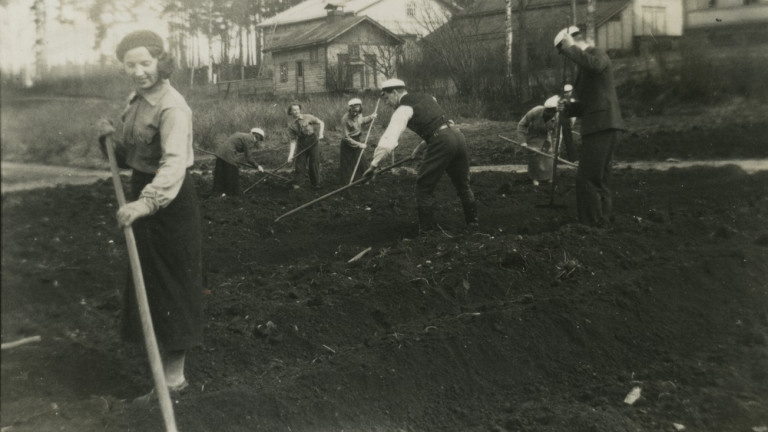
Picture: Gardening in the fields of the Jyväskylä College of Education around 1934-36.
During the era of Jyväskylä College of Education from 1934 onwards, horticulture and agriculture were actively studied in Seminary Park. However, the college's activities ceased in 1939 when the Winter War broke out, and the buildings were handed over for military use. Male students left for the front, and some students of the school also died in the Winter War. Most of the female students were Lottas (members of the Finnish women's voluntary auxiliary organization) and the men students reserve officers, and in 1941, after the outbreak of the Continuation War, the buildings were taken into military use again. However, efforts were made to continue studying even in these exceptional circumstances, at least partially.
After the war, the Seminary Park was badly damaged. The park's fences had collapsed, people used the park area for shortcuts, and most of the plants in the greenhouse had been frozen. The college's gardener and his horse had also been in the war. After the wars, there were attempts to renovate the garden as students' assignments, but the construction of a new campus designed by Alvar Aalto led to the old Seminary Park being a construction site for a long time. The old extensive vegetable gardens on the site of the Aalto Park disappeared, and teaching could not be organized in the garden. Gradually, horticultural education changed from practical work to theoretical work, and with the establishment of the Jyväskylä University (1966), it finally ended completely.
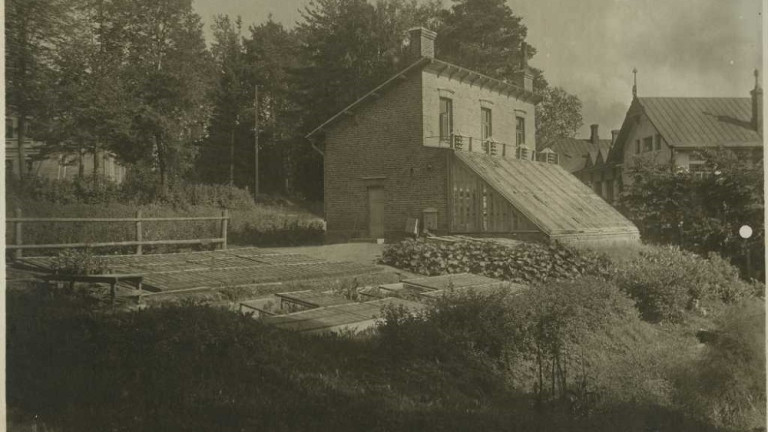
Picture: The green house of Seminary Park in 1922.
A new life
Once practical horticultural education came to an end, a new purpose was found for the Seminary Park in the service of the educational institution: with the introduction of biology as a major subject in 1970, the garden began to be seen as a tool for studying environmental education and management. Infill development on Seminaarinmäki in the 1970s led to the fragmentation of the old park, and concerns over permanently losing the historic campus park prompted members of the university community to take active measures to inventory its vegetation, develop the grounds, and enhance the value of the park.
As the university campus expanded to Mattilanniemi area, it was already accompanied by the idea of creating a completely new kind of botanical garden. From these foundations emerged the Jyväskylä Green Space Botanical Garden: a progressive form of botanical garden in which the garden and its plant collections were integrated into the city's green infrastructure. Seminaarinmäki became the core area of the green space garden, complete with its historic plant collections. Today, the collections of the Botanical Garden include nearly all the plants across the three campus areas of the University of Jyväskylä, totaling approximately 18,000 living plant specimens.
The function of the Seminaarinmäki school garden has changed a lot during its existence. However, the core mission of the garden has remained the same: by maintaining and developing its plant collections, it fosters the well-being, and consequently the sustainability, of the educational community and Finnish society as a whole. This means taking care of the well-being of local nature, the university community and, more broadly, the city's residents by developing the area as part of the city's green networks. The garden also teaches how to participate in the prevention of biodiversity loss in new ways in built green areas. The plant genetic resource plants of the Natural Resources Institute Finland (Luke) housed in the Villa Rana garden and the historical plant collection of the entire garden are part of the Finnish security of supply network by preserving valuable strains of useful and ornamental plant populations for future generations.
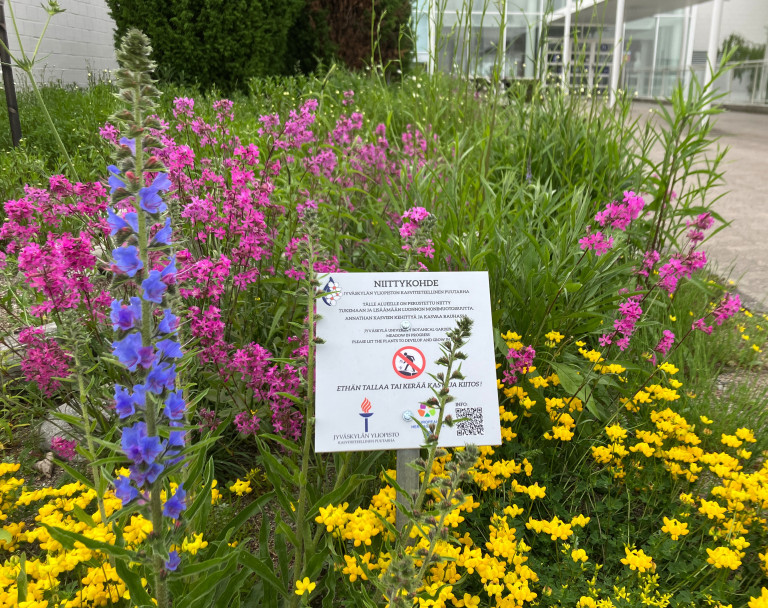
Picture: Botanical garden's newly established meadow at Ylistönrinne campus in 2025.
References:
Farin, Leila 2005: Puutarhaopetus Jyväskylän seminaarissa ja kasvatusopillisessa korkeakoulussa 1863–1967. Pimpinella 24.
Forsberg, Mari 2008: 125 vuotta Seminaarinmäen puistoalueiden historiaa : Jyväskylän yliopiston Seminaarimäen puutarha- ja ulkoalueiden suunnitelmat vuosina 1882-2007 : Jyväskylän yliopiston Seminaarinmäen ympäristöhistoriallinen selvitys.
Karjula, Anna 1998: Jyväskylän seminaarin puutarha ja seminaarinpuisto vuosina 1863-1934. Pro Gradu: Jyväskylän yliopisto, taidehistorian laitos.
Raatikainen, Mikko 1986: Jyväskylän ylimmän oppilaitoksen anti puutarhaharrastukselle. Teoksessa Jyväskylän puutarhaseura : 1896-1986.