
AI Pedagogy and Well-being- Learning about, with and for AI-incorporated environments
In May 2026, a new course called AI Pedagogy and Well-being was implemented by the Innovative Learning Environments (ILE) research group at JYU’s Faculty of Information Technology. The main objective of the course was to explore and re-imagine teaching and learning in the era of artificial intelligence (AI) in ways that support planetary, digital, creative and socioeconomic well-being. Special attention was paid to the critical, ethical and responsible use of AI for learning and teaching. The course was originally designed for learners at the masters level, but was made available to bachelors and doctoral students as well.
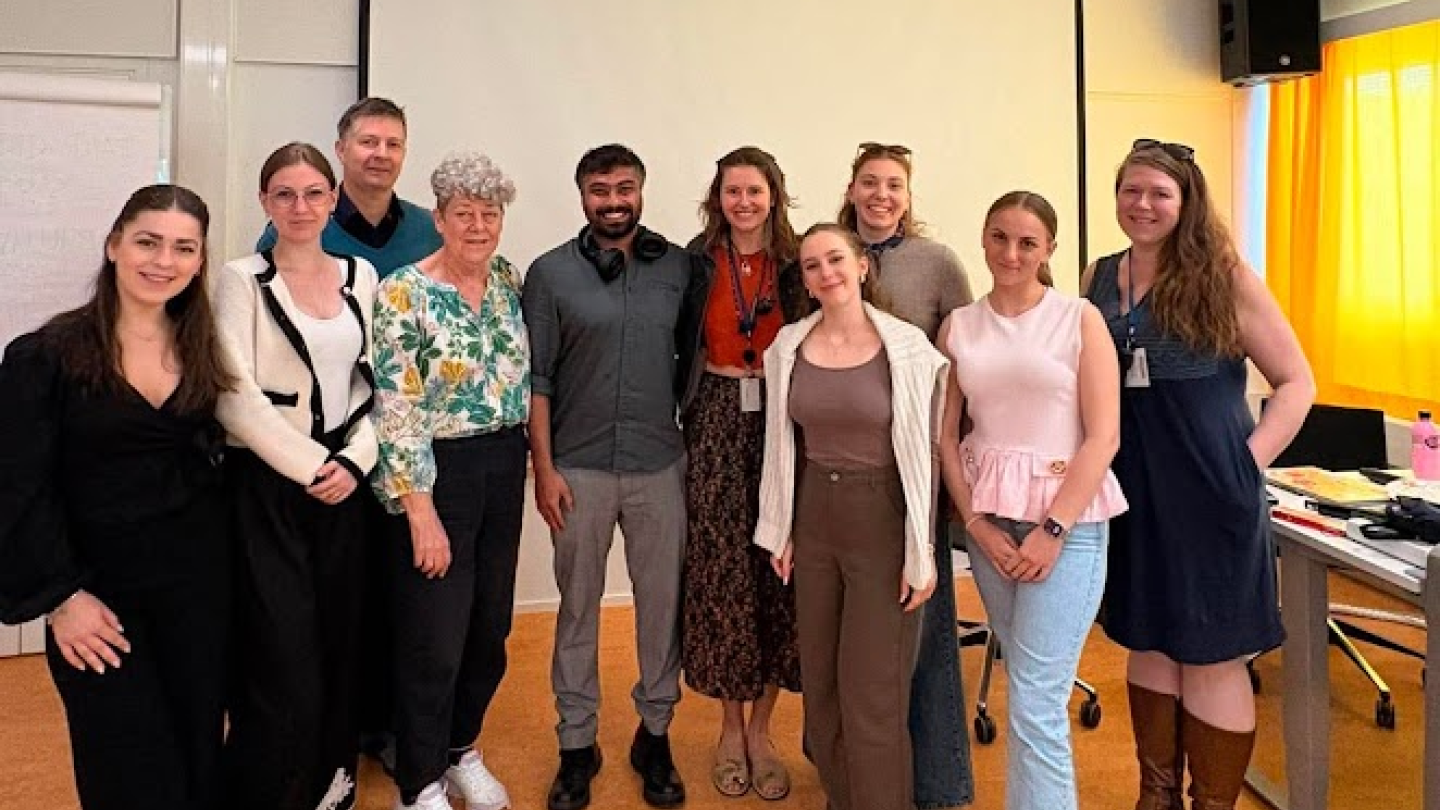
The core teaching group of the course comprised Orsolya Tuba, Kati Clements, Samuel Madtha from the University of Jyväskylä and Julie Lindsay, all the way from the University of Southern Queensland down under. Several guest teachers enriched the course with topical presentations. These included JYU’s Saana Mehtälä, Tiina Mäkelä, Kristof Fenyvesi, Erika Avikainen, Mikko Muilu and Matias Mäki-Kuutti, and educationists from across Europe including Andras Albert Halbritter (Ludovika University of Public Service, Budapest, Hungary), Miklos Hoffman (Institute of Mathematics and Computer Science, Eszterhazy Karoly University, Eger, Hungary), Gabriella Keszthelyi (Budapest University of Technology and Economics, Hungary), Alessandro Martinelli (Johannes Kepler University of Linz, Austria) and Alina Mag (lucian Blaga University of Sibiu, Romania). Somehow, the course most dominantly attracted Hungarian expertise!
As mentioned, the course was part of the Erasmus+ funded Blended Intensive Program (BIP), and involved 35 students from across bachelors, masters and doctoral levels, along with mentors and guest speakers from several European universities including- Ludovika University of Public Service (Hungary), Johannes Kepler University Linz (Austria), Lucian Blaga University of Sibiu (Romania), Eszterhazy Karoly Catholic University (Hungary), University of Latvia (Latvia), University of Milan (Italy), University of Valencia (Spain), and of course, the hosts- JYU.
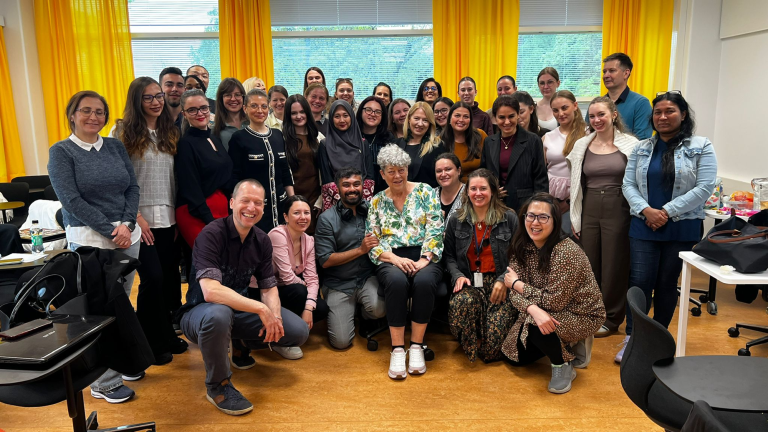
The course gave participants a great chance to develop both AI and social skills in an international setting. It offered an excellent opportunity for all participants to learn and interact in a diverse, multicultural environment. Learning experiences included synchronous and asynchronous online components, and in-person time, enabling students to develop practical soft skills alongside competencies in the responsible use of AI for their own learning, teaching, and well-being.
|
A.I.N.O and collaboration with Boodlebox: Julie Lindsay and Samuel Madtha customized a generative AI-based conversational agent that they christened AINO (Artificial Intelligence-based Network Orchestrator). AINO was developed to be a learning partner who works with teachers and students towards meeting learning goals in collaborative environments without compromising learner agency and cognitive effort and development. It works with you, not for you. AINO weaved together perspectives across institutions, kept collaborative momentum moving, and connected conversations to the Human-AI-World ecosystem and well-being dimensions at the heart of the course. On the final day of the in-person week, students presented their co-created AI agents to their peers and teachers. The agents were developed on the Boodlebox platform, with all students having received a free trial to BoodleBox’s premium account, courtesy the BoodleBox team’s generous and supportive cooperation with the BIP team. |
The course explored several key themes, starting with a “pedagogy first, AI second” approach that emphasized intentional, meaningful, and pedagogically sound use of digital technology and AI in classrooms. It introduced foundations of AI literacy, including ethical considerations and issues of justice, and examined the relationship between AI and well-being from planetary and psychosocial perspectives. Competence development, creativity, and technostress were also discussed in the context of an AI-incorporated world. Some talks were dedicated to understanding and appreciating the evolution of mathematical and scientific thinking in parallel with advancement in learning technology and AI.
Through a combination of talks and workshops, participants learned to understand how artificial intelligence, digital well-being, and planetary well-being are connected. They then, in international teams, incorporated the perspectives they gathered into customizing and testing their own learning agents on the BoodleBox platform. At the same time, their future thinking and critical thinking skills improved. Critical reflection on learning processes, both with and without the use of AI was a key component of the course. Thanks to these skills, participants expressed that they are able to better recognize opportunities, risks, and issues related to fairness and sustainability in the application of AI in education.
|
Students’ Testimonials “The course motivated students and many of them also liked it very much. They also gave some feedback from the course and it was really positive.” “I loved the new experience - collaboration among a team of humans and several AI chatbots at the same time. It gave me food for thought and highlighted the question - who is more supportive and reliable - humans or AI:)” “All teachers are really competent and helpful.” “Thank you for carefully planning and implementing the course. You are inspiring for further research in my country.” “It was an extraordinary experience!” |
For more information, please contact project researcher Orsolya Tuba at orsolya.o.tuba@jyu.fi


