
ILE DigiSauna Event Gathers Local Teachers for a STEAMy Digital Competence Session
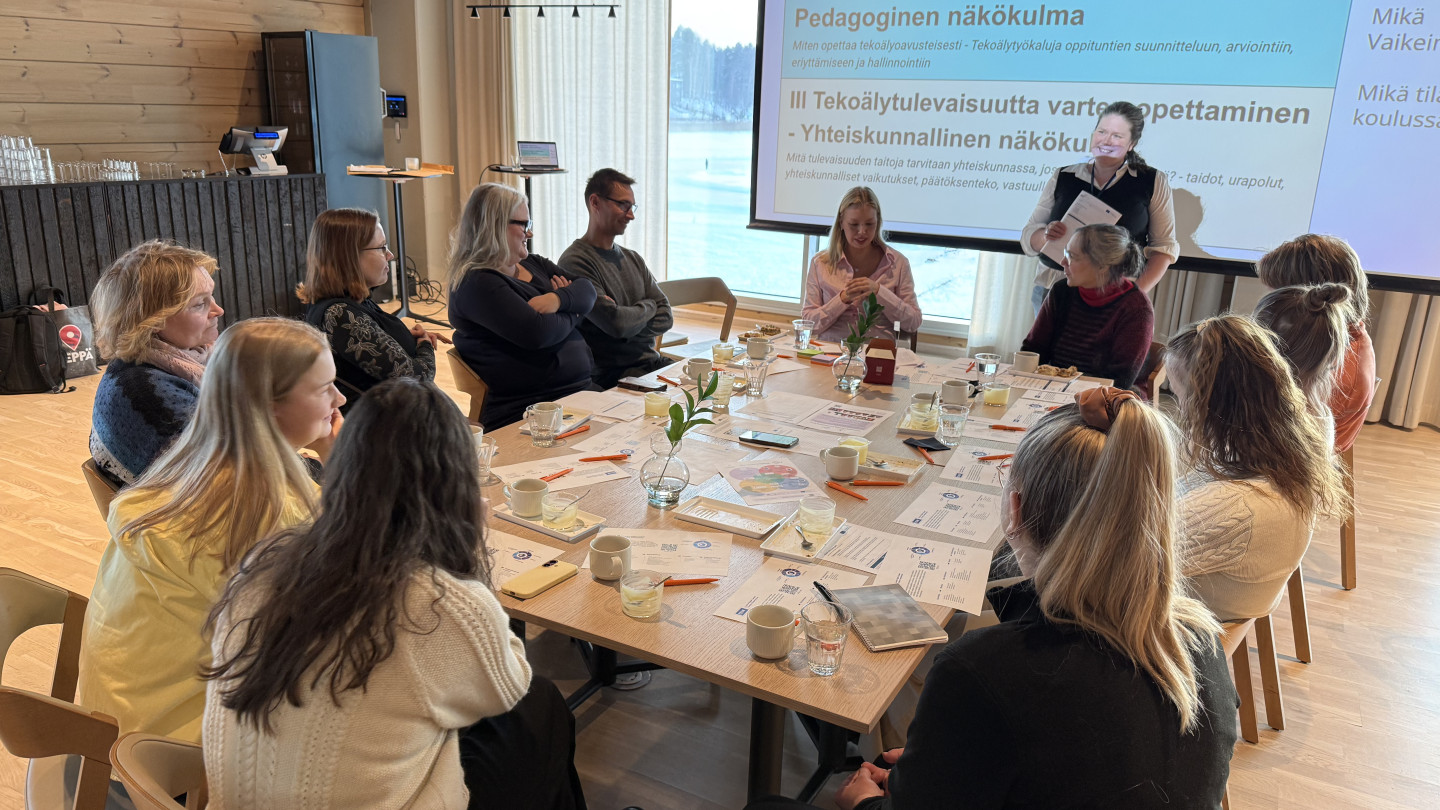
The event was organized in collaboration with several international development initiatives and Erasmus+ projects, including 3D STEAM, TD3C, ViReal4STEM, and AIDEA (AI-Driven Educators Academy). Teachers participating in the event explored practical ways of integrating digital technologies into teaching and learning through demonstrations, workshops and collaborative discussions.

The programme featured hands-on activities related to artificial intelligence in education, virtual reality and immersive learning environments, 3D printing and 3D modelling in classroom teaching, digital content creation, gamification and other innovative pedagogical approaches. Participants were able to experiment with digital and AI-based tools together with facilitators from the University of Jyväskylä project teams and collaborating teachers. The event took place at Sataman Viilu and brought together teachers and education professionals interested in digital transformation, practical experimentation, peer learning and networking.
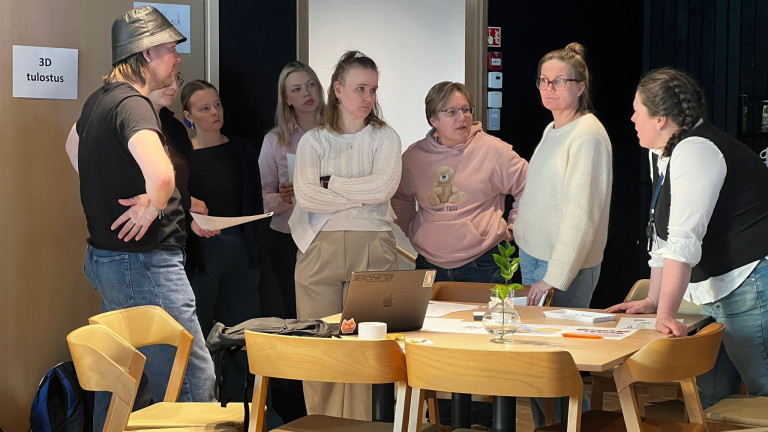
As part of the event, 20 teachers from primary, lower secondary and upper secondary education participated in a facilitated discussion on the current role of artificial intelligence in schools. Conducted within the AIDEA project, the discussion explored teachers' experiences, expectations and concerns regarding AI in education.
Many participants described AI as a valuable tool for lesson planning, creating learning materials, generating ideas and supporting student learning. Several teachers had already integrated AI tools such as ChatGPT and Microsoft Copilot into their everyday work.
"I use AI to create tasks, because we often get assignments as special education teachers like, 'Here's the topic, invent something.'"
Teachers also expressed optimism about the future role of AI in education. Even those with limited experience believed AI would become an increasingly important part of teaching and future working life.
At the same time, participants highlighted several challenges. A common concern was that students might rely on AI-generated answers without understanding the underlying learning process. Teachers also emphasized that AI adoption currently varies considerably between schools, grade levels and individual teachers.
Another recurring theme was the lack of clear guidance for schools.
"We kind of hope for more exact rules, but no one knows what to do or say right now. It's difficult now that the age limits and recommendations keep shifting constantly."
Many participants expressed a need for clearer national policies, practical guidelines and professional development opportunities that would help teachers integrate AI responsibly into their teaching.
The discussions strongly reinforced the objectives of the AIDEA (AI-Driven Educators Academy) project, which aims to equip both pre-service and in-service teachers with the competencies needed to understand, use and critically engage with AI in pedagogically meaningful, ethical and inclusive ways. As AI continues to transform teaching, learning and assessment, projects such as AIDEA seek to ensure that educators are prepared to adopt AI responsibly while promoting fairness, transparency, inclusion and human oversight.
The event also demonstrated a broader need for continuous professional development. While many teachers were already experimenting with AI tools, participants consistently expressed interest in receiving further training and practical guidance on how to use AI effectively and ethically in their classrooms.
After the workshop sessions, participants continued networking in a relaxed setting with a traditional Finnish sauna experience and the opportunity to dip into the frozen lake at Sataman Viilu. The informal evening provided an excellent opportunity for teachers, researchers and project teams to exchange ideas and experiences related to educational innovation and digital pedagogy.
Projects represented at the event
- 3D STEAM (Accelerating STEAM-related Knowledge and Skills via 3D Modelling and 3D Printing)
- TD3C (Teacher Digital Content Creation Competence)
- AIDEA (AI-Driven Educators Academy)
- ViReal4STEM (Envisioning a future in STEM using Virtual Reality)
The Digisauna event demonstrated the growing interest among teachers in practical, community-oriented professional development opportunities that combine emerging technologies, pedagogical innovation, collaboration and wellbeing.
Thank you to everyone who participated! We look forward to seeing you at the next Digisauna event!
Thank you for participation and see you next time!
For more information, please contact project researcher Matias Mäki-Kuutti at mamajuma@jyu.fi
Funded by the European Union. Neither the European Union nor the European Education and Culture Executive Agency (EACEA) can be held responsible for the content of this publication


