
Older adults who walk faster are more active in their daily lives
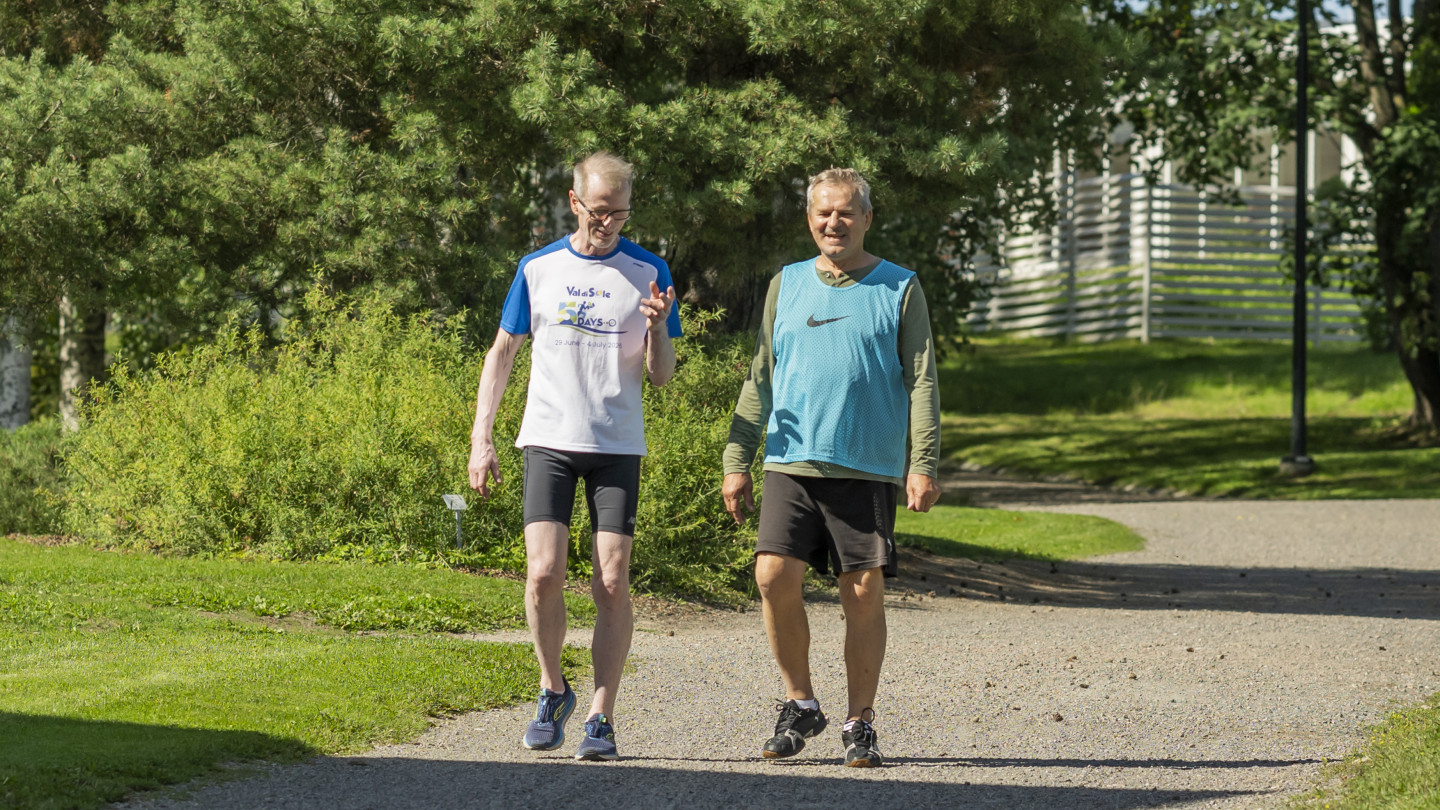
Physical activity is a key factor in maintaining health, physical functioning, and the ability for independent daily living. However, many people do not meet the recommended levels of physical activity, and as they age, their physical activity levels decline even further. At the same time, changes also occur in physical functioning, including walking ability.
Walking speed and physical activity are closely linked
Preferred walking speed is a simple indicator of physical functioning and, according to this study, is also associated with daily physical activity levels.
“Participants with faster walking speeds were, on average, more physically active in their daily lives than those who walked more slowly,” says Joona Neuvonen, a doctoral researcher from the University of Jyväskylä.
The findings suggest that changes in physical functioning, such as a decline in walking speed, are closely linked to age-related changes in physical activity. The relationship, however, is not straightforward.
“Walking speed measured under laboratory conditions may not fully reflect everyday mobility,” Neuvonen says, “as environmental barriers and opportunities influence movement in different ways.”
Combined heart rate monitoring and movement sensing provides a more accurate assessment of physical activity
The use of combined heart rate monitoring and movement sensing enabled a more accurate assessment of the relationship between walking speed and physical activity than has been possible in previous studies. The decline in physical activity observed in this study was greater than that reported in previous comparable studies, which may partly be explained by the more precise assessment method.
“Heart rate monitoring can detect physically demanding daily activities that may not involve substantial body movement, such as lifting and carrying objects,” Neuvonen says. “Therefore, assessments based solely on movement sensors may underestimate age-related changes in physical activity.”
When physical activity was measured using movement sensing alone, changes in walking speed explained the observed changes in physical activity. This suggests that conventional movement-based measures may reflect not only changes in behaviour but also changes in physical functioning associated with ageing.
Study design and participants
The study is based on data from the AGNES cohort and followed approximately 300 community-dwelling older adults aged 75–85 years over a four-year period. Physical activity was assessed in free-living conditions using wearable sensors that estimated physical activity energy expenditure based on both body movement and heart rate. Walking speed was measured in a laboratory setting using the six-minute walk test.
This work was supported by the European Research Council, the Research Council of Finland, the Yrjö Jahnsson Foundation and the Juho Vainio Foundation.
Original article:
Neuvonen, J., Hyvärinen, M., Löppönen, A. et al. Longitudinal associations between physical activity and preferred walking speed in community-dwelling older adults: a 4-year follow-up study. Eur Rev Aging Phys Act 23, 30 (2026). https://doi.org/10.1186/s11556-026-00419-9
More information:
Joona Neuvonen, Doctoral Researcher
University of Jyväskylä, Faculty of Sport and Health Sciences
joona.e.neuvonen@jyu.fi, +358504685171
Laura Karavirta, Associate Professor
University of Jyväskylä, Faculty of Sport and Health Sciences
laura.i.karavirta@jyu.fi, +358408055041


