
Professor of Neuroscience Tiina Parviainen views the brain as the key to learning and wellbeing
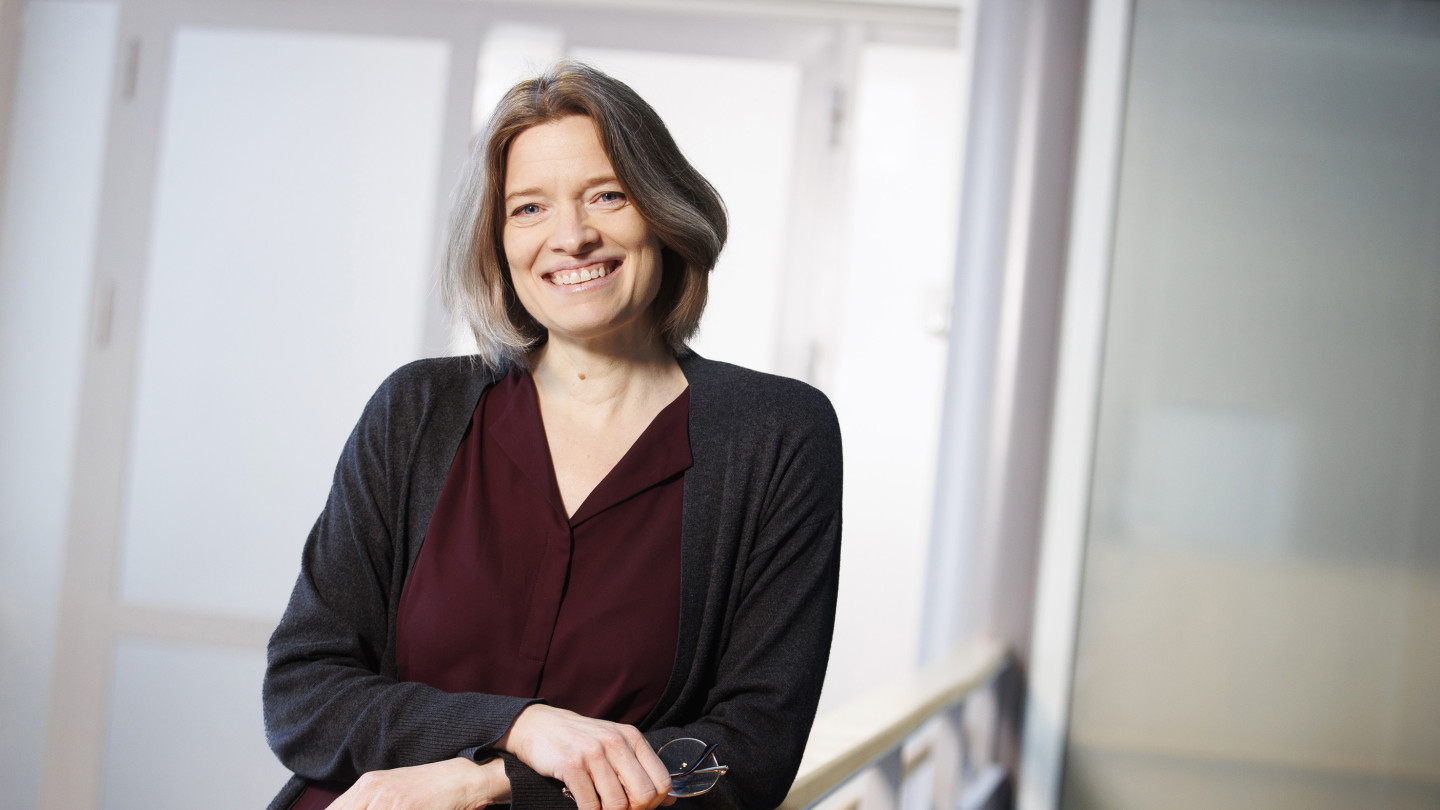
According to Professor Tiina Parviainen, human behaviour and emotions cannot be understood without understanding the brain. The brain is a system that has evolved over millions of years and provides insight into why we behave the way we do.
“To understand people, it is essential to understand the brain’s structure,” explains Parviainen. “The brain is a complex organ that develops in each individual partly through genetics and partly through environmental influences, yet above all is shaped by the unique, self-directed interaction of these factors. In a fascinating way, it unites our biological and cultural dimensions.”
A child’s brain is not a “small adult brain”
Parviainen’s research follows two complementary lines, the first of which focuses on brain development in childhood. According to her, a child’s brain is not simply an unfinished version of an adult brain but has its own unique characteristics.
“In many ways, a child’s brain is more than an adult brain, with features that make it particularly adaptable and capable of storing information about the environment,” says Parviainen. “In particular, the way the brain responds to the surrounding world is different. This has an important role in the development of various skills and in learning.”
Parviainen explores this perspective, among other things, in the new project Trajectory, funded by the Research Council of Finland. Together with her colleagues, she investigates how the child’s cerebral cortex develops and what kinds of changes in neural networks support cognitive development and learning ability. In the future, the project’s findings could help improve strategies to support learning.
Body and mind in continuous dialogue
Parviainen’s second line of research moves closer to everyday life, focusing on the interaction between the body and the brain.
The brain does not function independently of the rest of the body but is part of a network of internal organs. The activity of the autonomic nervous system and other bodily signals influences how we experience the world and interact with others. The ongoing project DIGIMIND, funded by Business Finland, investigates how the state of the body
and brain relates to anxiety and how this understanding could be used to improve its treatment.
“Mental health problems, including anxiety among adolescents, have increased significantly,” says Parviainen. “There is an urgent need for new knowledge and solutions in health care to address these major challenges. The connection between the body’s state and brain activity, and especially individual differences in this, can help us better understand anxiety and develop more effective treatments.”
The research progresses from one insight to the next. Parviainen is particularly motivated by moments when the pieces fall into place or when the results gain significance beyond the academic world.
“Understanding grows through the projects. Nowadays, I can already anticipate the moment when a new insight emerges, opening up the next path in research,” says Parviainen.
Multidisciplinary insight drives progress
Parviainen has served as the Director of the Centre for Interdisciplinary Brain Research (CIBR) since it was founded in 2011.
“Over the past ten years, Jyväskylä’s brain research has gained significant visibility,” says Parviainen. “We are now a prominent part of the national network of brain scientists, and what’s especially exciting about Jyväskylä is that we are boldly applying the latest brain research methods to new areas.”
This is also reflected in the fact that two of the University’s multidisciplinary Centres of Excellence use brain research methods as an essential part of their research.
Parviainen would like to see collaboration between brain research and other disciplines further strengthened in the future.
“Brain research provides tools for understanding a wide range of phenomena, such as learning, behaviour and wellbeing,” she says. “For this reason, the barriers to dialogue between different disciplines should be lowered.”
Tiina Parviainen began her role as Professor of Neuroscience at the Department of Psychology at the University of Jyväskylä in October 2025. Before joining the University of Jyväskylä, Parviainen worked as a postdoctoral fellow at the University of Oxford. She received her PhD in Psychology from Aalto University in 2007.
In addition to her scientific work, Parviainen has served for a long time as the Director of the Centre for Interdisciplinary Brain Research (CIBR) and has been involved in the preparatory work and the Management Group of Neurocenter Finland.
The University of Jyväskylä’s inaugural lectures for newly appointed professors will take place on Wednesday, 6 May 2026. Parviainen’s inaugural lecture is titled "Miten mieli syntyy aivoissa? (How does the mind emerge from brain activity?)". The event will take place in the Seminarium building at 12 noon.


