
Research: Steam increases physiological strain during sauna bathing
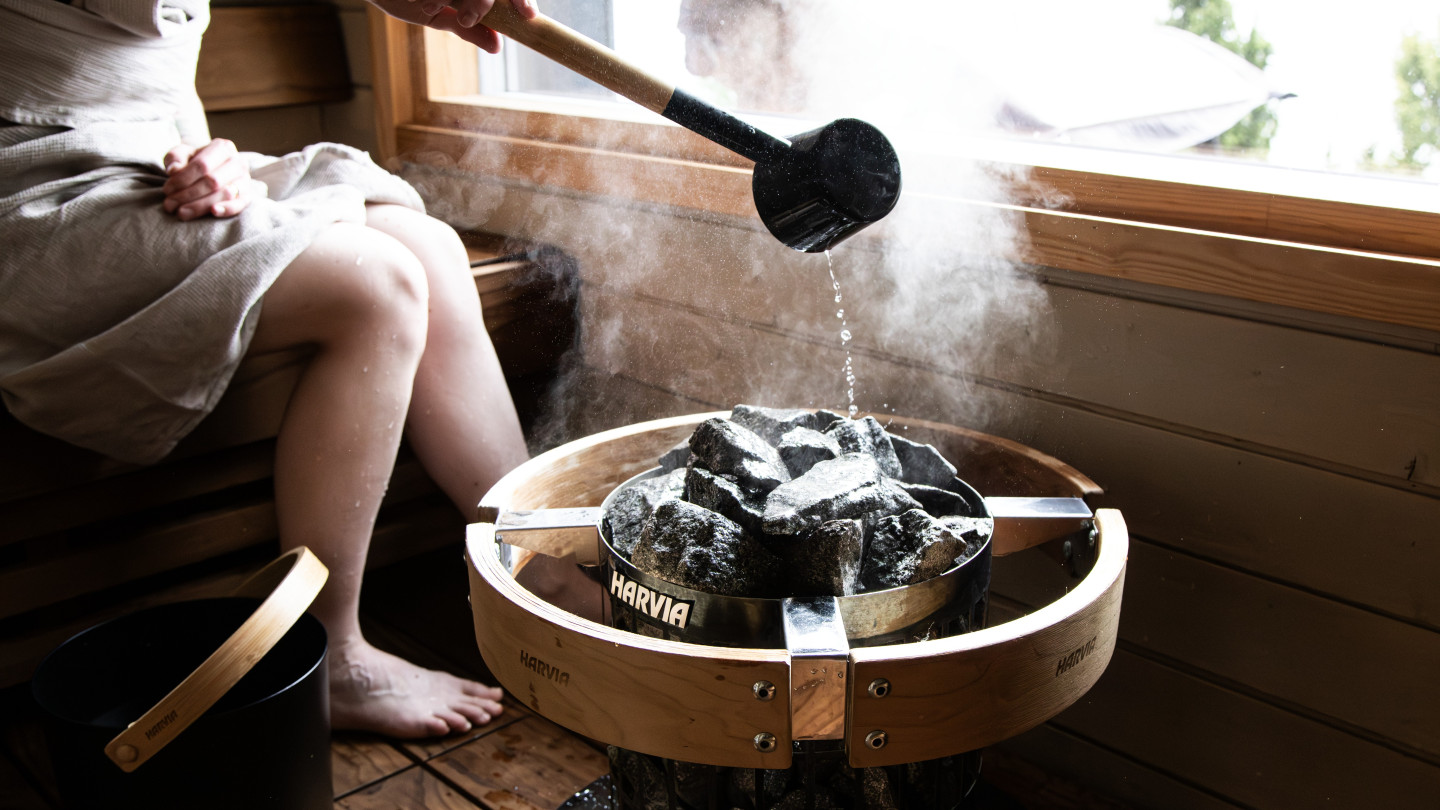
The University of Jyväskylä and the Finnish Institute of High Performance Sport KIHU conducted this sauna study in collaboration with Harvia. Data collection was partly funded by Toyota Motor Corporation.
Finnish sauna is renowned for its high temperatures, but research suggests that the humidity generated by steam also plays a crucial role in physiological responses during sauna bathing. This study investigated how temperature and relative air humidity affect thermoregulatory responses, including changes in heart rate and core temperature, during sauna bathing.
Fifty healthy adults participated in four sauna experiments, during which their heart rates and body temperatures were measured, and their perception of heat was assessed.
Heart rate rose by over 40 beats per minute on average
Sauna bathing caused an intense response in the cardiovascular system. The average heart rate increased from 79 beats up to 121 beats per minute during ten minutes in the sauna.
According to the results, both temperature and air humidity contributed to the increase in heart rate.
“In addition to temperature, the relative humidity of sauna air affects the thermoregulatory responses. While temperature is still the most significant factor, steam also clearly impacts heart rate and core temperature,” says Iida Laatikainen-Raussi from the Faculty of Sport and Health Sciences at the University of Jyväskylä.
Humidity impedes the body’s cooling process
High relative humidity prevents sweat from evaporating effectively from the skin, reducing the efficiency of the body’s main cooling mechanism.
“This increases thermal strain and forces the cardiovascular system to work harder to maintain an adequate body temperature,” says Laatikainen-Raussi.
The findings support the notion that the humidity created by steam plays a key role in the effects of the traditional Finnish sauna experience.
Body temperatures rose moderately
On average, subjects’ core body temperatures increased from 37.4 to 37.8 degrees Celsius during the sauna bath, an increase of approximately 0.4 degrees.
Changes in core body temperature were found to be associated with the temperature and humidity of the sauna; the hotter and more humid the sauna, the higher the core body temperature.
The role of steam in sauna may be underestimated
The researchers suggest that the importance of steam in saunas may have been overlooked in previous studies because variations in humidity were not usually considered in enough detail, and different sauna conditions were not adequately measured.
“Future sauna studies and practices should pay more attention to humidity and consider and measure sauna conditions more thoroughly,” says Laatikainen-Raussi.
Further information:
Iida Laatikainen-Raussi
University of Jyväskylä, Faculty of Sport and Health Sciences
iida.e.m.laatikainen-raussi@jyu.fi, +358 50 434 6410


