
Mussels help protect fish by removing water mould
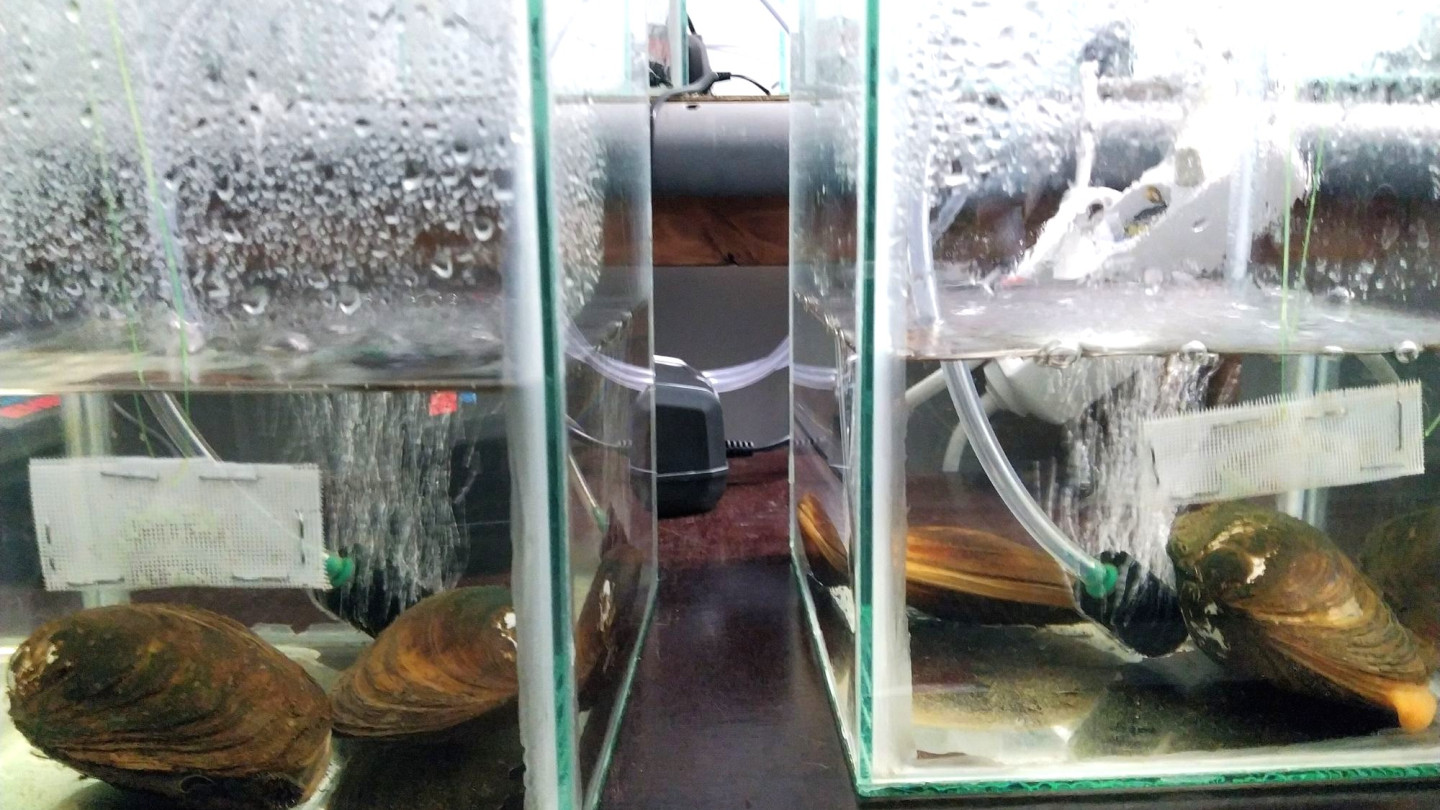
Water mould can infect eggs, fry and adult fish and can hinder fish farming in inland waters. It has also become a significant threat to the conservation of endangered salmonids, as the disease has destroyed valuable farmed broodstock.
Traditionally, the prevention of water mould has relied on chemicals, but these are expensive and their use is restricted for health and environmental reasons. Therefore, new, environmentally friendly methods of preventing water mould are highly desirable.
“Mussels are known to be effective in biofiltration,” says lead author, Doctoral Researcher Ville Julkunen from the University of Jyväskylä.
“Any small organic particles in the 5 to 50 micrometre (µm) size range are suitable for them. Water mould spores fall within this size range, so we wanted to find out whether mussels would consume them.”
The mussels removed mould spores and reduced their germination rate
According to the researchers, the results of the study were promising in many ways. In aquaria containing mussels, the concentration of water mould particles decreased sevenfold compared to control aquaria without mussels. Additionally, the germination rate of spores that were not consumed reduced to less than 25 per cent in mussel aquaria compared to control aquaria.
“This means that mussels not only eat spores but also harm them in an as yet unknown way, opening up interesting new avenues for research,” says Senior Lecturer and Docent Katja Pulkkinen, who supervised the dissertation at the University of Jyväskylä.
Mussels protect fish eggs from mould infection
The most convincing evidence of the effectiveness of mussels in preventing water mould disease emerged when sensitive fish eggs were exposed to mould spores. Without mussels, 93–100 per cent of the eggs became infected with mould within 24 hours. In mussel-containing aquaria, however, this figure was just 0–3 per cent.
“In fish farming, a mortality rate of almost 100 per cent among fish eggs is common if pesticides are not used,” says Professor Jouni Taskinen from the University of Jyväskylä. “In this laboratory study, mussels made it possible to achieve almost complete protection using a natural, chemical-free method.”
The study has received funding from the Nessling and Wihuri foundations, which are supporting Ville Julkunen’s doctoral research.
The study was published in the Freshwater Biology journal in June 2026:
- Julkunen, V., Pakarinen, V., Korkea-aho, T., Viljamaa-Dirks, S., Taskinen, J. and Pulkkinen, K. 2025. Freshwater mussel Anodonta cygnea reduces concentration, germinability, and infectivity of pathogenic oomycete Saprolegnia spp. spores. Freshwater Biology, 2026; 71:e70261: https://doi.org/10.1111/fwb.70261
For further information
Ville Julkunen, University of Jyväskylä, Department of Biological and Environmental Science, ville.i.julkunen@jyu.fi
Katja Pulkkinen, University of Jyväskylä, Department of Biological and Environmental Science, katja.pulkkinen@jyu.fi, tel. +358408469359
Jouni Taskinen, University of Jyväskylä, Department of Biological and Environmental Science, jouni.k.taskinen@jyu.fi, +tel. +358403558094


