Biography
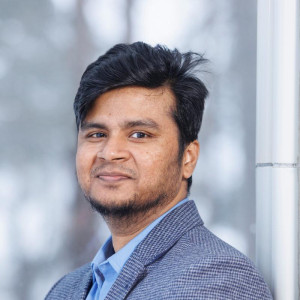
Dr. Abdul Kadir Khan is a Postdoctoral Researcher in Development Studies at the Department of Social Sciences and Philosophy, University of Jyväskylä, Finland. He is the recipient of a Kone Foundation postdoctoral research grant for his project, “Trapped in Climate Fragility: Sustainability Transformations Across the Humanitarian–Development–Peace (HDP) Nexus in Protracted Humanitarian Crises” (2026–2029).
His current research investigates how climate vulnerability, environmental degradation, and protracted displacement interact to reproduce fragility and constrain sustainability transformations in humanitarian crisis settings. Focusing on the Rohingya refugee response in Cox’s Bazar, Bangladesh, the project examines how humanitarian, development, and peace interventions can better address the interconnected social, political, and environmental dimensions of protracted crises. It explores the possibilities and limitations of locally grounded approaches to climate-sensitive humanitarian governance, resilience, environmental peacebuilding, and sustainability transformations.
More broadly, Dr. Khan’s interdisciplinary research spans humanitarian governance, localization of humanitarian action, forced displacement, genocide and human rights, and peacebuilding. His doctoral research examined the localization of humanitarian action in the Rohingya response, focusing on humanitarian space, the agency of local organizations, and the institutional and political constraints shaping humanitarian practice.
Dr. Khan holds a Bachelor of Social Sciences in Political Science from the University of Dhaka, an MSc in International Development Studies from the Norwegian University of Life Sciences (NMBU), and an MPhil in Peace and Conflict Studies from the University of Oslo. Alongside his research, he coordinates and teaches the Master’s-level course Civil Society Organizations in Development Cooperation and Humanitarian Action at the University of Jyväskylä.
He welcomes international research collaboration and policy-oriented partnerships on climate fragility, sustainability transformations, humanitarian governance, forced displacement, and the Humanitarian–Development–Peace nexus.