
GENTRY attented to Nordic Baltic PIAAC-conference: Thoughts on research, Adult skills and Adult learning
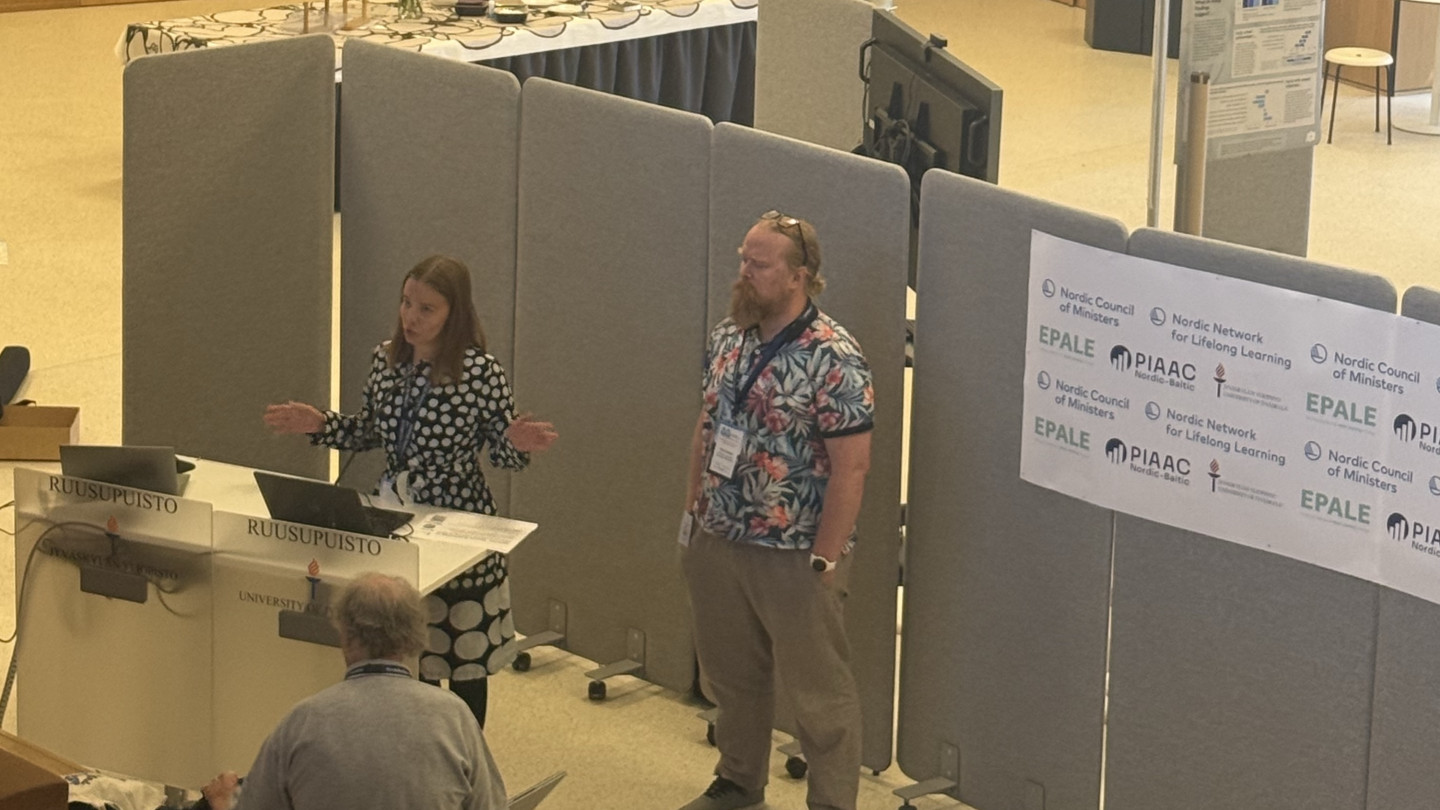
Together with my colleague Panu Forsman, we had the opportunity to attend and present at the Nordic-Baltic PIAAC Conference in Jyväskylä on 26–27 August 2026. We were given the chance to present the preliminary quantitative results of a sub-study within our GENTRY project and to discuss how to take them forward, participating in this way in the research discussion on adult skills and learning. As in this blog post, in our presentation we also reflected on, amongst other things, what kind of structure adult skills form and what factors might underlie the structure in question.
The Nordic-Baltic PIAAC Conference indeed succeeded in sparking thoughts and research ideas relating to topics of special interest to our GENTRY research group, namely generational issues. While PIAAC data is often used and analyzed utilizing an age variable, our generational perspective (see GENTRY description) seems to spark interest. The conference thus provided us with the opportunity to explore, for example, the phenomenon of generational differences regarding educational history and age, as well as the relationship between skill levels, education, and the skills required at work. It was also an excellent opportunity to initiate and listen to discussions on topics that received less attention in the main presentations, such as the application of skills and related guidance in the workplace, as well as sector-specific differences in workplace learning.
Although the conference addressed adult competence, topics such as workplace learning and everyday learning practices in general indeed received little attention. There seemed to be a strong focus on human capital and education when it comes to adult skills and their development, which means that learning itself, the very aspect that actually develops skills, was given less attention. PIAAC data is rich and huge, with more than 200k respondents in its first cycle and more than 160k in this second cycle that we are using. While interest seems to be high, it will be interesting to see where this statistically demanding data will lead.
Where and how does the PIAAC study’s target group – working-age adults – learn best?
In the future, I would like to encourage more concrete discussion regarding adult skills and their development: skills do not simply increase, decrease, or become outdated on their own. After all, we all know that much already. Therefore, in my view, cause-and-effect relationships should be explored not only within the educational system but also in the working environments, work tasks, and learning situations where adults spend the majority of their daily lives and where their skills are in fact developing, changing, and being put into practice. Learners and their backgrounds must also be taken into account; drawing inspiration from the conference, factors such as changes to the education system, age, and, as my own addition, years of work experience, for example, could become extremely useful areas of research. I was also pleased to see that the need for qualitative research on this topic seemed to be gaining popularity alongside quantitative research.
So, here’s to some good ideas and inspiration for the future! ;)
Maria


