

Focus on forests: how research can reconcile economic and biodiversity goals
In heavily forested Finland, a discussion about the importance of forest biodiversity is in order: Finland has nearly 23 million hectares of forest – only a quarter of Finland’s area is not covered by forests.
A third of Finland’s endangered species live mainly in forests. According to research findings, diverse forests are also more resilient: the ecosystems work better, forests are more resistant to pests, and recover better from damages.
Research shows that biodiversity is declining, and long-term projections predict the continuing negative trend.
The forest sector, that is, forestry and the forest industry, plays a key role in protecting biodiversity. The most recent new requirements for the use of forests are part of the EU biodiversity strategy and the Nature Restoration Regulation.
What are the biggest challenges at the moment for the Finnish forest industry and economy in regards to securing biodiversity? Why are these at the top of the list?
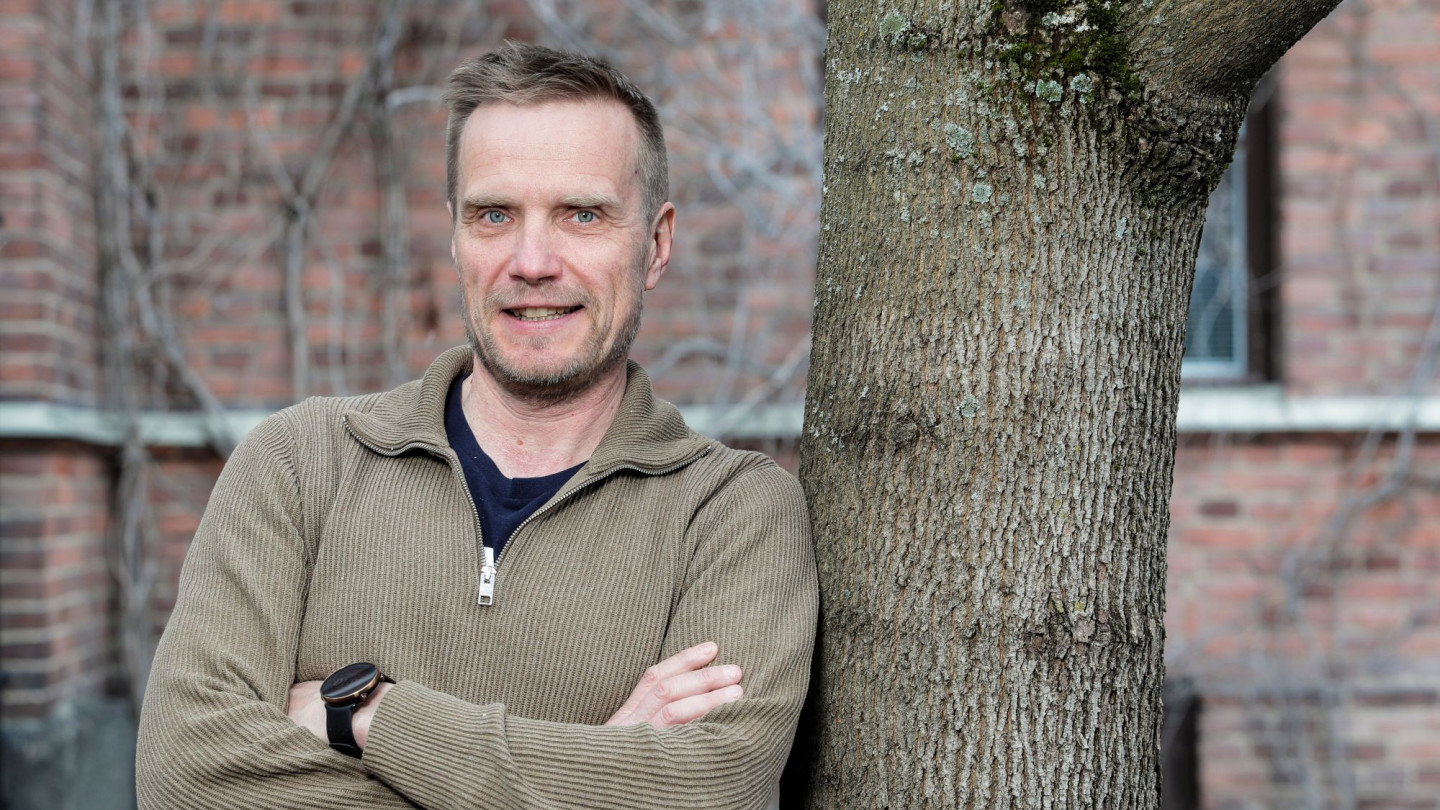
These questions were answered by Professor of Applied Ecology Mikko Mönkkönen, who investigates the sustainability transition of the forest sector, and Associate Professor Marileena Mäkelä, who studies responsible business, both from the University of Jyväskylä. Mäkelä is a member of a the Finnish Forest Bioeconomy Science Panel appointed jointly by the Ministry of Agriculture and Forestry and the Ministry of Economic Affairs and Employment.
We asked
| 1. | Why must the biodiversity of forests be secured? |
| 2. | What are the biggest sustainability challenges to the Finnish forest sector and the challenges for securing biodiversity at the moment? Why are these at the top of the list? |
| 3. | What current factors prevent or promote the solving of these challenges? |
| 4. | In your view, what kind of role does the forest industry play in solving challenges related to securing the diversity of forests? |
| 5. | What are the most important other parties for solving the challenges? |
| 6. | What new ways does research suggest for facilitating the reconciliation of the respective goals of biodiversity and the economy of forest industry? |
| 7. | How near or far is our national understanding in relation to reconciling the goals of biodiversity and the forest industry? |
| 8. | The researcher as reconciler: How can the economic goals of the forest industry and the goals for biodiversity be reconciled? What advice do you have for industry, companies and other operators, perhaps for consumers as well? |

1. Why must the diversity of forests be secured?
Mönkkönen:
Diversity is the structure on which the ecosystem, or the forest as a whole, functions. Securing diversity means that a forest remains a forest, not just a source of wood as raw material.
Mäkelä:
Finland is a forested country, but although we have a lot of forests, many endangered species live in them, especially in old-growth forests. There are but few old forests in Finland, and the main reason for this is forestry. In general, most of the Finnish forests are commercial woodlands, and protected forests are relatively scarce. In Finland, forests are cut down at a relatively young age for the needs of industry. Diverse forests are more likely to withstand environmental changes and extreme weather phenomena than are commercial woods of a single tree species, for example. So, diverse forests also secure the supply of raw material for the future forest industry.
2. What are the biggest sustainability challenges to the Finnish forest sector and the challenges for securing diversity at the moment? Why are these at the top of the list?
Mönkkönen:
Stopping the loss of biodiversity and reversing the trend toward recovery is the number one challenge, for the above-mentioned reason.
Secondly, I would highlight the effects that the usage of forests has on water bodies. These are not often discussed, but forest management has a big impact on the quality of small water bodies and, consequently, on the quality of lakes, rivers and coastal waters. The forests on peatlands drained in the 1960s and 1970s are reaching regeneration age. The regeneration of these forests through clear-cutting would cause a vast load on waterways, threatening the habitats and organisms of aquatic ecosystems.
The third challenge is the dependence of the forest industry’s value creation on high volumes. Its underlying reason is the insufficient extend of value added, which makes it necessary to harvest vast amounts of wood from forests in order to gain economic profit.
Mäkelä:
Responsible business consists of economic, environmental and social responsibility. These involve challenges.
Economic responsibility encompasses ensuring economic viability and distributing economic welfare to the surrounding society. Related to this, the biggest challenge is the uneven distribution of wealth both globally and locally.
The second challenge pertains to environmental responsibility. For environmental responsibility, it will be a problem if production consists largely of disposable goods (toilet paper and other tissue products, disposable items). The price of these goods is also often low. These call for large logging volumes, which provides a direct link to the challenges pertaining to diversity and endangered species. Large logging volumes usually mean that forests are harvested while they are still relatively young.
Social responsibility, in turn, covers the human relationships of a company. The challenge is how we treat fairly the groups of people within our sphere of influence. Through subcontracting, social influences can be global, and on the other hand, we have a number of examples of socially unsustainable working conditions among people working in Finland.

3. What current factors prevent or promote the solving of these challenges
Mönkkönen:
A preventive factor is the path-dependency of the forest industry on past large-scale investments, which impedes the development of novel, forest-based value chains.
Another preventive factor is the emphasis of the subsidy system for forestry in support of timber production instead of supporting primarily issues important for the general welfare such as maintaining diversity or climate benefits.
A promotive factor is the EU Nature Restoration Regulation, which requires improvements to the quality of forest and aquatic ecosystems. This drives actions that slow down the erosion of biodiversity. When implemented on a sufficiently large scale, the measures also help reverse the trend towards the recovery of diversity.
Another promotive factor is markets for nature value. It is a mechanism that, when extensively and appropriately implemented, will create prerequisites for taking biodiversity better into account in forests. It also creates an alternative way for forest owners to earn from their property as well as an incentive to maintain and produce nature values in forests.
Mäkelä:
A preventive factor is the current structure of production. Corporations have invested heavily in existing pulp mills, for example. These produce products in great volumes, and the products still yield a reasonable value. This becomes a problem if the production rates of pulp, for example, increase in markets where production costs are lower than they are in Finland. To an outsider of the forest industry, it seems that as yet there are no substituting products which could be produced in equally large volumes.
A promotive factor is the renewability of the raw material used in forest industry. The forest industry has potential in replacing fossil raw materials, such as substituting plastics, for example. The problem cannot be solved by paper bags or cardboard straws; it is larger in scope. For example, timber-based building could be a significant factor in reducing the climate impacts of construction. A fine example is Finland’s biggest building made of mass timber, Stora Enso’s new headquarters in Katajanokka.
A clear promotive factor is Finnish research expertise related to forests. Finland has a wealth of high-level experts in the paper manufacturing chain, for example. Finland has previously produced high-quality and expensive paper, but global paper consumption has decreased and Finland is currently producing much cheaper paper than before, such as print paper for newspapers.
Alongside technology, Finnish forest research is extensive and of a high standard. A wide variety of forest-related research is conducted in Finland. More research, however, should be pursued in a multidisciplinary fashion. Cooperation is needed for companies’ responsibility work

4. In your view, what kind of role does the forest industry play in solving challenges related to securing the diversity of forests?
Mönkkönen:
The role is a central one. Decisions made by the industry today will have a long-term impact on the future. If the Finnish forest industry wants to be genuinely sustainable, it must recognise its responsibility and place the improvement of biodiversity and climatic issues on the management’s strategic agenda. Sustainability also means securing long-term operational capabilities and is thus an element of rational business economy.
Mäkelä:
The forest industry plays a key role in securing the biodiversity of forests. Although forest industry owns only a small share of woodland, as a big player it has a significant role. Big players, such as Stora Enso, UPM and Metsä Group, have made their own programmes to promote the biodiversity of forests, though these are often limited only to the forests they own. The Finnish Forest Industries Federation and the Finnish Sawmills Association have created a joint roadmap for biodiversity. The contribution of big players is important and gives direction to the whole sector.
Forest corporations that buy wood from forest-owners have a lot of power and a duty to develop the biodiversity competence of their chain.

5.What are the most important other parties for solving the challenges?
Mönkkönen:
Political decision-makers play a central role. Legislation, public subsidies to forestry, and other means of politicy instruments play a central role in establishing the operating environment for the usage of forests.
Forest-owners and their advocacy group’s role are also relevant for the future state of forests. The Central Union of Agricultural Producers and Forest Owners has already started piloting nature value trading and established a market platform for this.
We should not underestimate the role of civic actors, NGOs, and associations, which have a big role in creating public awareness and attitudes regarding forest issues.
Mäkelä:
Forest owners have an important role. Their decisions affect in practice what kind of biodiversity prevails in their own forests. For these efforts, forest owners need additional information. For a long time, the only way to gain income from forest property was through logging; now the emerging nature value trading brings a welcome change. The state, and especially Metsähallitus as a big forest owner, naturally has a great significance as well. I regard the measures of Metsähallitus and the government as an example, showing the way: How do we foster our shared forest property in Finland?
6. What new ways does research suggest for facilitating the reconciliation of the respective goals of diversity and the economy of forest industry?
Mönkkönen:
Research has shown that the means required by forest certification and forest legislation are insufficient for the management of forest ecosystems, and more must be done in order to secure biodiversity.
From the perspective of the management of commercial forests, the key measure suggested in research is the usefulness of the diversification of forest management practices. More variation is needed in logging, more continuous cover forestry, as well as longer and more varied rotation cycles. It is not necessarily a question of great financial costs. For example, moderate lengthening of the rotation cycles for forests so that the final harvesting takes place not until the trees are 90 years old, would be a positive measure both for climate and for ecology, while also often yielding a better economic result.
Mäkelä:
I would like to highlight two reports by the Finnish Forest Bioeconomy Science Panel.
The first one, “From timber to medicine”, investigated possibilities for increasing the added value of forest industry. The main message of this report is that forest industries should produce a greater variety and more processed products from wood. For example, traditional pulp could be further refined into nanopulp or textile fibres. Nanopulp, in turn, can be used to make packaging materials to replace oil-based ones, water filtration membranes, as well as materials for various medical applications.
One problem is that forest bioeconomy is conceived of mainly through the current type of the forest industry, and people often talk only about more efficient use of material side-streams. This overlooks, for example, the recreational use of forests, which is nevertheless important to the public. This also neglects other branches of business, like nature tourism, commercial use of natural products, as well as hunting and fishing. It would therefore be important to see that forests can be used for business purposes other than logging.
7. How near or far is our national understanding in relation to reconciling the goals of diversity and the forest industry?
Mönkkönen:
The national understanding of the current situation is shared, as all parties recognise the need to do things better in order to secure diversity, to enhance the climate benefits and resilience of forests, and to raise the degree of processing. There is disagreement over the means to achieve this. Some emphasise the role of the private sector and markets in the development of better practices, while others believe that better regulation is in the decisive role.
Scientific results suggest that we actually need a combination of regulation and market-based methods if we effectively want to shift toward sustainability in forest use.
Mäkelä:
When following the media discussion, one often feels that the different parties are very far from each other. Forest industry representatives often express alarm in the media over talk about logging restrictions. Citizens, however, are more open to such restrictions, for example. In a survey conducted a year ago, 45 percent of respondents were in favour of reducing logging volumes, and nearly half hoped for other forest-based business alongside the traditional forest industry. Citizens would want more diverse business activities and recreational values from forests.
On the other hand, in the same survey, it was very difficult for the respondents to evaluate how successfully the different uses of forests were integrated. As a researcher, I find this terribly interesting, and would like to get a chance to study why evaluation is so difficult.

8. The researcher as reconciler: How can the economic goals of the forest industry and the goals for biodiversity be reconciled? What advice do you have for industry, companies and for consumers as well?
Mönkkönen:
The natural capital must be recognised, that is biodiversity, the ecosystems relying on it, and the resulting ecosystem services as a central factor for production. Ecosystem services refer to the benefits and functions forests provide for people and society for example, carbon sequestration, purification of water, and recreational benefits. In addition to the notion that maintaining the natural capital is morally right and a duty, it is also a prerequisite for sustainable business.
Mäkelä:
The industry needs both the companies’ own and universities’ and research institutes’ contributions to research and product development, so that they can develop new, highly refined products. There is need for innovation and courage to do things in a new way. I have understood that we have plenty of small-scale innovations or inventions, but they have not yet been scaled up to the industrial scale. We need many more wood-based innovations, such as raincoats made of wood-based fibre, designer bathroom furnishings made of the material side-streams of the forest industry, or wood-based plaster.
Consumers also have an important role in this. I often advise us consumers to question our own habits. The very reason for environmental problems is over-consumption. Finland’s calculated date of annual over-consumption was 1 April. Before you buy, stop and think if you need the new thing. Can it be borrowed or rented? Can you buy it as a second-hand item? If you need to buy something new, find out the backgrounds of the product and its manufacturer.


