

Representative democracy should see beyond the talk of crisis
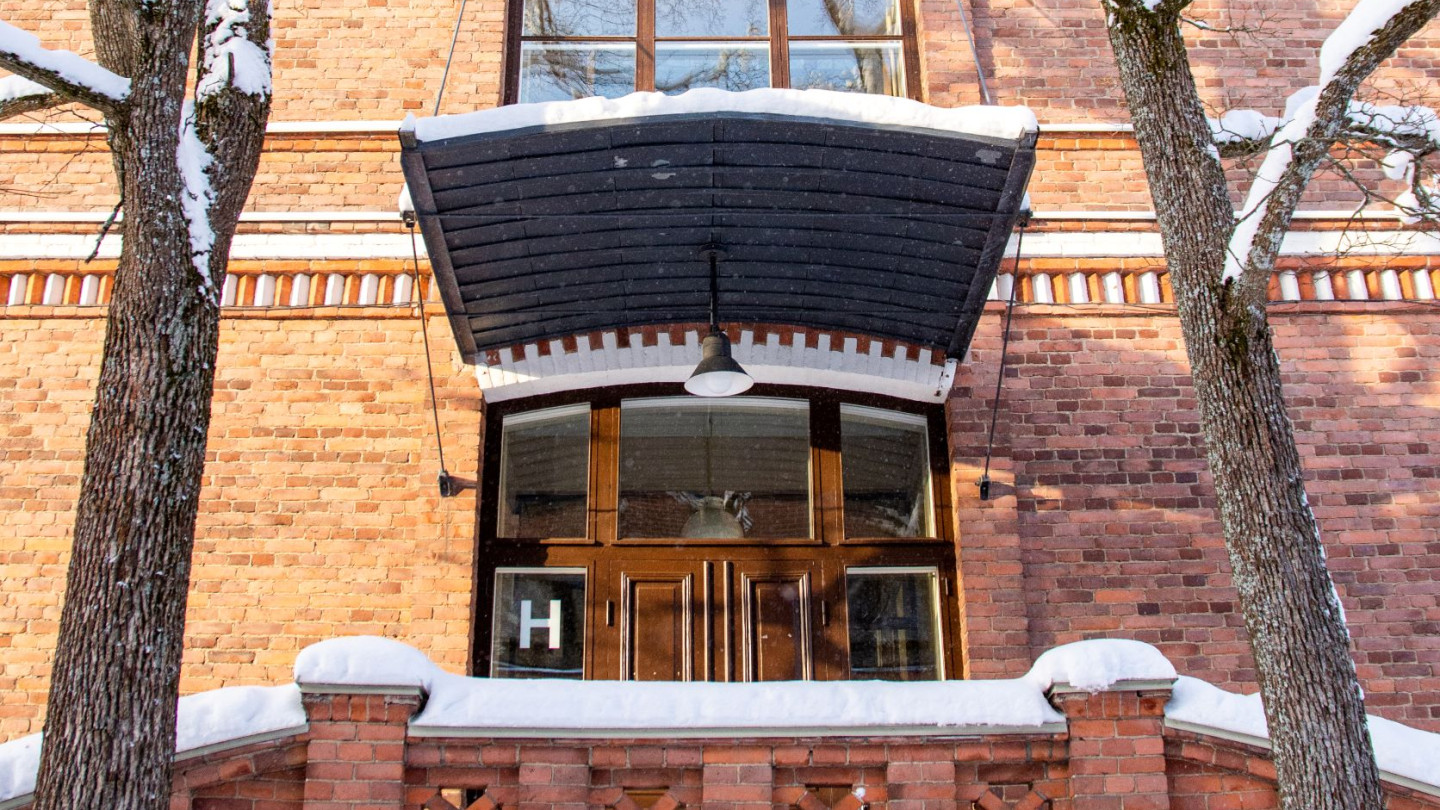
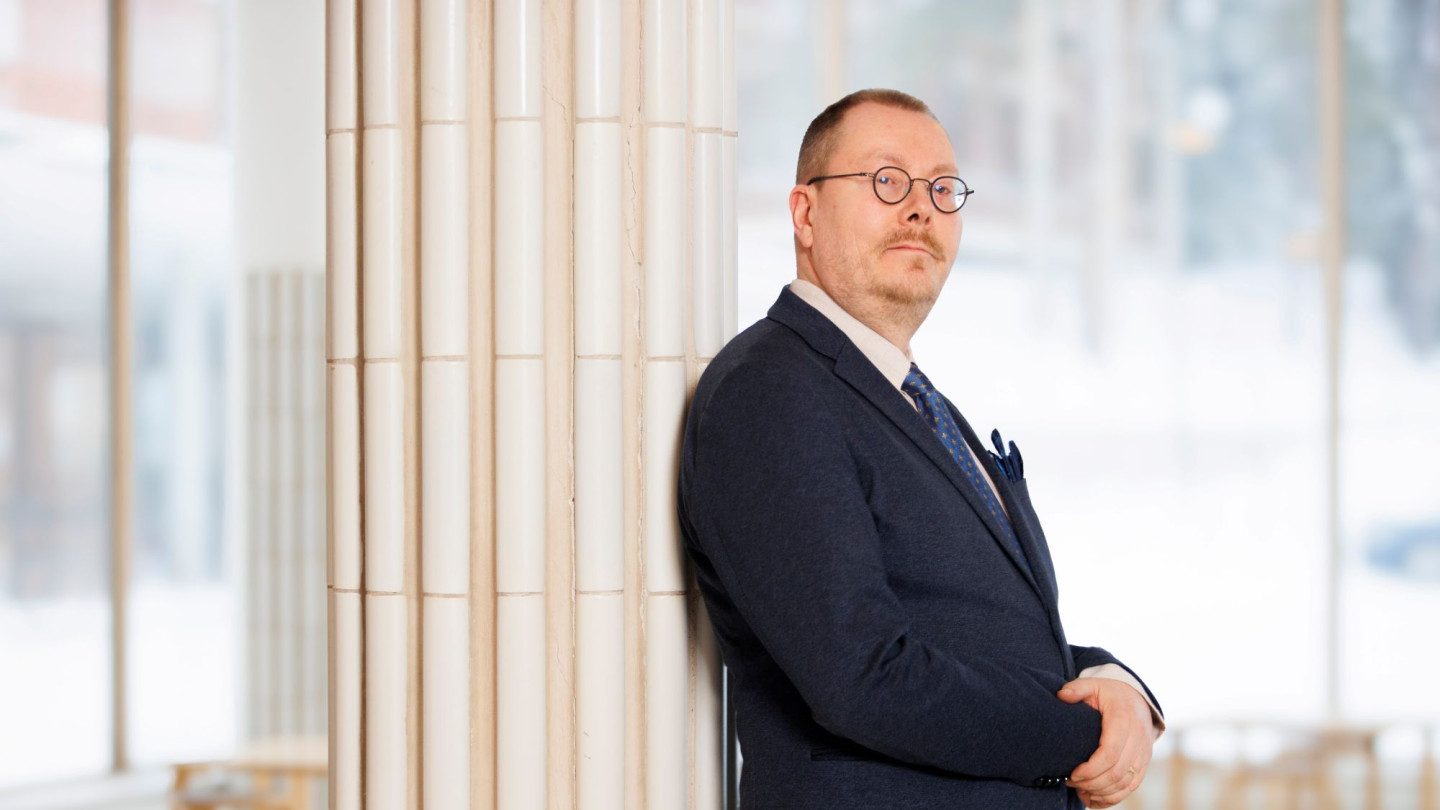
The brick walls of the Historica building at the University of Jyväskylä glisten with frost on a freezing February day. Inside, the cold is left behind as I step into the office of Academy Professor of History Pasi Ihalainen, surrounded by sagging bookshelves.
Ihalainen studies the long-term development of political discourse and representative democracy in Northwestern Europe. His perspective spans centuries, making him the right person to assess what can be learned from the developmental trajectories of European democracies – and how they help us understand democracy today.
In representative democracy, decision-making power lies with elected representatives. This model has been in use in Western countries since at least the nineteenth century. The system has been proven to be a quite effective way of managing societal affairs, although the debate over whether citizens should be able to influence public matters even between elections intensified at the end of last century, Ihalainen explains.
Participatory democracy is not without its problems
The idea of participatory democracy first emerged more extensively around 1968 and gained greater momentum in the 1990s, when the early days of the internet were seen to be creating new opportunities for citizen participation. In the 2000s, this theme also made its way onto the EU agenda and through that channel spread to Finland.
Politicians have been searching for practical solutions to participation for 30 years now.”
In Ihalainen’s view, citizens’ initiatives have been one of the most successful solutions for participatory democracy. They have mobilized people and, at their best, have also led to legislative changes.
Participatory democracy is not, however, without its problems: the more there is a call to hear from citizens, the more feedback and debate arise, which soon becomes difficult to manage.
Ihalainen calls this the paradox of participation.
With the advent of social media in the early 2000s, the downsides of participation became even more pronounced: the debate become more heated and polarized, meaning that the ideals of participation were never achieved in practice.
“Politicians wanted to involve citizens, but it proved to be complex in practice. Who can process thousands of pieces of feedback?” Ihalainen asks.
Referendums are susceptible to external influence and disinformation
In addition to participatory democracy, even more radical solutions have also been proposed. Ihalainen is cautious about methods of direct democracy, such as referendums. Over time, authoritarian leaders have used referendums to legitimize their power.
A recent example of a referendum is Brexit, which Ihalainen considers an extreme example of a decision that oversimplified a complex political issue and polarised the debate. Referendums are also susceptible to external influence and disinformation.
“Referendums have not fully disappeared, even though Brexit showed their ineffectiveness. In Switzerland, for example, there is now a debate about whether a limit should be set on the country’s population through a referendum.”
Far-right and right-wing movements support direct democracy
According to Ihalainen, in recent years direct democracy has been supported mainly by far-right and right-wing movements:
They see referendums as an opportunity to challenge the politics pursued by the parliamentary majority."
"The idea was originally a left-wing one as well, but as support for populism and the far right has risen and demands for ‘direct democracy’ have grown stronger, more moderate parties have become more cautious.”
In Ihalainen’s view, the problem is that political issues are rarely simple yes-or-no choices but rather require consultation with experts, discussion, and the opportunity for representatives to change their positions – to compromise. Referendums do not enable this kind of deliberative discussion.
Crises are a constant companion of democracy
Expert talk of a crisis in democracy is heavily featured in the media. Ihalainen acknowledges that the concern is partly justified. He considers the situation in the United States to be particularly serious and considers, assessing its democracy as “more or less collapsing”.
He is not as concerned about developments in Western Europe, even though trends in France and the United Kingdom raise some questions. In Germany, the majority’s strong historical awareness serves as a safeguard for democracy. According to Ihalainen, however, defending democracy remains an essential task within the EU.
He points out that talk of crisis is not a new phenomenon, but part of a long historical continuum.
In Western democracies and in Europe, things are better than ever before by many measures."
Certain threats – such as Russia’s aggression – rightly cause concern, but these can also unite and strengthen us in defending democracy,” Ihalainen notes.
Social media is deepening the divide in a worrying way
Media structures have changed many times, and the current transformation is no exception: in the early 20th century, readers of party newspapers lived in their own bubbles, radio became a tool of propaganda in the 1930s, and television in the 1960s gave politicians a direct line to the public – while also intensifying political debate.
Social media has since added its own dimension to polarisation, which worries Ihalainen. As debates intensify and the divisions deepen, groups drift apart, and the consequences can be serious.
Ihalainen reminds us that just over a century ago, Finnish history witnessed the cycle of violence to which the deepening ideological divide among the people can lead to.
When is democracy at its most fragile?
Ihalainen says that democracy can be seen as most fragile when moderate parties begin to cooperate with extremist movements, or when free discussion and the presentation of alternatives begin to be suppressed.
Ihalainen sees that the course of events in the United States is a cautionary example of this.
He emphasizes that upholding democracy requires an understanding of history.
As a society, we must actively remember where the rise of extremist movements and polarisation can lead at their worst. A short memory is not just a problem in politics, and that is why an understanding of history is crucial for democracy to remain vibrant and capable of reform.”
Criticism and dissatisfaction with democracy are, on the other hand, essential to its survival, Ihalainen emphasises. Open debate, the presentation of different alternatives, and questioning the exercise of power are the cornerstones of a healthy democracy – and that is precisely why they are worth cherishing.
“Representative democracy tends to be short-sighted”
The effects of climate change are already visible in our daily lives, and the loss of biodiversity is accelerating. Life on our planet is becoming increasingly unstable. Such changes raise the question whether our political system can respond quickly enough to these challenges.
Is representative democracy too slow for challenges of this magnitude and speed?
Ihalainen nods: The same thought has crossed his mind as well.
The problem, as he sees it, is not so much the slowness of democracy, but rather that its cycles are too fast in relation to the challenges and changes brought about by climate change. Elections every four years make politics short-sighted.
Representative democracy tends to be short-sighted. For many voters, the price of gas, a vacation in the south, or really anything else is far more important than biodiversity or the conditions we’ll be living in a few decades from now.”
According to Ihalainen, democracy is thus plagued by presentism in both directions – we are too fixated on the present moment and unable to see long-term developments and the common good.


