
Cefmof Foundation funding boosts hydrogen research at the University of Jyväskylä
Cefmof granted the University of Jyväskylä €1.325 million funding to strengthen hydrogen research and promoting sustainable transport and the circular economy. The five-year research programme is also supported by the university’s own €250,000 contribution. The funding is part of the strategic partnership of Cefmof and JYU, which aims to promote sustainable solutions for society and mobility through multidisciplinary research and education.
“The impact of the funding comes from the fact that it enables new initiatives and enhanced expertise” says Cefmof Executive Director Haruka Arai. “We are proud to contribute to the growing hydrogen ecosystem in Jyväskylä and to see research advancing in practice toward a more sustainable future.”
Hydrogen research is strengthened through complementary expertise
Hydrogen research at JYU is built on several complementary research areas that cover issues related to hydrogen production, materials research, and storage.
“This multifaceted approach strengthens JYU’s position as a pioneer in hydrogen research and creates a strong foundation for the development of sustainable energy solutions,” says Timo Sajavaara, Dean of the Faculty of Mathematics and Science at the University of Jyväskylä.
Ali Davoodi: Materials and electrochemistry supporting green hydrogen
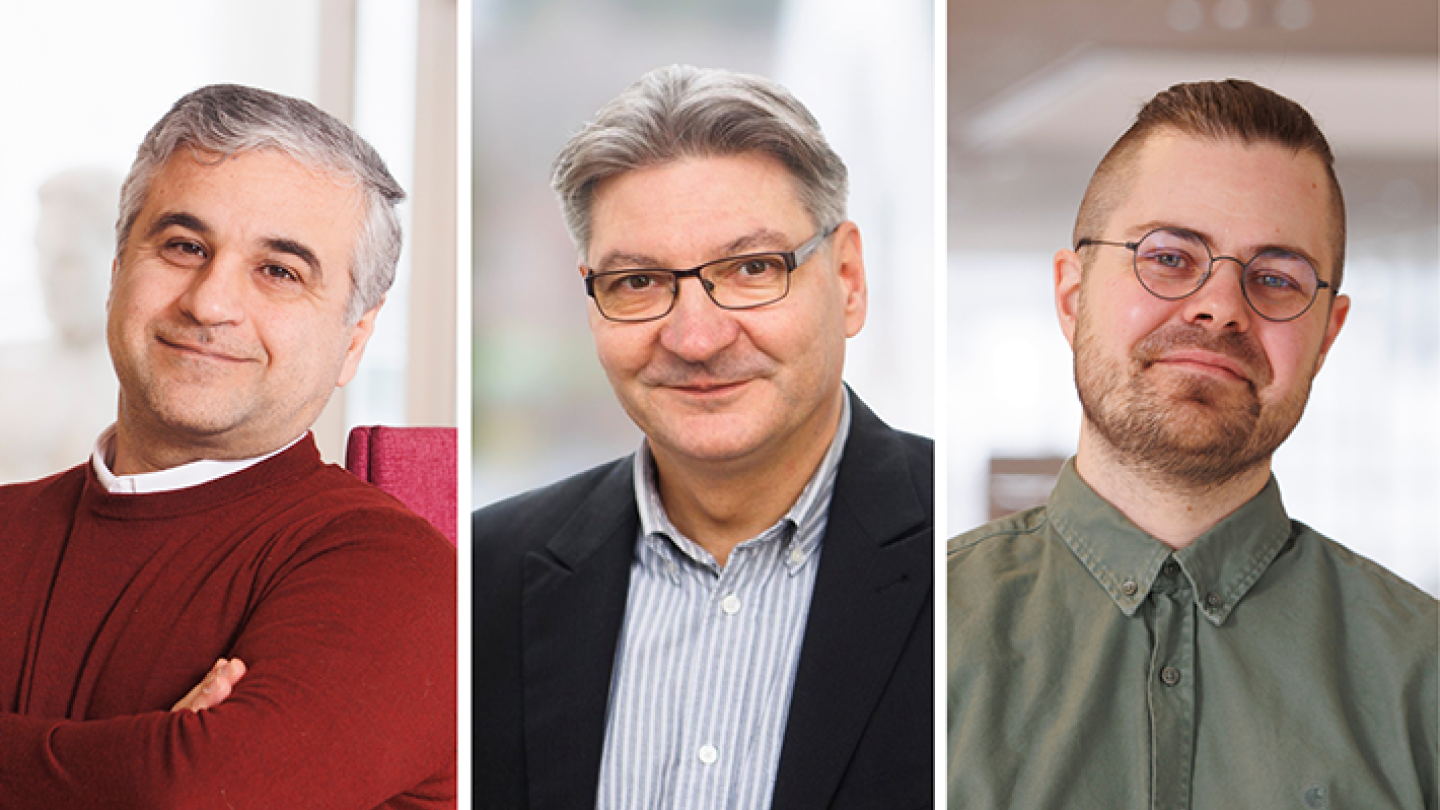
Associate Professor Ali Davoodi started in his position at the Department of Chemistry in January 2026. His research focuses on experimental electrochemistry, materials science, and green hydrogen technologies, which are pivotal in the global energy transition.
Davoodi aims to establish an advanced electrochemistry laboratory at the University of Jyväskylä to support the green transition. The laboratory will investigate how advanced electrocatalysts materials behave, degrade and perform in energy and industrial applications. Research projects are planned, for example, on sustainable and green hydrogen production paired with biomass valorisation, hydrogen storage materials and the integration of hydrogen into energy systems.
“It’s exciting to start this new phase at the University of Jyväskylä,” says Davoodi. “I look forward to building up research activities, developing new cooperation networks, participating in teaching and promoting hydrogen and sustainable energy solutions for a carbon-neutral future.”

Manu Lahtinen: Solutions for safe hydrogen storage
Associate Professor Manu Lahtinen’s research focuses on hydrogen storage, which is one of the key bottlenecks in practical hydrogen economy. Current storage methods are based on compressing hydrogen at extremely high pressures or liquefying it at very low temperatures, which makes storage and transport energy intensive and technically demanding.
Lahtinen is researching porous storage materials, particularly metal-organic network structures, also known as MOF compounds (Metal-Organic Frameworks), and biocarbon-based materials. MOF materials and porous carbon materials can bind hydrogen like a “sponge”, enabling more efficient hydrogen storage at lower pressures. This can reduce the weight and cost of tanks, improve safety, and reduce energy consumption.
“Porous materials may be the key to solving hydrogen storage problems, especially in transport applications,” explains Lahtinen. “When hydrogen is not just a gas, it binds to the surface of the material, and the pressure remains under control.”
The research is being conducted in collaboration with VTT, among others, where porous materials are tested under different pressure and temperature conditions. The aim is to find solutions that are suitable for practical applications, such as transport and energy storage.

Marko Melander: New computational methods to understand electrochemistry and hydrogen production
Hydrogen research is also being strengthened by Senior Lecturer and Academy Research Fellow Marko Melander. His research complements the Department of Chemistry’s expertise in material and electrochemistry research, particularly in the field of theoretical and computational electrochemistry.
Melander’s research focuses on the development and application of atomic-level computational methods suitable for modelling electrochemistry, for example, in the chemistry of hydrogen evolution and, more generally, in the study of electrochemical materials. The methods developed provide precise information on how and why electrochemical reactions happen. This information can in turn be used to explain experimental observations, to develop current materials, and to predict new materials. Future projects will focus even more strongly on developing and predicting the efficiency and sustainability of materials that are central to hydrogen chemistry through computational methods.
“I’m excited about the development of experimental electrochemistry research in Jyväskylä,” says Melander. “This initiative not only renews the Department of Chemistry’s research in a very important field but also enables direct combination of our internationally high-level method development and computational research with experimental electrochemistry. I believe that combining experimental and computational work will promote both the understanding of existing electrochemical materials and the faster development of new and better materials.”

Alongside research, investments in teaching and the circular economy
The strengthening of hydrogen research is also reflected in teaching. In January, the Department of Chemistry launched a new compulsory study unit for first-year chemistry students to teach hydrogen production as part of a sustainable energy system. In addition, the department teaches hydrogen chemistry, electrchemistry, and (electro)catalysis on several courses.
“Finland and Central Finland need new experts with a strong understanding of electrochemistry and its many applications,” says Melander. “It is important that we train these future experts here at JYU.”
Further information:
-
Central Finland Mobility Foundation (Cefmof):
-
Cefmof, Executive Director Haruka Arai, haruka.arai@cefmof.org, tel. 050 555 2310 (in English)
-
-
University of Jyväskylä:
-
Dean Timo Sajavaara, timo.sajavaara@jyu.fi, +358 40 805 4114
-
Associate Professor Ali Davoodi, ali.a.davoodi@jyu.fi, +358 50 435 3099
-
Associate Professor Manu Lahtinen, manu.k.lahtinen@jyu.fi, +358 40 805 3696
-
Senior Lecturer Marko Melander, marko.m.melander@jyu.fi
-


