
Dissertation: Collaboration between humans and AI can provide a decisive speed advantage in critical cyber operations
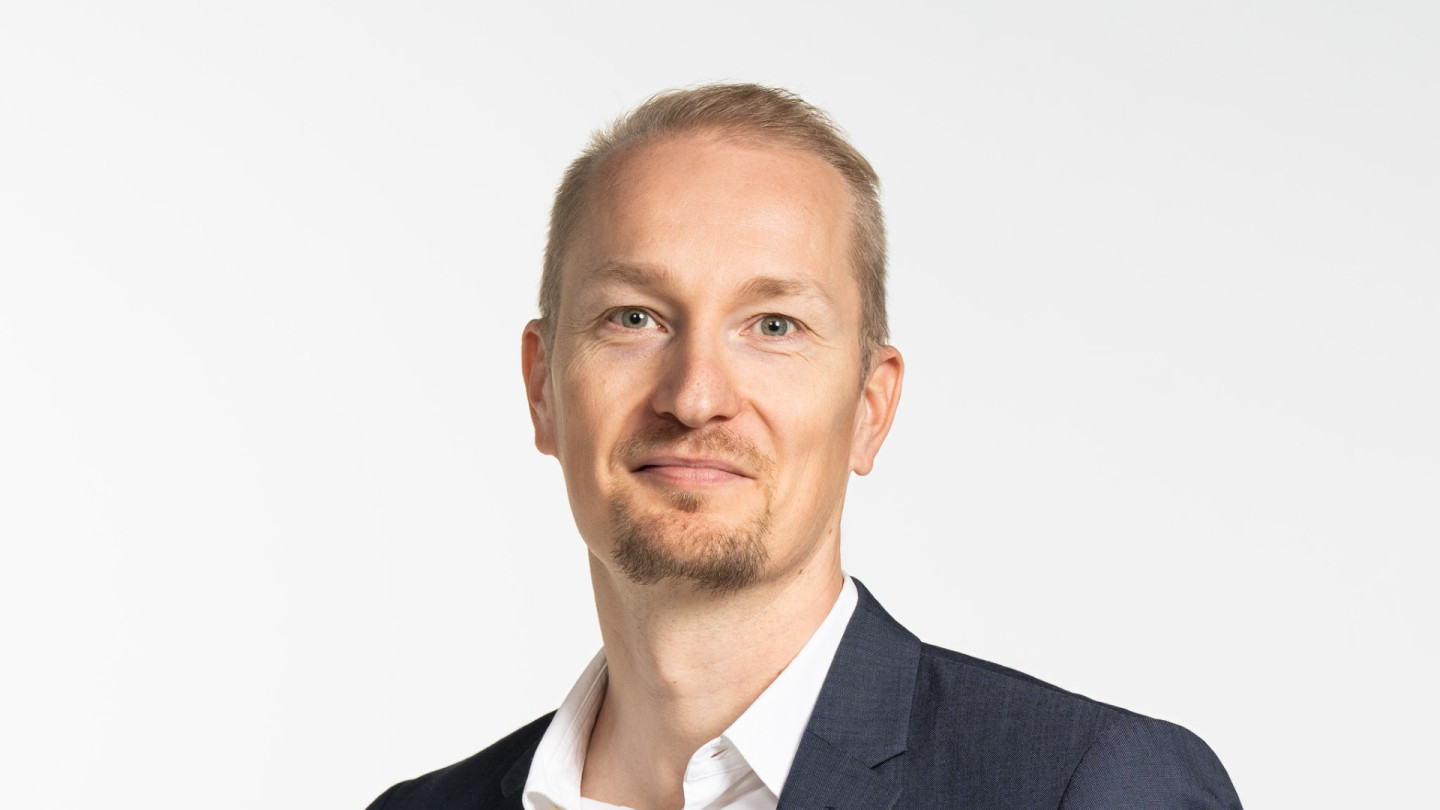
What did you study?
In my doctoral dissertation, I investigated how human-machine teaming (HMT) accelerates operational decision-making and how work should be divided within a team in environments that change rapidly and where the stakes are extraordinarily high. My primary research domain was defensive cyber operations (DCO), where defenders maneuver under the influence of active and adaptive adversaries. However, the core principles of this decision-making and division-of-labor model can be applied directly to operational business management or dynamic crises where acting slower than the competition leads to loss.
Previous AI research in cyber operations has focused largely on technical capabilities or high-level strategy, leaving the operational leadership level with less attention. My research addressed the core of operations leadership: how teams make decisions under intense pressure and how tasks are optimally distributed between humans and AI. Decision-makers must understand which critical decisions humans must make themselves and how to best leverage machine speed and computational power.
The research data was gathered by observing the decision-making of operations leaders and cyber defenders in the world's largest cyber defense exercise, NATO Locked Shields, by interviewing an international panel of cyber leaders, and by testing the performance of five AI agent systems I developed for demanding operations planning.
What were the results of your study or what is its main finding?
The research demonstrated that a properly guided AI agent provides teams with a significant speed advantage in preparing decisions. The machine can synthesize fragmented situational data and produce an executable operations plan (OPLAN) in minutes, whereas the same task typically takes human planning staff several days. In expert evaluations, the top-performing AI agent achieved an 80 percent executability score and prioritized defended assets as effectively as human experts.
However, the study also revealed distinct blind spots, which is why full autonomy in decision-making is not yet possible. AI agents failed to assess human workloads accurately, underestimating required personnel resources by an average of 85 percent compared to real-world teams. Furthermore, performance showed occasional variations across runs with identical prompts.
From a leadership perspective, the decisive factor is a clear division of labor and structured decision-making tiers:
- The machine's role in the division of labor: The AI handles large-scale data analysis, anomaly detection, drafting multiple parallel courses of action (COAs), and generating initial operations plans. The machine serves as a rapid situational data enricher and planning accelerator.
- The decision-maker's role in the division of labor: The experienced human leader retains absolute decision authority and responsibility at strategically critical points. These include setting asset prioritization, determining staffing and resource allocations, selecting and timing countermeasures, establishing rules of engagement, and managing stakeholder communication.
Similarly to mentoring junior colleagues, situational leadership principles can be applied to AI systems: they are given clear boundaries and assignments, but the human, acting in a mentoring role, oversees quality and confirms critical decisions.
The dissertation also defined best practices for building dependable AI agents. A large language model alone is insufficient; reliability requires rigorous context engineering: bounding background information fed to the agent, applying clear step-by-step prompt engineering, providing access to external tools for real-time data, and tuning safeguards tailored to the operational use case
How can the results be applied in society and business?
Whether dealing with a defensive cyber operation or high-tempo market competition, a lack of situational awareness and slower decision-making than the adversary leads to defeat. This doctoral research provides organizations with a concrete decision-making model, 22 documented AI use cases, and a reference architecture for multi-agent systems in defensive cyber operations.
The decision-making model structures operations into a planned primary process and a dynamic secondary process triggered when unexpected disruptions occur, designed to regain initiative amidst a crisis. With these findings, enterprises, government agencies, and critical infrastructure operators can establish an operational division of labor where decisions are made efficiently, and machine computation empowers human leaders. This enables organizations to operate at machine speed while preserving human judgment, situational awareness, and strategic accountability.
Public defense
M. Eng. Pietari Sarjakivi's doctoral dissertation in Software and Communications Engineering, "Artificial Intelligence Accelerated Cyber Operations – The Future of Cyber Operations Decision-Making", will be publicly examined at the University of Jyväskylä on Saturday, November 21, 2026 at 12:00. The public examination will be held in Agora, Auditorium 2 (Mattilanniemi 2, Jyväskylä). The opponent will be Professor Seppo Virtanen (University of Turku), and the custos will be Senior University Lecturer Panu Moilanen (University of Jyväskylä). The language of the event is Finnish.
Pietari Sarjakivi
pietari@sarjakivi.fi


