
Dissertation: In addition to financial calculations, people, power relations, and the context shape major investment decisions
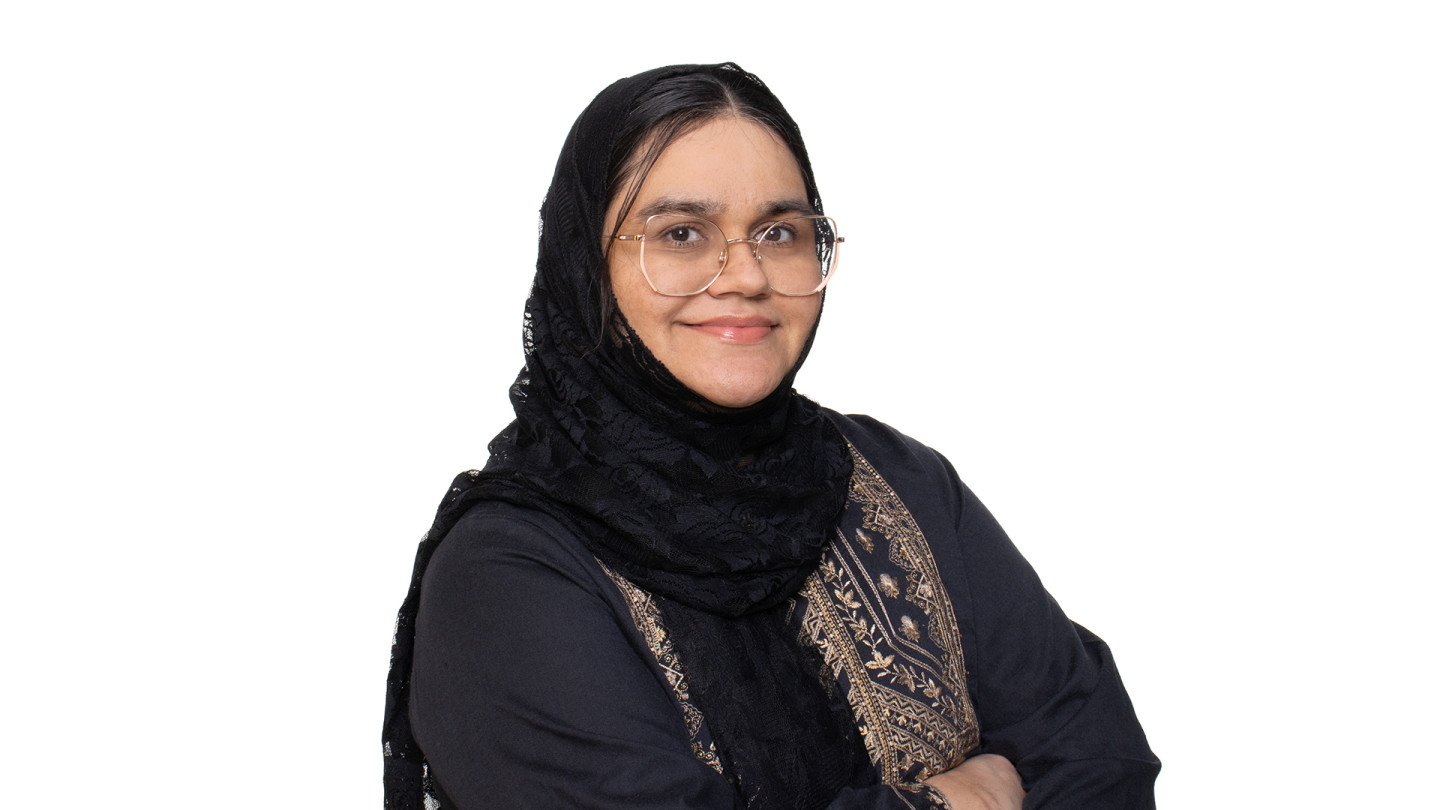
The dissertation focuses on manufacturing companies in Pakistan, a developing economy where firms operate under conditions of political uncertainty, regulatory change, and infrastructural challenges such as energy shortages. In many cases, however, investment decisions are strongly influenced by top management authority or managerial power rather than by financial calculations alone.
One of the central findings of the dissertation is that uncertainty fundamentally changes how decisions are made. When the external environment becomes unstable, decision-making often becomes more centralised, and organisations rely increasingly on judgement, experience, and negotiation.
“Traditional financial tools still play a role, but they are no longer sufficient on their own,” Imran explains. ”This challenges the widespread assumption that better calculations automatically lead to better investment decisions.”
Understanding organisational dynamics is just as important as financial expertise when making major investment decisions
Beyond the specific context of Pakistan, the findings have broader relevance. Many companies around the world operate in environments marked by uncertainty, rapid change, and increasing complexity. This dissertation shows that understanding organisational dynamics and contextual conditions is just as important as financial expertise when making major investment decisions.
“For business leaders, this means recognising the value of professional judgement and collaboration alongside financial analysis. For policymakers, the research highlights how political stability, clear regulations, and reliable infrastructure can directly influence companies’ willingness to invest,” says Imran.
Management accountants contribute to investment decision-making in many ways
This research also brings attention to the role of management accountants, who are often viewed simply as technical experts working behind the scenes. The findings show that management accountants contribute to investment decision-making in several important ways.
"They prepare cost analyses, support strategic discussions, evaluate alternatives, and help justify decisions within organisations. Although they rarely make final investment decisions themselves, their expertise is crucial in making investment choices appear credible and well-founded. Their influence depends strongly on their education, professional qualifications, and position within the organisation.”
Non-financial factors shape financial performance over time
The dissertation also highlights that strategic investment decisions are influenced by non-financial parameters such as management hierarchy, corporate strategy, and growth orientation, and that these factors are closely linked to firms’ financial performance. The findings show that while non-financial considerations guide how investment decisions are made and justified, their impact on financial outcomes is complex and often unfolds over time rather than immediately.
“Financial performance is not shaped by numbers alone,” Imran explains. “Investment outcomes reflect a combination of strategic priorities, managerial authority, and organisational structures. These non-financial factors influence not only which investments are chosen, but also how effectively they are implemented and sustained.”
By showing how strategic investment decisions are actually made in practice, rather than how they are described in theory, Imran’s dissertation offers new insight into how organisations navigate uncertainty and shape their future.
The examination of Sehar Imran's doctoral dissertation in Accounting and Corporate Finance "Strategic Investment Decision-Making Process: Contextual Perspectives, Roles of Management Accountants, and the Impact on Firm Financial Performance in Pakistan" will be held on Friday, January 30, 2026, at 12:00 noon in Seminarium Building, the old assembly hall S212 of the University of Jyväskylä. The opponent will be Docent Jean Claude Mutiganda (School of Business and Economics, Åbo Akademi) and the custos will be Professor Antti Rautiainen (University of Jyväskylä). The language of the examination will be in English.
The event can be followed remotely.
Explore Sehar Imran's doctoral dissertation.
More information:
Sehar Imran
sehar.s.imran@jyu.fi


