
Kristian Meissner aims to make Konnevesi Research Station more open and accessible
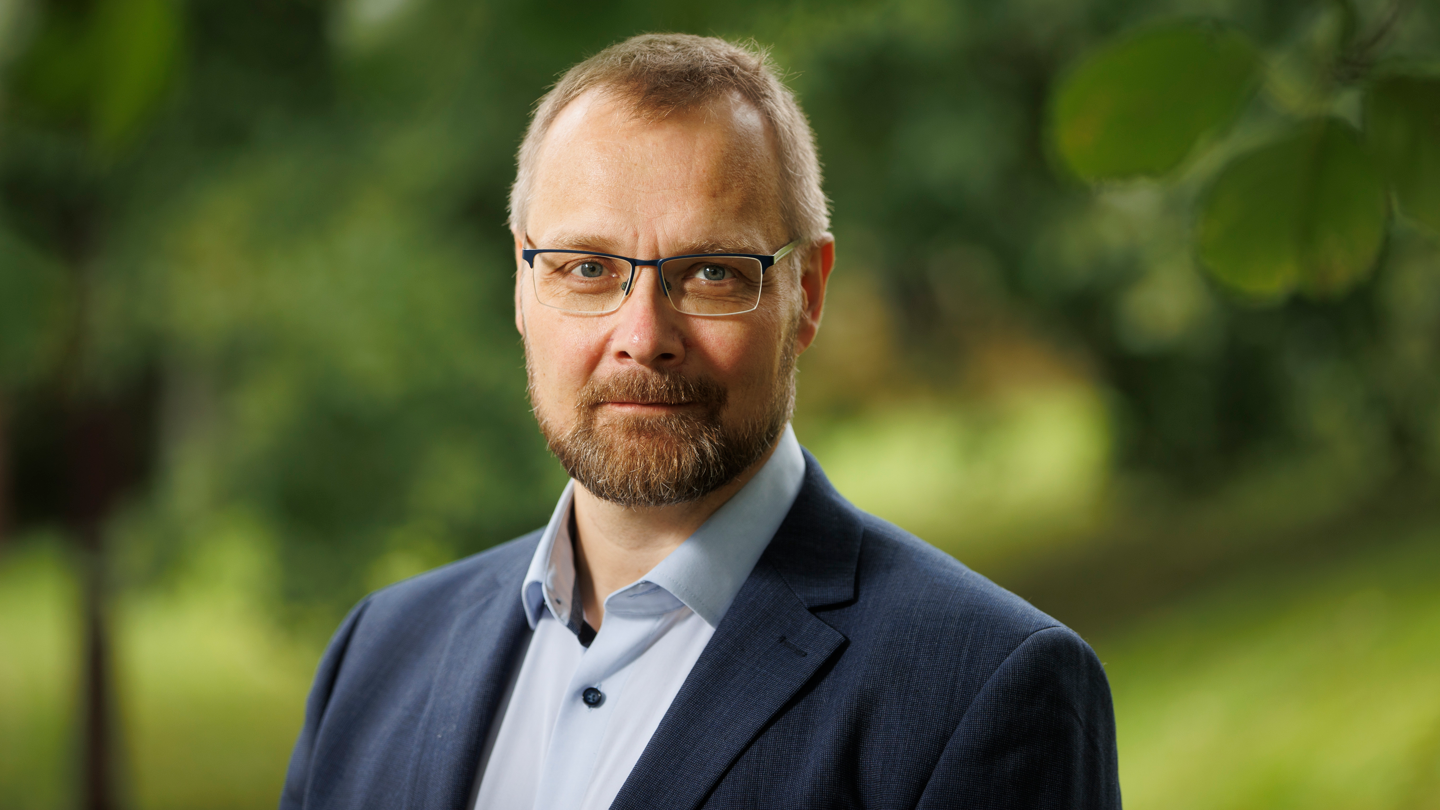
The position of director of the Konnevesi Research Station appealed to Kristian Meissner because it brings together many of the experiences and interests that have shaped his career.
“I have worked in a range of expert and developmental tasks within the environmental administration for more than 20 years,” Meissner says. “This position provides an opportunity to explore the university world from a new perspective while taking advantage of my previous experience. The Konnevesi area is also personally important to me, as I have a summer cottage in nearby Rautalampi and have known the area since childhood.”
Returning to his roots in Jyväskylä
Meissner’s academic journey began at the University of Jyväskylä, where he studied hydrobiology. After completing his master’s degree, he moved to the University of Oulu to finalise his doctoral dissertation. He subsequently built a long career in environmental administration, working in various expert and development roles at, among other places, the Finnish Environment Institute.
“It feels wonderful to return, in a sense, to where my academic journey began,” Meissner says.
Throughout his career, Meissner has been particularly interested in advancing environmental monitoring, developing new methods and applying them in practice. In recent years, he has focused especially on DNA-based methods and international standardisation work. He continues to play an active role in national and international standardisation committees.
“Standards provide a shared framework for environmental monitoring,” Meissner points out. “They don’t dictate how basic research should be conducted but create the common foundation needed for reliable environmental monitoring and evidence-based decision-making.”
Konnevesi provides an outstanding setting for multidisciplinary research
According to Meissner, the Konnevesi Research Station is known for its high-quality research. Research on freshwater pearl mussels and bird populations, among many other projects, demonstrate the station’s strengths. He believes its facilities and expertise could support a much broader range of disciplines beyond biology.
“The Konnevesi Research Station could serve researchers in social sciences, tourism studies and archaeology, and even provide an inspiring setting for writing retreats in the arts and humanities,” Meissner says. “There is also significant potential to deepen collaboration with Jamk University of Applied Sciences.”
Located near Southern Konnevesi National Park, the research station offers an exceptional research environment. In particular, it provides unique opportunities for experimental research in forest and aquatic ecosystems. The region’s lakes, forests and protected areas also support a wide range of research across disciplines.
“Researchers can study topics such as ecological restoration, fish population dynamics, forest biodiversity, or sustainable nature tourism,” Meissner states. “The environment offers unique opportunities for new forms of collaboration.”
A hub for research, teaching and collaboration
According to Meissner, the station’s greatest strengths are its high-quality research infrastructure, skilled staff and versatile operating environment. Research activities are supported by technical specialists, accommodation and dining services, and lecture and teaching facilities suitable for courses and training events.
In the coming years, the aim is to make the station even more open and accessible to researchers, students and partners. The goal is to strengthen its role not only as a centre of research but also as a venue for education, seminars, workshops and multidisciplinary collaboration.
“We want to offer a warm welcome and make it easy to get involved,” Meissner says. “The station is about much more than research alone. It is also an excellent place for learning, networking and generating new ideas together.”
Networks play a key role in the station’s development
Over the coming years, priority will be given to developing infrastructure, strengthening networks and raising the station’s profile. Meissner wants to take an open-minded approach to the station’s future needs and build its activities over the long term in partnership with regional stakeholders.
“We want to strengthen cooperation with local organisations, municipalities and other stakeholders,” Meissner says. “Looking further ahead, we also aim to expand international collaboration.”
Another important priority is strengthening cooperation with schools and educational institutions.
“We want to introduce the research station to a wider audience of school pupils, students and anyone interested in science,” Meissner says. “At its best, the station can serve as a bridge between science and society.”
An open invitation to collaborate
As he begins his new role, Meissner would like to extend an open invitation to researchers, students and partners:
“A warm welcome to Konnevesi. We are always happy to discuss new opportunities for collaboration. If you are looking for a new venue for research, teaching, seminars or other activities, we encourage you to get in touch. The possibilities are extensive.”


