
Machine learning identified the best structures for atomically thin metals
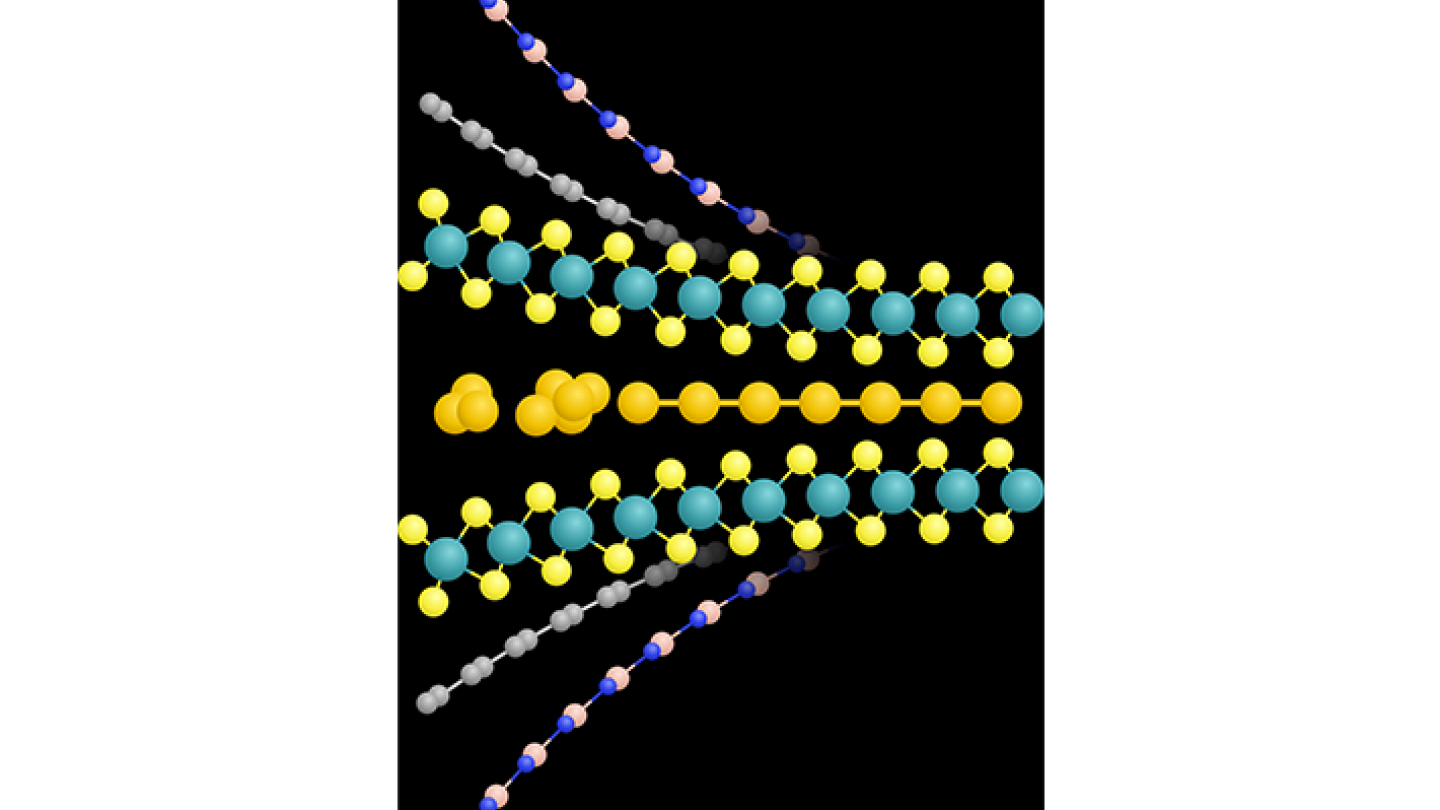
Metallenes are atomically thin layers of elemental metals. Their large surface area and unusual electronic properties make them promising materials for many future technologies. However, because metal atoms bond in all directions, free-standing metal sheets easily collapse into three-dimensional clusters.
In 2025, researchers showed that metals such as bismuth, tin, and lead can be kept flat by squeezing them between two sheets of molybdenum disulfide. However, finding out systematically which metals and protective layers work best would be impractical experimentally and far too slow with conventional electronic structure simulations.
Machine learning tests more than a thousand sandwiches
Researchers from the University of Jyväskylä solved the problem by using machine learning trained on data from first-principles simulations. This allowed them to explore a large family of metal “sandwiches”, combining dozens of different metals with several widely used two-dimensional materials such as graphene and transition-metal dichalcogenides.
The result is a broad map of which combinations can keep a one-atom-thick metal sheet stable, and why some work while others fail.
- Machine learning allowed us to examine more than a thousand heterostructures, far more than conventional quantum-mechanical calculations could handle, while we checked the key results against those calculations, says Postdoctoral Researcher Mohammad Bagheri from the University of Jyväskylä, who carried out the simulations.
Selenium-based materials performed best
Sandwiches made with the Se-based transition-metal dichalcogenides stabilized the largest number of metal layers. The protective layers keep the metal stable mechanically and chemically.
Simulations at room temperature confirmed that selected sandwiches stay intact, and the encapsulated layers remained metallic.
- The results give experimentalists a practical map: which metal to choose, which layer to wrap it in, and which structure to expect. This map can speed up the synthesis of new two-dimensional metals for real applications, says Professor Pekka Koskinen, who leads the research group.
Open data supports further research
The dataset of all stable structures has been made openly available to other researchers. The research was funded by the Jane and Aatos Erkko Foundation (EcoMet project). The calculations were performed on the LUMI supercomputer hosted at the Finnish supercomputing center CSC.
The results were published in the Nano Letters journal.
Article information:
- M. Bagheri and P. Koskinen, “Machine-Learning-Accelerated Metallene Stabilization from High-Throughput Sandwich Modeling”, Nano Letters (2026)
- Link to the article: https://doi.org/10.1021/acs.nanolett.6c04636


