
Risto Miettunen, new Professor of Practice in social and health care management at EduJyväskylä: “Social and health care services should be developed as a whole”
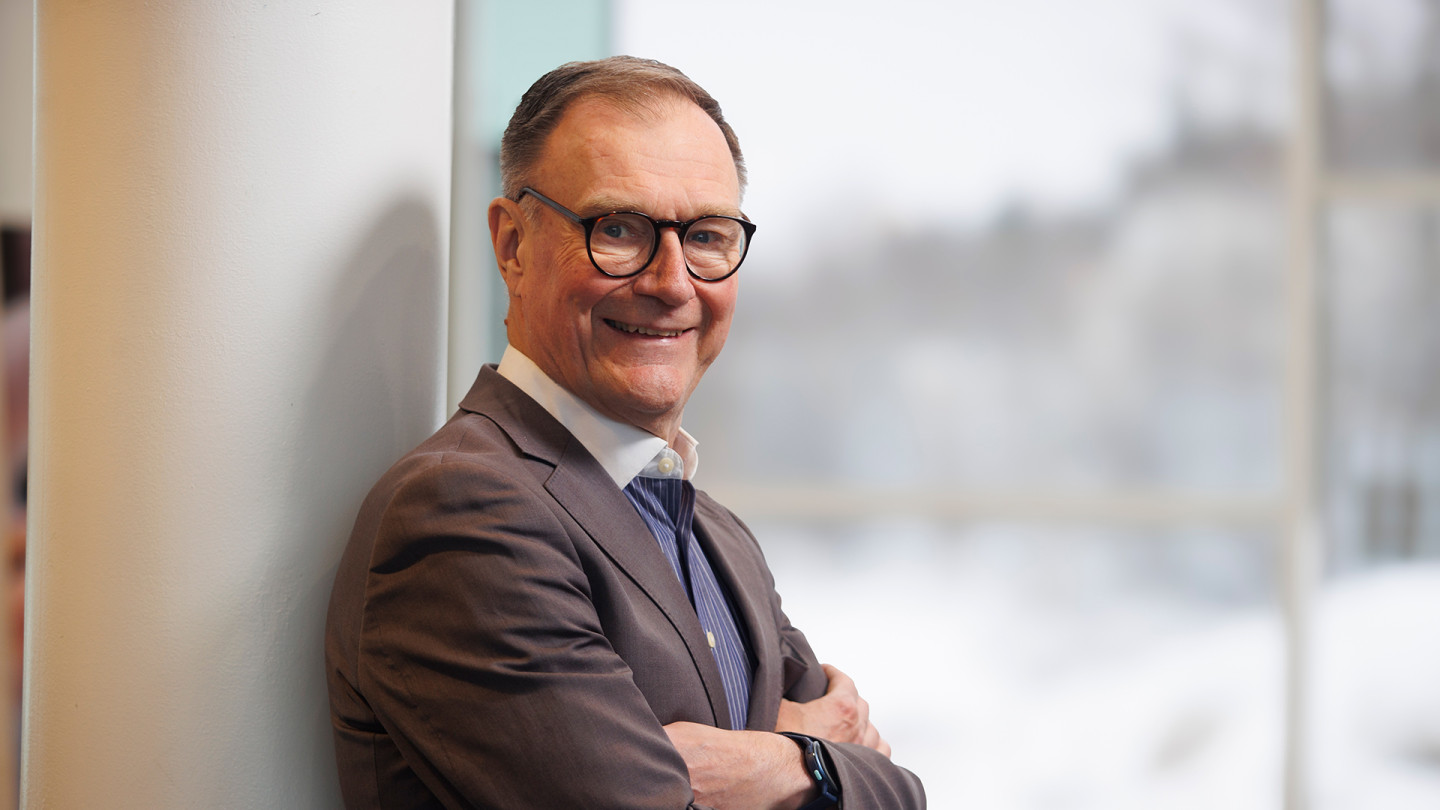
As a professor of practice at EduJyväskylä, Risto Miettunen will strengthen the dialogue between research, education and the business world. In this role, he will particularly focus on developing the structures, operating models and management of wellbeing services counties. He will also concentrate on strategic change management, including seizing the opportunities presented by digitalisation, promoting the wellbeing economy, and ensuring that social and health impacts are considered in decision-making processes. This comprehensive framework encompasses a customer- and population-centred approach, reducing inequality, increasing preventive work, and promoting wellbeing and health through management. The position strengthens ties with the business world and facilitates the development of new solutions by bringing research and practice together.
Focus on the overall assessment and impact
The Finnish economy has not grown for years, causing Finland to fall behind the other Nordic countries in this respect. There is a general agreement that the increase in social and healthcare costs must be addressed. Miettunen believes that the wellbeing services counties have prioritised cost-cutting, resulting in a loss of sight of the bigger picture. This type of short-sighted reform of the service structure undermines the associated social security system.
“I believe in conducting a comprehensive assessment and taking overall impact and efficiency into account,” says Miettunen. “While cost savings are important, simply cutting back on services isn’t enough. The social and healthcare sector is a broader system where everything affects everything else.”
Although Finland reportedly has one of the highest rates of unmet need for social and health services among OECD countries, the services themselves are effective once you get access to them.
“A lack of services has created a backlog.”
Once access is gained, Finland’s welfare sectors function well. This is also supported by a recent study by the National Institute for Health and Welfare (THL), which found that the general public’s trust in social and health services is lower than their ratings of their actual experience of using these services.
Focus on the essentials before moving on to bigger challenges
According to Miettunen, the surest way to ensure customer-oriented services through management is to first get the small basic things right, creating more room and efficiency for the more difficult issues.
“Wellbeing services counties have not been given the opportunity to do this because the process started with structural cutbacks straight away.”
Economies of scale are most effective when dealing with standardisable operations. However, it is difficult to achieve similar benefits through centralisation in local services delivered to the home. When operating in a service- and customer-oriented manner, it is important to recognise these differences. The same solution does not work in the same way in all areas.
The shortage of social and healthcare staff further complicates this multifaceted issue. Cutbacks have resulted in a decline in local job opportunities. However, rather than moving within the public healthcare sector as planned, some trained staff are seeking employment in the private sector and other roles. In fact, Finland has a higher-than-average number of trained social and healthcare personnel compared to other countries, except for having slightly fewer doctors than the EU average. The shortage of resources is concentrated in specific areas.
“As the saying goes, a river is made up of many small streams,” says Miettunen. “For example, accessing services is currently problematic. The knock-on effects of unmet needs manifest themselves in various ways, such as failure demand and increased social security costs, including those paid by Kela.”
According to Miettunen, quality systems always consist of three parts: enablers (i.e., resources), actions, and results. These are surrounded by a societal framework, including public health, the economy, social security, sustainability, and safety.
“As a separate theme, sustainability is also a major global issue because, according to a study, health care produces around 5% of all greenhouse gas emissions globally,” he says.
“We should remember to focus not only on resources but also on actions and results and pay attention to the framework, because social and health care is a very integral part of society.
Digitalisation and AI present opportunities
According to Miettunen, digitalisation and artificial intelligence offer significant opportunities for strategic change management and efficient leadership in health care and social services.
“Digitalisation and artificial intelligence are highly promising and useful tools for repetitive and automated tasks,” he says. “For example, artificial intelligence can identify issues with great precision in diagnostics. While the human brain can process a maximum of seven to ten things simultaneously, artificial intelligence can process thousands of parameters in parallel. However, the goal in utilising these tools should not merely be cost savings, but rather streamlining operations, improving effectiveness and gathering data.”
“It is also important to consider data security issues, as data processed in health care and social services today – as in many other sectors – ends up on servers that are largely controlled by international companies. This poses a new threat even at the EU level.”
Building internal and external networks for EduJyväskylä
The new Professor of Practice will strengthen ties with the business world and develop new solutions by fostering interaction between research and practice.
“The business world is interested in societal impact. There is significant scope for research into how various factors affect the social and healthcare sector as a whole. Even more research could be conducted in this area.
In his position, Miettunen will work both within EduJyväskylä as well as externally at national and international levels.
“I intend to establish new connections with the wellness sector and businesses, develop a local cooperation network in Central Finland, and actively participate in national and international events,” says Miettunen, who is deeply committed to his new role.
During his long career, he has worked as a visiting adjunct professor at the University of Colorado from 2022 to 2025, as director of the Northern Savo Health Care District for ten years, and in the business and industry sectors.
He built extensive international networks during his time as a board member of the International Hospital Federation (IHF), serving as chairperson from 2019 to 2021. He is currently an honorary member of the organisation.
Risto Miettunen’s professorship covers the entire EduJyväskylä network. It falls under the management and leadership discipline at the Jyväskylä University School of Business and Economics.
Further information:
Risto Miettunen, D.Med.Sc, Sairaalaneuvos (hon.)
050 430 6393
risto.h.miettunen@jyu.fi


