
The 2026 Language Campus Seminar explored changes in teaching and the role of teachers in the fields of language and communication
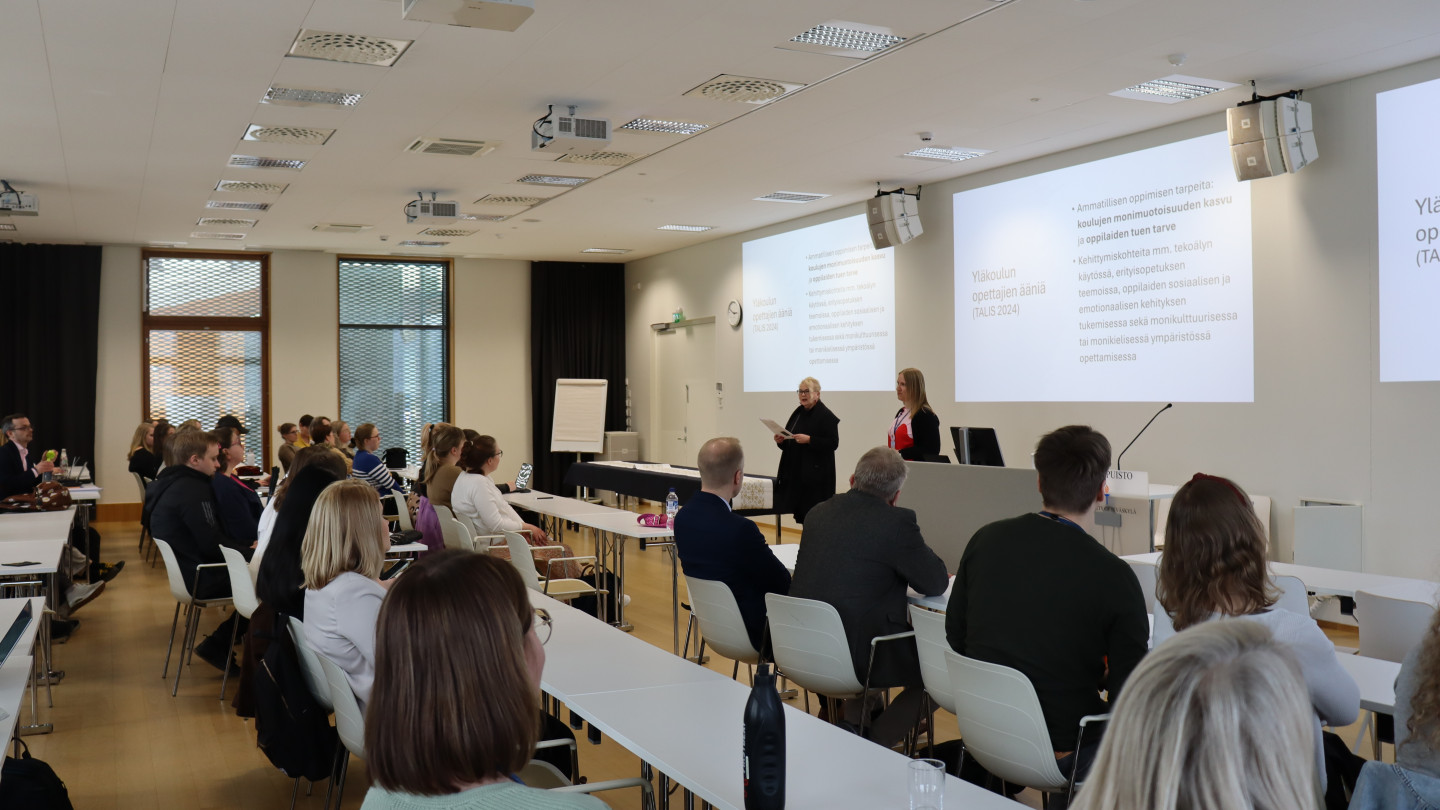
The theme of the seminar was “The changing role of teachers?”, and the event was attended by more than a hundred participants. In addition to members of the Language Campus, other participants included language teachers from basic and secondary education, other higher education institutions, as well as language teacher students. The atmosphere at the seminar was enthusiastic and cheerful, and many wished there had been even more time to discuss with others working in the field.
The seminar consisted of two elective sessions and a joint presentation. There were six different programs to choose from: an AI workshop, language teacher as a social actor, the changing matriculation exam, possibilities for differentiation in teaching, digital versus print learning materials, and a panel discussion on the changing needs of language teaching. In line with the seminar’s title, the topic of the joint opening session was the changing nature of teaching.
The AI workshop for language and communication teachers, led by Jenny Tarvainen and Lauri Haapanen, explored the opportunities and challenges of AI in language and communication education and in the acquisition of these skills. Topics for discussion included how to justify the need for language and communication education in a world where AI is developing at a rapid pace, and what every teacher should know about AI. After a brief introduction, participants discussed in small groups various future scenarios shaped by AI. As a result of the lively discussion, it was noted, for example, that teaching AI skills cannot be overlooked and that, at their core, the skills for responsible and sensible use of AI are thinking skills.
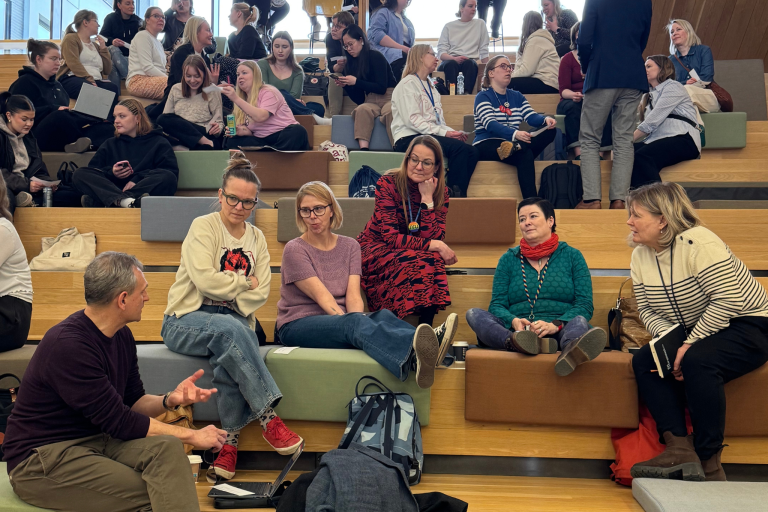
Photo: Discussions during the AI workshop.
Lotta Leinamo and Venla Rantanen organized a workshop on the topic of language teachers as social actors. The workshop explored what language teachers can do when social phenomena such as immigration or labor market conditions flood into the classroom, and how to integrate society more closely into the urgent realities of daily teaching. Based on presentations and group work, participants also considered what kind of skills or understanding socially active teaching requires.
Katja Mäntylä’s lecture “At the forefront since 1852 – the changing matriculation examination” addressed upcoming changes to the matriculation examination: the possibility of including a skills or arts subject in the exam, an English-language exam, and plans for an oral section in language exams. Following the presentation, language teachers from different educational levels discussed together how the changes will affect, among other things, applying to and studying in higher education.
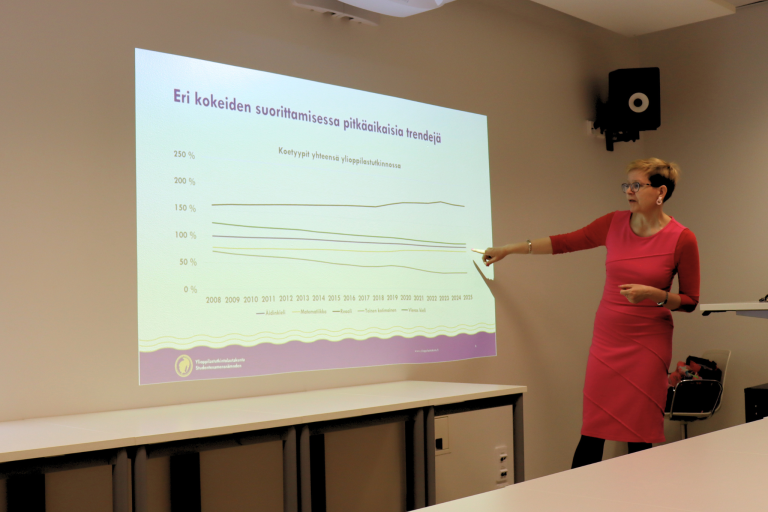
Photo: Katja Mäntylä explains the changes to the matriculation examination.
In Kati Kajander’s workshop “Possibilities for differentiation in teaching,” participants explored methods of differentiation and the European Language Portfolio through research and collaborative activities. Pirjo Pollari’s workshop, “Digital or print – or both?” examined the advantages and disadvantages of digital and printed textbooks from both a research and user perspective, and explored, among other things, whether language subjects differ from other subjects in this regard and why. The topic sparked a lively discussion among the participants.
In the panel discussion "Experiences of changing language education from upper secondary school to university studies and staff training," Elina Jokinen, Ulla-Maija Bergroth-Koskinen, and Jonna Riikonen, moderated by Mikko Jäkälä, discussed current language proficiency and related perceptions, as well as how language and interaction skills are intended to be developed at the university. The panelists shared their observations and experiences regarding the continuum of language proficiency development, and reflected on the role of language and interaction skills in studies and working life, how a university student’s prior educational background affects language proficiency and its development, and what challenges are involved in building multilingual and multicultural interaction skills.
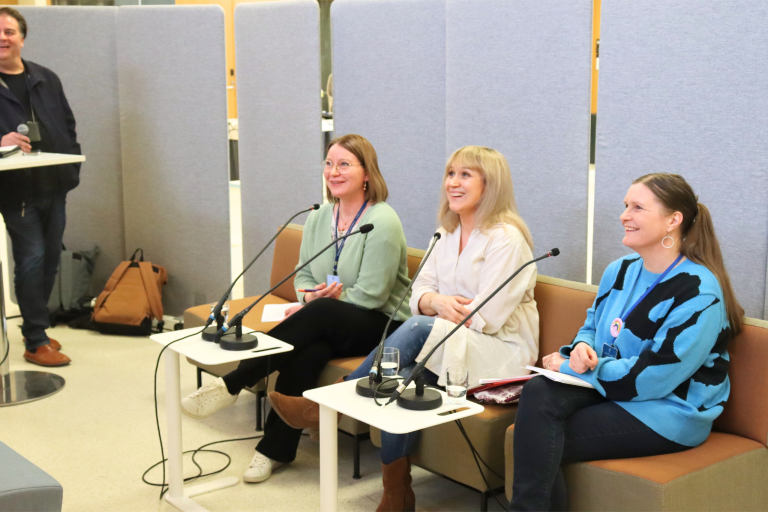
Photo: The panel discussion sparked plenty of ideas among the audience.
Finally, all participants gathered to listen to Emma Kostiainen and Auli Lehtinen’s presentation, “The evolving role of the teacher,” which examined the teaching profession in light of current and future trends. Through various perspectives, the discussion explored what new skills are expected of teachers, what should be cherished, and what can be let go of. The presentation offered a diverse range of perspectives on what it means to be a teacher in an era where artificial intelligence writes, students negotiate meanings in multiple languages, and expertise is increasingly built collaboratively. The discussion touched on, for example, the challenges facing schools today and whether teaching should be conducted digitally or not, alone or collaboratively. The topics of current interest sparked the audience’s curiosity, some examples even amusing the participants.
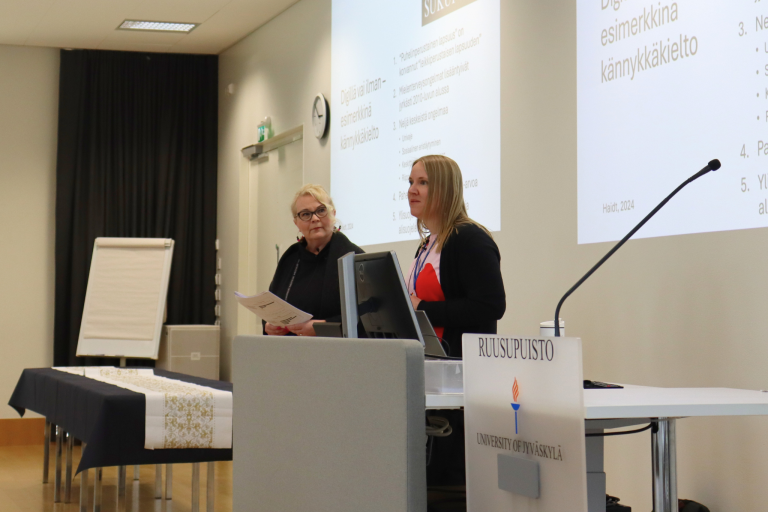
Photo: Emma Kostiainen and Auli Lehtinen giving a presentation on the changing nature of teaching.
At the end of the seminar, the Language Campus Award was presented to Mikko Jäkälä in recognition of his active and tireless work in support of the Language Campus and the development of its activities. Finally, attendees had the opportunity to discuss the day’s topics over a cup of coffee.
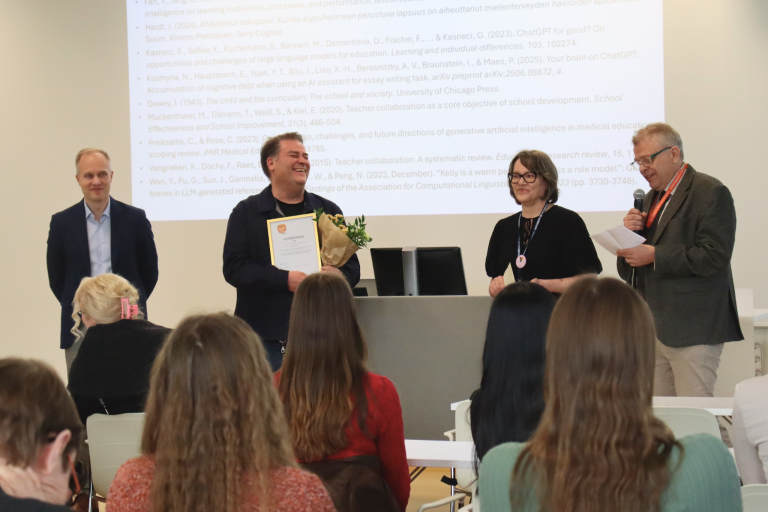
Photo: The department heads presented the Language Campus Award to Mikko Jäkälä.
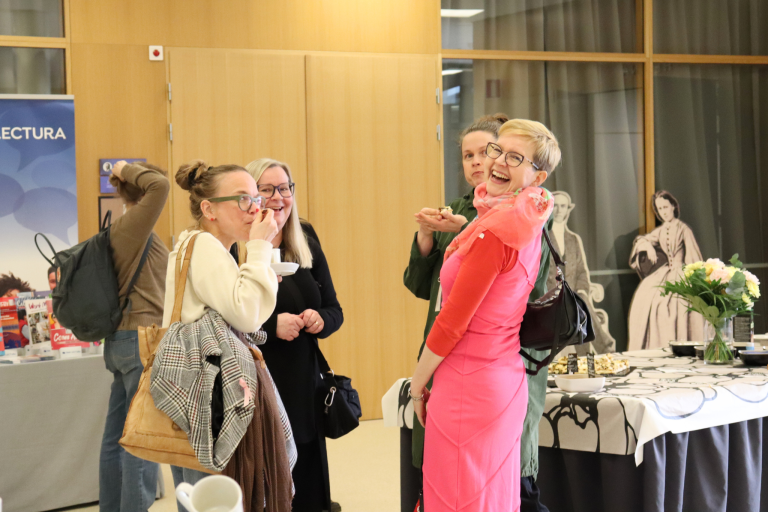
Photo: The cheerful atmosphere continued during the coffee break discussions as well.
Feedback on the event was collected from participants via a questionnaire. The feedback was very positive; in particular, the program content and the atmosphere of the event received praise. The seminar also sparked new ideas.
I’d love to attend events like this again.
Timely and interesting topics, concise presentations, and engaging workshops. A pleasant atmosphere.
It was great to share thoughts on unifying themes with people from different backgrounds.
In the end, there was very little time left for networking.
It was a really nice and interesting afternoon!
Awareness and understanding. We are facing new challenges in many areas. Teachers care about their students and hope that everyone is doing well. The seminar raised questions about the intersection: how do we combine interaction, fairness, well-being, and digital tools with learning objectives? What is evolving, and what should evolve? Is the goal of learning the definite past participle, or a broader understanding of oneself and others?
Topics for coffee-table discussions—and perhaps even for lessons.
The seminar organizing committee would like to thank all the speakers and participants for a successful seminar!
The seminar organizing committee:
Mikko Jäkälä
Maija Lappalainen
Katja Mäntylä
Pirjo Pollari
Roosa-Maria Vesanen, Language Campus Coordinator


