
How much clearcutting can nature sustain? A study determines the ecological limit for boreal forest birds
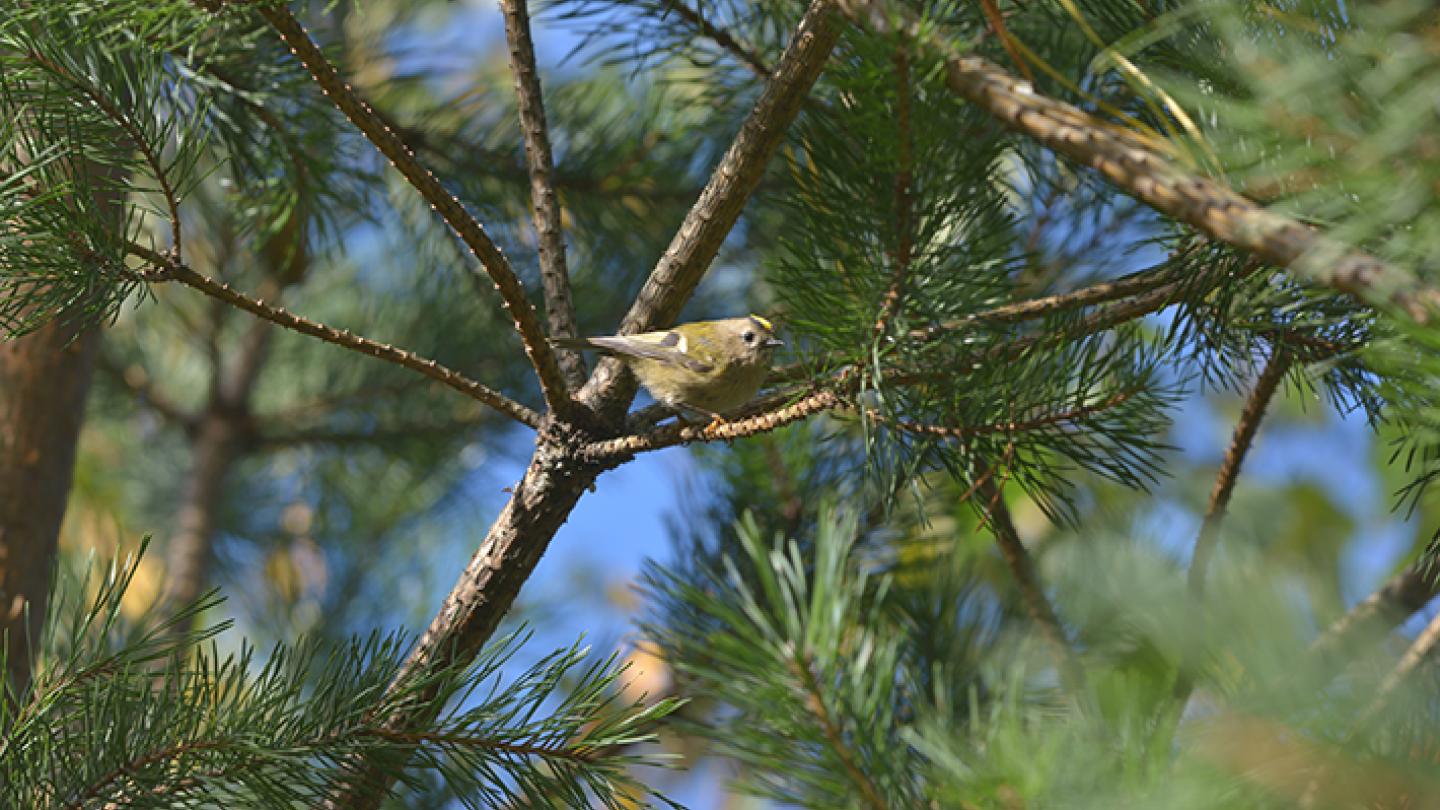
Clearcutting is a common forest management method worldwide, especially in boreal forests, but it is also a significant factor in the decline of forest biodiversity. Although the effects of individual harvests are relatively well understood, there has been little information to date on the long-term and cumulative effects of clearcutting at the landscape level.
Researchers analyzed national bird monitoring program data from South and Central Finland covering the years 2006 to 2020 and the European maps of forest disturbances, depicting the accumulation of clearcut areas.
- We noticed that the abundance of common forest species and species specialized in old-growth forests was lower in landscape where large areas of clearcutting had accumulated over 20 years, summarises Senior Researcher Rémi Duflot from the University of Jyväskylä.
Defining a "safe operating space" for forests
A key finding of the study was the definition of a so-called “safe operating space” for forest ecosystems. The researchers identified the ecological limits below which populations of bird species associated with old-growth forests can remain stable or recover from past declines.
- Based on our results, to maintain forest bird populations, the proportion of clearcutting should not exceed c. 10 percent of the forest landscape over a ten-year period. This corresponds to a rotation period of approximately 90 years in forestry or to the exclusion of approximately one-fifth of forest areas from clearcutting management, explains Duflot.
The researchers also emphasize that ecological thresholds may vary by region and among different groups of organisms. For example, lichens and mosses may be more demanding than forest birds. Therefore, the results should be supplemented by studies on other species groups before general thresholds are adopted.
A tool for more sustainable forest management
The results provide decision-makers, forest owners and forestry sector stakeholders with a concrete metric for planning ecologically sustainable forest management.
- Our study offers a clear and easily communicable goal that can be used to reconcile forest use with the protection of biodiversity. The method is also suitable for use around the world, says Professor in Applied Ecology Mikko Mönkkönen from the University of Jyväskylä.
The results were published in the Journal of Applied Ecology.
Article information:
- Duflot et al “Impacts of clearcut accumulation on boreal forest bird communities: Defining a safe operating space at the landscape level'”, Journal of Applied Ecology (2026).
- DOI number: https://doi.org/10.1111/1365-2664.70552
- Link to article: https://besjournals.onlinelibrary.wiley.com/doi/10.1111/1365-2664.70552


