
Molecular knot researcher Fabien Cougnon appointed professor at the University of Jyväskylä
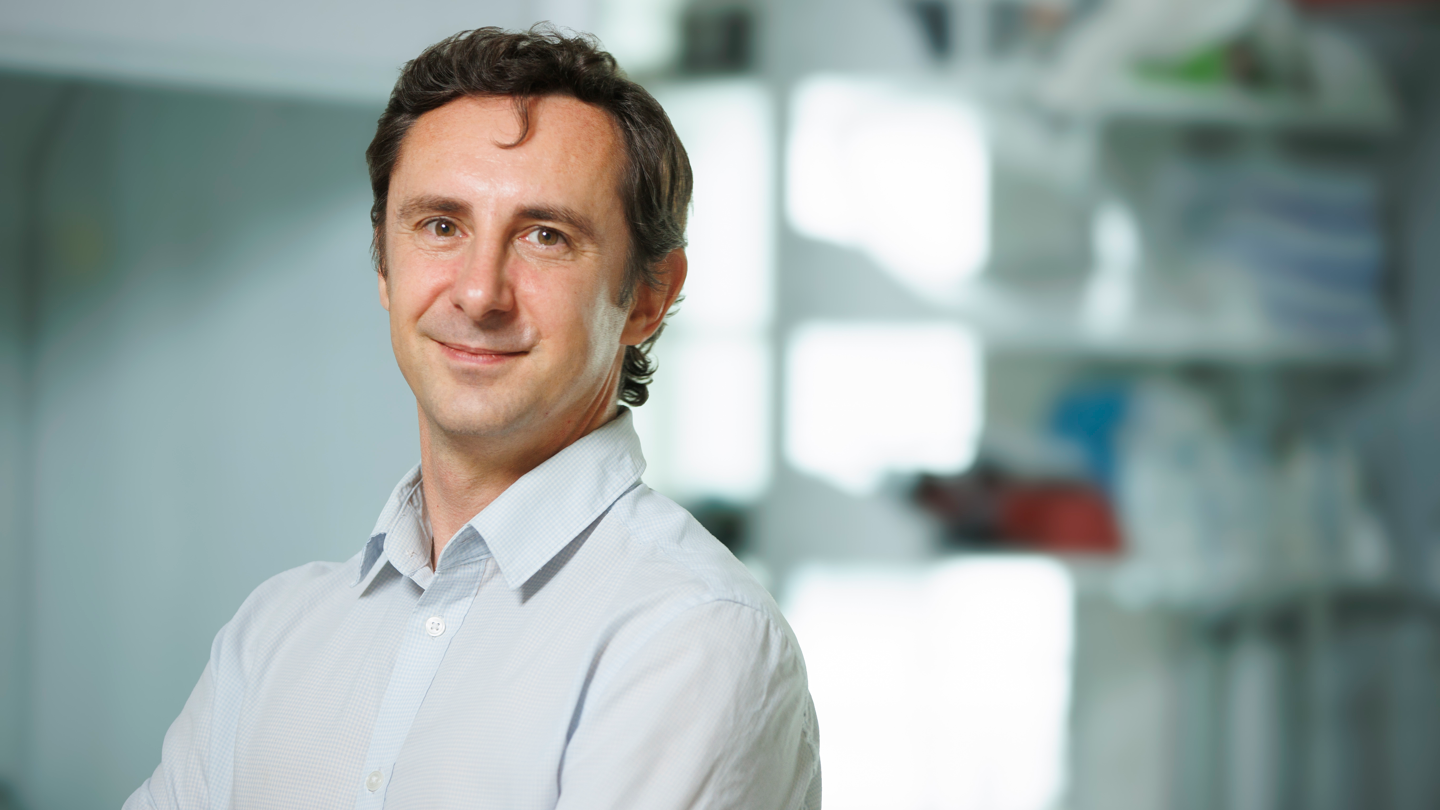
Originally from Cannes in the south of France, Fabien Cougnon completed his master's degree at the University of Strasbourg before moving to the University of Cambridge, where he earned a PhD in Chemistry. His doctoral research focused on supramolecular chemistry, particularly the role of weak intermolecular interactions in directing the self-assembly of molecules into complex architectures such as molecular knots.
“What fascinates me most about chemistry,” says Cougnon, “is how invisible interactions between molecules can give rise to remarkably complex and functional structures.”
Finland’s research excellence attracted Cougnon
After completing his PhD, Cougnon worked as a postdoctoral researcher at the University of Edinburgh and at the Massachusetts Institute of Technology (MIT) in the United States. At MIT, he broadened his research into biochemistry, investigating the mechanisms through which antimicrobial peptides function in the human body.
In 2017, he established an independent research group at the University of Geneva before joining the University of Jyväskylä as an Associate Professor in October 2021.
“The University of Jyväskylä has a strong tradition in supramolecular chemistry, and the advanced instrumentation needed for our research is available there,” says Cougnon. “I have also been impressed by the collaborative and supportive atmosphere of the Nanoscience Center, where researchers from different disciplines work closely together.”
From molecular knots to future applications
Cougnon’s research group develops new approaches for controlling the self-assembly of molecules into increasingly sophisticated architectures, including molecular knots, helices, and cage-like structures. By uncovering the principles that govern nature’s own self-assembly processes, the group aims to develop new functional materials.
Although firmly rooted in fundamental research, this work also has significant potential for practical applications.
“Recently, we demonstrated that certain molecular knots can capture sulphate from water,” says Cougnon. “We are also developing molecular systems for biological applications, including new platforms for RNA delivery. In the long term, this research could contribute to entirely new solutions in environmental and health technologies.”
Cougnon has received several prestigious research grants, including a European Research Council (ERC) Consolidator Grant and funding from the Research Council of Finland. Since January 2026, he has served as Scientific Director of the Nanoscience Center at the University of Jyväskylä.
Inspiring students and advancing scientific collaboration
For Cougnon, mentoring the next generation of researchers is one of the most rewarding aspects of academic life.
“It is rewarding to see students and postdoctoral researchers gradually develop into independent scientists,” he says. “At its best, research inspires such enthusiasm that discussions continue long after the working day has ended.”
As a professor, Cougnon aims to further strengthen the university’s international profile in supramolecular chemistry while promoting interdisciplinary collaboration between chemists, biologists, materials scientists and physicists.
“I am delighted to have the opportunity to continue my research in Jyväskylä,” says Cougnon. “The university combines strong scientific expertise, excellent infrastructure, and an inspiring research community. Together, these create a basis for new research questions and, potentially, unexpected breakthroughs.”
Outside academia, Cougnon is a dedicated swimmer who trains three times a week with a local swimming club. He is also an avid reader, with a particular interest in crime fiction and classical literature.


