
University of Jyväskylä participates in developing AI-driven digital twins for waste-to-value technologies
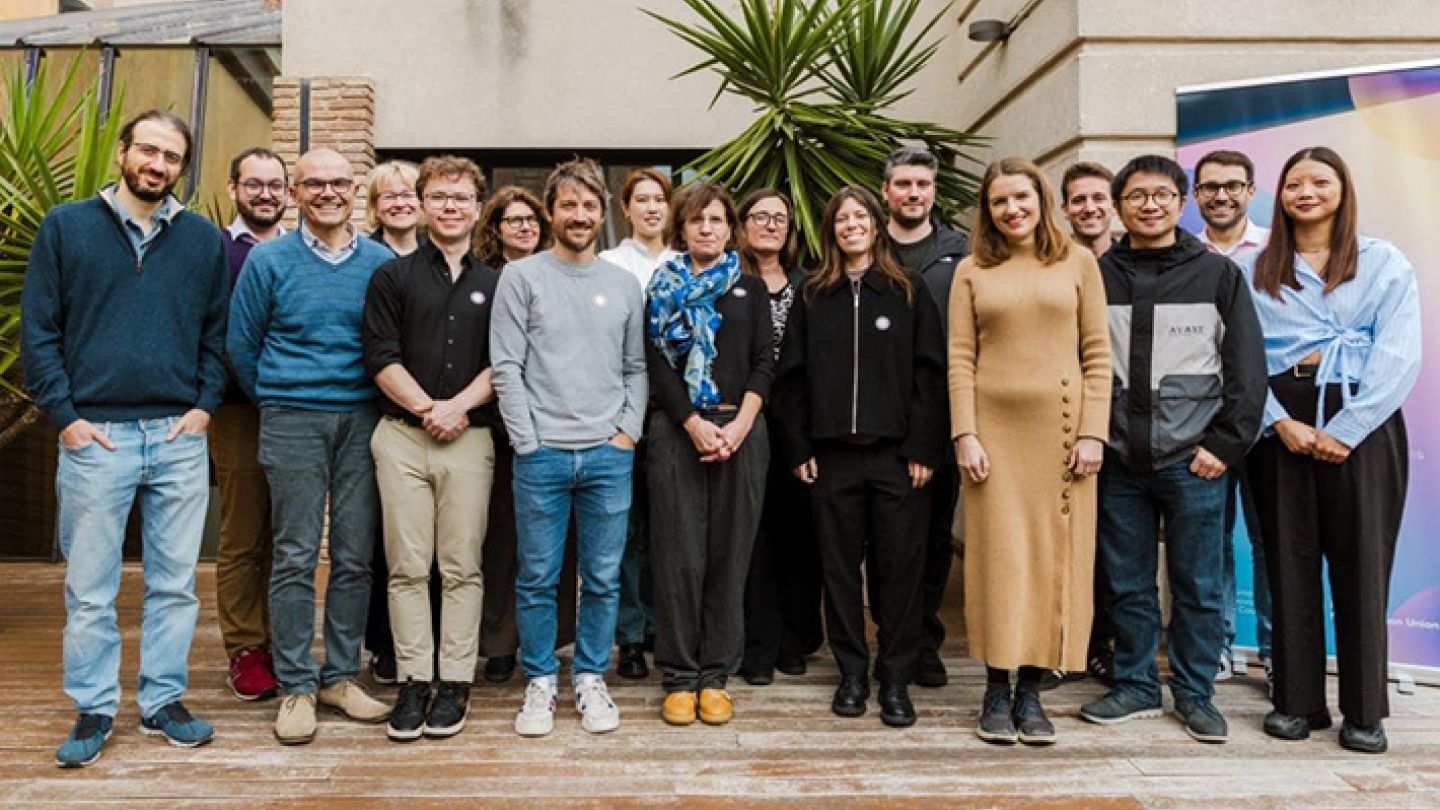
The AIM project, AI-Multiscale Integration for Waste-to-Value Digital Twins, has received funding from the European Union under the EIC Pathfinder Challenge 2025 call. The project will run for four years with a budget of nearly €4 million and will be coordinated by ICIQ. It started in October 2026.
AIM is one of the eight projects funded under the EIC Pathfinder Challenge on Waste-to-Value. Together, the projects are exploring different ways to turn difficult-to-recycle waste into useful products, from breaking down mixed plastics and recovering materials from desalination brines to treating wastewater and converting CO₂ into chemicals.
Within this portfolio, AIM has a specific role: it is the only project developing digital twins. Using artificial intelligence and advanced computational simulations, the project will create virtual models that link processes at the atomic level with the behaviour of a complete device. These models will provide computational support to the other projects, helping their teams understand how their technologies work and explore how different materials or operating conditions could affect their performance.
Artificial intelligence connects atomic-level phenomena and industrial processes
Working with waste is currently challenging as these materials are often contaminated or contain substances that make conventional recycling difficult. Additionally, in these recycling processes many things happen at once and at very different scales: reactions take place at the level of atoms, but at the same time materials change, transport processes occur and the full device operates under complex conditions. Today, these levels of complexity are often studied separately, which makes it hard to connect detailed knowledge with real performance.
The AIM project understands these systems as a whole, not as separate pieces. By combining artificial intelligence with multiscale simulations, research can connect what happens at the smallest level with the performance of the full device. This will help to design better and more realistic waste-to-value technologies.
Digital twins will allow researchers to test ideas virtually, compare different approaches and identify potential problems before building or scaling up a device. This could reduce the need for costly physical trials and help researchers make better-informed decisions about which solutions to investigate before moving to real-world testing.
The University of Jyväskylä is developing the computational methods
The project brings together a consortium with complementary expertise. The University of Jyväskylä plays a significant role in the project as a developer of computational simulation methods that provide the basis for digital twins, in collaboration with Ruhr University in Germany.
The work is led by Professor Karoliina Honkala from the University of Jyväskylä. Her research group is internationally recognized in computational nanocatalysis.
- Digital twins offer entirely new opportunities to understand and develop complex circular economy processes. The goal is to integrate atomic-level phenomena and the whole device’s operation into a single model. This allows us to predict how technologies work before experimental testing, explains Honkala.
Senior Lecturer Marko Melander and Postdoctoral Researcher Xinwei Zhu from the University of Jyväskylä are also participating in the project. The research strengthens the university’s position at the international forefront of computational chemistry, artificial intelligence, and sustainable technology research.
- The project offers an excellent opportunity to combine the University of Jyväskylä’s strong expertise in computational chemistry with top-level European research. At the same time, we are training new experts in a field where artificial intelligence and sustainable technologies interact, says Melander.
Solutions for Europe’s Green Transition
The AIM project comes at a time when Europe is pushing to reduce waste, cut emissions, and rely less on fossil resources. On its way to defossilisation, energy systems and industries are developing solutions to replace fossil inputs with alternative carbon-based raw materials, including waste.


