
Movement and Imaging for Muscles and Tendons (MOVIE)
Basic

Research group description
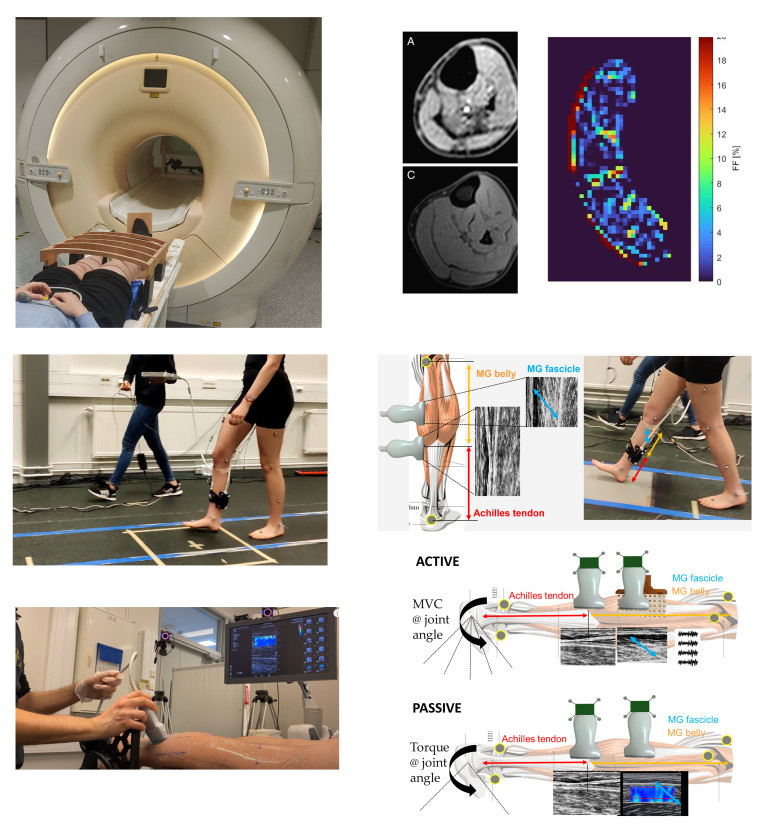
Our MOVIE Lab consists of an initial core team of one postdoctoral researcher and two PhD students, with additional MSc students and clinical collaborators contributing to specific projects. We work in close collaboration with the New Children’s Hospital in Helsinki and maintain active international partnerships with KU Leuven (Prof. Kaat Desloovere) and KTH Royal Institute of Technology (Prof. Lanie Gutierrez and Prof. Ruoli Wang).
Our research focuses on the fundamental mechanisms of muscle–tendon structure and function during human movement, particularly the interplay between active and passive force generation in neuromuscular systems. We investigate intramuscular force transmission, tissue remodeling, and multi-scale regulation of muscle mechanics from sarcomere behavior to whole-body locomotion. Cerebral palsy (CP) is our primary clinical target, while the developed methodologies are designed to be transferable to other neurological and musculoskeletal populations.
Our main research methods integrate advanced imaging, biomechanical analysis, neuromuscular measurements, and computational modeling:
- Structural and quantitative MRI
- 3D ultrasonography and imaging–tracking fusion approaches
- Microendoscopy (in collaboration with international partners)
- High-density electromyography (HD-EMG)
- Peripheral electrical stimulation and dynamometry
- 3D motion capture and gait analysis
- Musculoskeletal modeling and phenomenological muscle–tendon modeling
- Multi-objective optimization approaches for personalized force analysis
We actively utilize the Motion Analysis Laboratory at the Faculty of Sport and Exercise Sciences, MRI facilities at Hospital Nova, and clinical collaborations with the New Children’s Hospital in Helsinki. These infrastructures enable us to combine experimental biomechanics, imaging, and clinical expertise to advance translational neuromechanics research.


