
Spring School 2026: Life as a Doctoral Researcher

This year’s theme was Life as a doctoral researcher: The academic self during and after the PhD (Elämää tohtorikoulutettavana: Akateeminen minä tohtoriopintojen aikana ja niiden jälkeen). The event took place in hybrid mode and was hosted by grant researcher Dr. Sotiria Varis. The event was organized by Sotiria with the help of University Teacher Dr. Päivi Iikkanen and doctoral researchers Sanna Riuttanen (technical support) and Mahnaz Shirdel (communications). The participants were introduced to the Postgrad Group by Päivi, who is the coordinator of the group, emphasizing peer support, academic community, and shared responsibility in sustaining doctoral researchers’ work and wellbeing.
The two-day Spring School 2026 event included two keynotes, two workshops, and two paper presentation sessions.
The first day of Spring School 2026 began with a workshop on career planning, followed by a keynote by University Researcher Dr. Riikka Ullakonoja (University of Jyväskylä) on her experiences in academia. The workshop created space for participants to reflect on their own professional development and future possibilities during and after the PhD. In connection with the broader theme of the Spring School, career planning was approached not merely as a practical exercise, but as part of the wider process of constructing an academic and professional self. These sessions invited participants to consider academic work not only as a professional trajectory, but also as a lived experience shaped by choices, transitions, opportunities, and uncertainties.

Picture 1. Participants discussing their life experiences with professions prior to their doctoral education. Photo: Päivi Iikkanen.
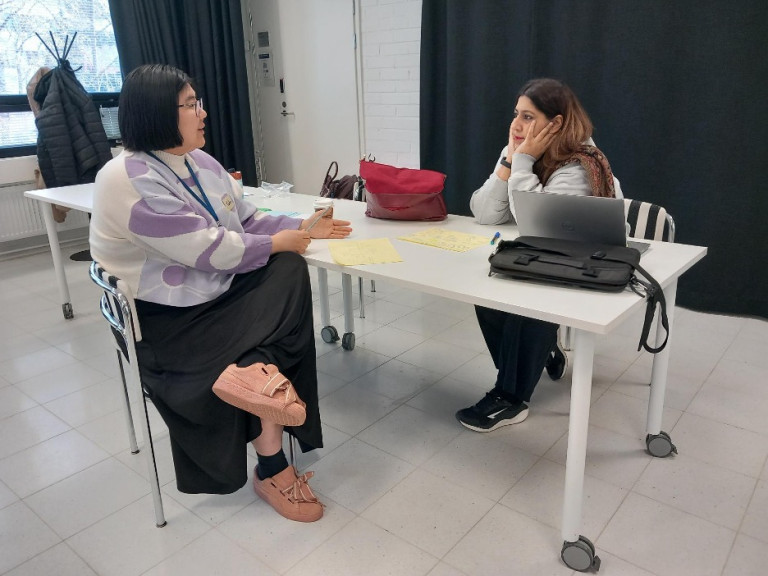
Picture 2. Early-career researchers discussing their professional life experiences. Photo: Päivi Iikkanen.
The second day of Spring School 2026 continued the discussion with the themes of academic identity, doctoral life, and professional development. Our keynote speaker MEd Aytuna Yamaç had us hooked from the beginning. Aytuna is a doctoral researcher at Tampere University and Founding CEO of the Northern Excellence in Teaching Academy Finland (N.E.T. Academy Finland). Her keynote brought an important perspective to the Spring School theme by connecting doctoral research with entrepreneurship, international collaboration, and professional agency beyond traditional academic paths. Her talk invited participants to consider how doctoral expertise can travel across institutional, national, and professional boundaries.
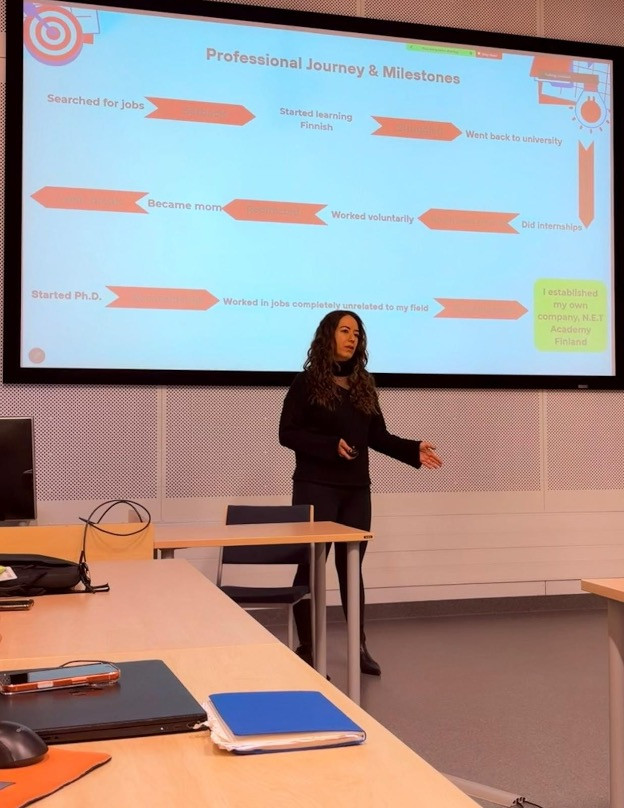
Picture 3. MEd Aytuna Yamaç delivering her keynote on Day 2 of Spring School 2026.
Aytuna’s keynote was followed by a workshop by Dr. Minni Matikainen, postdoctoral researcher at the Department of Teacher Education, University of Jyväskylä. Their workshop focused on the Tomlinson model of graduate capitals, offering participants a framework for thinking about the resources, capacities, and forms of capital that they can develop during their doctoral education. The workshop addressed this Spring School’s central theme by encouraging participants to reflect on the skills, identities, networks, and forms of knowledge that they accumulate as doctoral researchers during their PhD. It also encouraged broader thinking about how these resources may support different futures after doctoral studies.

Picture 4. Dr. Minni Matikainen facilitating a workshop on the Tomlinson model of graduate capitals. Photo: Päivi Iikkanen.
After the keynote and workshop in the morning session on Day 2, participants continued the discussion over lunch before moving into two presentation sessions. Each session included four presentations, with presenters given 15 minutes for their talks and approximately 10 minutes for discussion.
The presentation sessions brought together a range of research projects, including several works still in progress. This made the sessions particularly valuable as spaces for feedback, dialogue, and collaborative thinking.
The first session focused on language, learning, and participation across different educational contexts. The presentations explored how language shapes learning experiences in areas such as early foreign language education, multiliteracy, language proficiency assessment in higher education, learners’ beliefs about speaking and language use in integration training, and participation in hybrid learning environments.
The second session took a broader and more conceptual perspective, focusing on how learning, language, and education are understood in global contexts. The session began with a methodological lens by introducing phenomenography as a way of studying how people experience and understand the world. From there, the presentations critically examined English language education, including its role and possible futures in contexts such as the Global South. The session also addressed students’ lived experiences of studying in international contexts and the role of English-medium instruction in enhancing disciplinary learning.
Across both days, Spring School 2026 created space for discussing the visible and less visible aspects of doctoral life. The theme encouraged participants to consider not only research topics and methodologies, but also the personal and professional transformations that accompany doctoral work.
The Spring School also showed that academic identity is not limited to one pathway. The program brought together perspectives on university research, career planning, entrepreneurship, graduate capitals, language education, participation, and global educational contexts. In doing so, it invited participants to imagine doctoral futures both within and beyond academia.
Spring School 2026 reminded participants that doctoral research is not only a matter of completing a dissertation. It is also a process of becoming: becoming a researcher, a colleague, a professional, and a person whose academic experiences continue to shape future paths.
We hope to see you at the next Spring School!


