
Parvovirusinfection modulates nucleolar organization and function
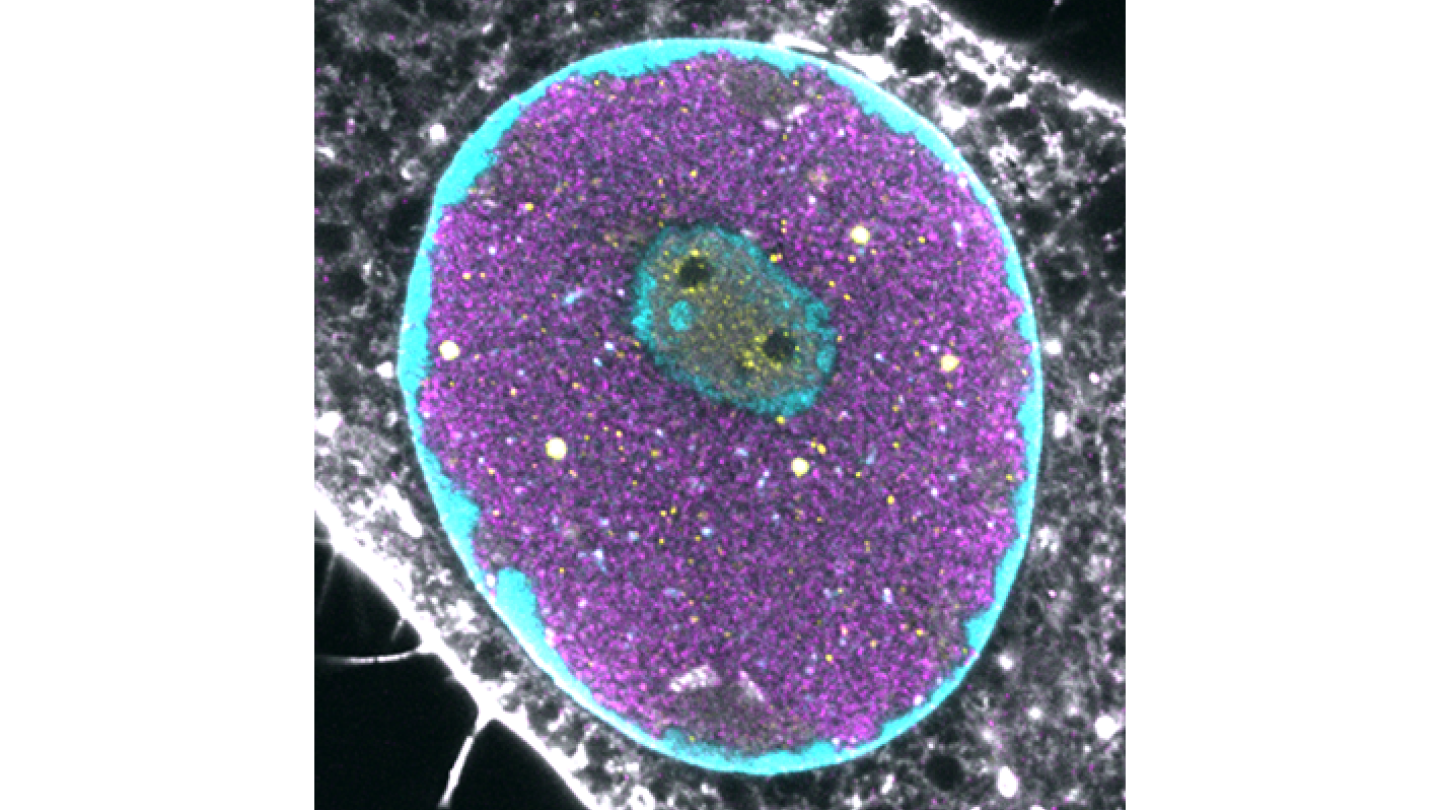
Every cell contains nucleoli. Their main function is to produce ribosomes. In addition, they control and regulate several key cellular processes, including cell division. Understanding the function and structure of nucleoli is important because disorders directly affect cell viability, protein production, and even the development of diseases. For example, canine parvovirus infection affects host cell nucleolar organization and ribosome biogenesis.
A research group led by the Research Director Maija Vihinen-Ranta and Academy Research Fellow Salla Mattola from the University of Jyväskylä investigated how parvovirus infection impacts nucleolar morphology and function.
- Our results reveal that infection leads to the redistribution of key nucleolar proteins and rRNA, extensive remodeling of nucleolar structure, and reorganization of nucleolus-associated chromatin, explains Research Director Vihinen-Ranta from the University of Jyväskylä.
Virus infection disturbs the balance of the nucleolus
Notably, these alterations are accompanied by pronounced changes in pre-rRNA processing, highlighting the profound effects of canine parvovirus on nucleolar homeostasis.
- In conclusion, our work demonstrates that autonomous parvoviruses, such as canine parvovirus, remodel nucleolar structure and modulate its function. This study provides insights into the functional and physical interactions between autonomous parvoviruses and the nucleolus, says Academy Research Fellow Salla Mattola from the University of Jyväskylä.
The study was published in Communications Biology, a prestigious Nature Portfolio journal.
The research was conducted together with several research groups of national and international collaborators. The work was financed by the Jane and Aatos Erkko Foundation, the Academy of Finland, the European Union’s Horizon 2020 research and innovation program, the Belgian Fonds de la Recherche Scientifique -program, and the National Institute of Health.
Article information:
- Huttunen M, Hakanen S, Aho V, Leclerc S, Soenmez A, Kapishnikov S, Zannotti A, Ruokolainen V, Salokas K, Varjosalo M, Latonen L, Parrish CR, Fahy K, Mattola S, Lafontaine DLJ, Vihinen-Ranta M. Canine parvovirus infection affects host cell nucleolar organization and ribosome biogenesis. Commun Biol. 2026 Jan 3;9(1):10..
- DOI number: 10.1038/s42003-025-09385-x.
- Link to article: https://www.nature.com/articles/s42003-025-09385-x


