
Building a supportive community for early career researchers
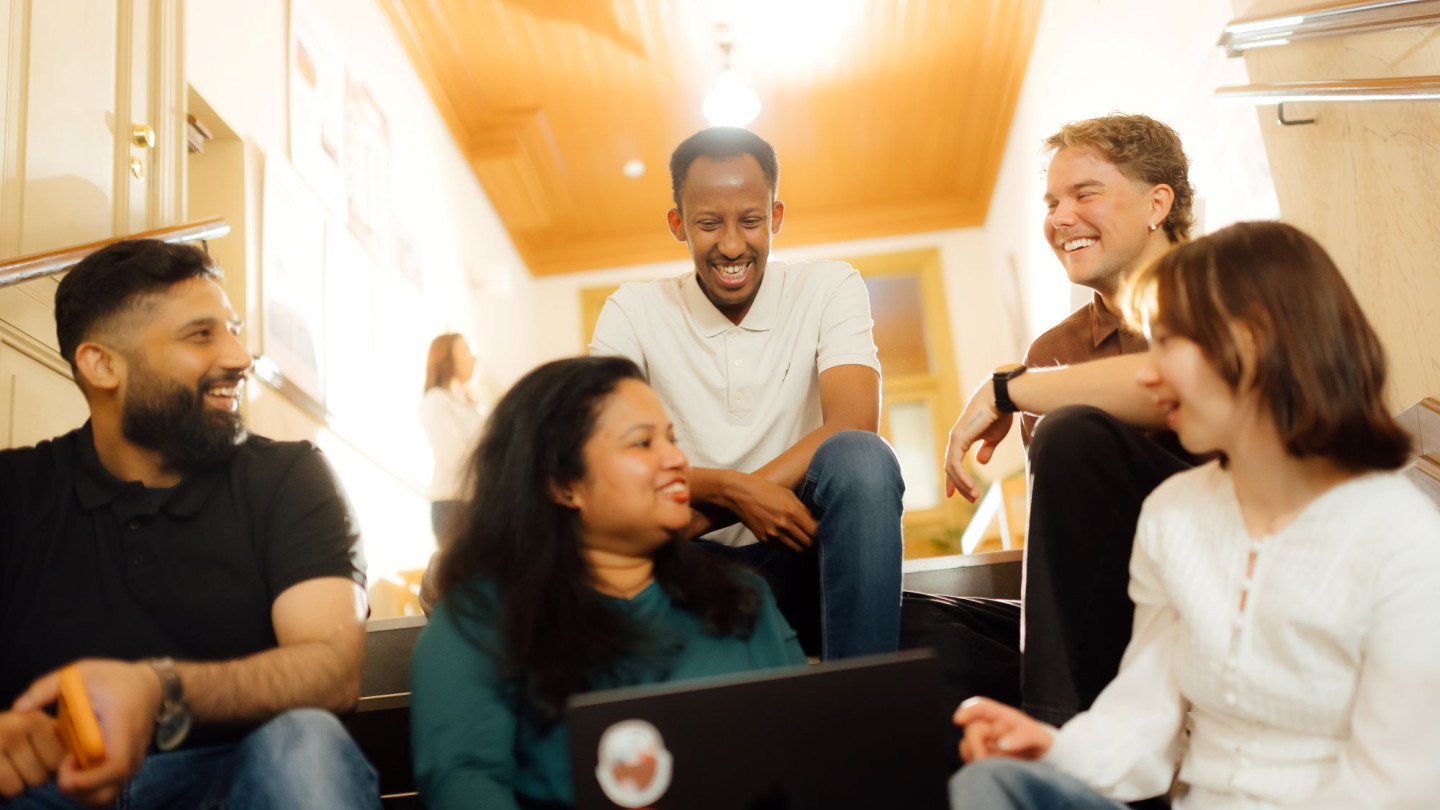
Academia provides an inspiring and meaningful environment for work. At the same time, it can be demanding and occasionally isolating—especially for early career researchers. As they begin their careers, they take on the tasks of building confidence, finding their place in the academic community, and navigating uncertainty while embracing continuous learning as a natural part of their professional growth.
To support this journey, the Early Career Researchers’ (ECR) Pool was developed within the project EduRESCUE – the resilient schools and the education system. Bringing together approximately 20 researchers from the Universities of Jyväskylä, Turku, and Helsinki, it supported wellbeing and career development through regular online meetings and occasional face-to-face encounters during and after the pandemic years.
Here, we share what we learned in building this collaborative community.
A multidisciplinary community creates connections
The pool brought together researchers from different disciplines, universities, and backgrounds. Monthly online meetings created a rhythm where participants could step out of their daily routines and reflect together. Despite different perspectives, many recognized shared questions and challenges as well as sources of joy and experiences of success, both within their research topics and in academic work and life more broadly. Having researchers from several universities added another layer to the experiences, creating opportunities to connect with colleagues beyond one's immediate academic environment.
Face-to-face meetings during consortium events and conferences deepened connections among pool members.
They offered opportunities to listen and contribute to each other’s work, visit different campuses, and continue discussions in more informal settings.
Together, these encounters fostered open exchange of ideas and a growing sense of community.
Learning together builds confidence
The pool provided space to discuss aspects of academic work that are rarely made explicit. Participants shared experiences of academic practices, long and often demanding research processes, and questions about one’s role in the university community, while also learning from peer experiences and invited experts.
These conversations helped make visible the tacit knowledge of the field.
Sharing experiences with and more experienced researchers highlighted that research is also emotional work. Feelings of doubt, frustration, and excitement are part of the process. Over time, these shared discussions strengthened wellbeing, confidence and a sense of self-reliance in navigating both challenges and successes.
“How are you today?” – a small question with a big impact
When the ECR pool started, we never expected the simple question, "How are you today?" to have such an impact. Yet, this small gesture made the ECR pool special, creating a sense of care and belonging rarely found in professional groups focused solely on work discussions. In practice, we regularly devoted a substantial part of our meetings to sharing how we were doing—at a level each felt comfortable with. This space for personal exchange, alongside academic discussion, became a defining feature of the group.
This shared starting point also shaped how the group evolved.
Listening mattered as much as asking.
Responding to what was shared—through discussion, shared reflections, and concrete actions such as planning future meetings—helped build trust and strengthen the community. The question revealed different needs within the group, which we addressed by organizing tailored activities such as workshops, invited talks, and informal gatherings.
Sharing experiences—both professional and emotional—with others who understand the context felt invaluable. In this way, a simple question became more than a routine: it created a space where early career researchers could connect, reflect, and support each other in navigating the complexities of academic work.
Lessons in building a supportive research community
Drawing on the experiences of the ECR pool, we highlight three practical lessons for those interested in building similar communities in research projects.
First, while the pool depended on the active contributions of its members, support from project leaders and senior researchers was essential.
This included listening to participants’ needs, providing resources, and recognizing the group as a meaningful part of the project. Even in relatively small research teams, creating opportunities for early career researchers to get to know one another can help foster peer support, confidence, and a sense of belonging.
Second, embedding such structures into research projects from the outset—for example in funding applications—can strengthen early career researchers’ commitment, while supporting their professional development and networks.
While our experiences come from a single research consortium, similar approaches could also be explored across projects or disciplines within universities to strengthen regular interaction and sustained engagement.
Finally, dedicating time to social connection is not secondary, but central.
Regular check-ins—such as “How are you today?”—can foster a sense of community and support wellbeing.
Together, these lessons show that building a supportive research community is not an add-on, but an integral part of meaningful and sustainable academic work.
About the authors: Sanni Pöysä, Saswati Chaudhuri, Zhiyang Feng, Timo Salminen, Anne-Elina Salo and Sze Wah Chan work at the University of Jyväskylä. Their research is conducted mostly under the field of Education, and they focus on, for example, well-being, interaction, and multiliteracy. Anu Kajamies and Mikko Tiilikainen work at the University of Turku. Their research is conducted mostly under the field of Education, and they focus on developing teacher education, interaction dynamics and teacher reflection. Olli-Pekka Heinimäki and Hiroyuki Toyama work at University of Helsinki. Their main current research interests focus on teachers' and principals' occupational wellbeing. Virve Valtonen is a visiting researcher at the University of Eastern Finland, and she studies legal perspectives on basic education.
Project “EduRESCUE – the resilient schools and the education system” was funded by the Strategic Research Council of the Research Council of Finland.


